

HSE Creates ‘Transfer of Neurocognitive Technologies’ Consortium

HSE, the Pirogov National Medical and Surgical Centre, and the Centre for Speech Pathology and Neurorehabilitation of the Moscow Healthcare Department have signed an agreement on cooperation and the creation of a ‘neuro-consortium’ under the name ‘Transfer of Neurocognitive Technologies’. The new body will boost the development and implementation of advanced solutions in neurotechnology aimed at maintaining and improving people's health. The agreement was signed for five years, and the consortium is open to new participants.
The idea to create a consortium arose from a natural desire to implement the developments of the HSE neurocluster (the Centre for Language and Brain, the Institute for Cognitive Neuroscience, the School of Psychology) into the clinical practice of partners. Thus, the Centre for Language and Brain has been collaborating with the Pirogov National Medical Centre and the Centre for Speech Pathology and Neurorehabilitation for ten years. This collaboration has resulted in fundamental research on the brain basis of speech pathology and language representation in the brain, as well as diagnostic tools for speech and other cognitive functions in adults and children. In partnership with doctors, HSE researchers have developed programs for speech correction combined with brain stimulation after a stroke and protocols for intraoperative speech mapping that allow it to be preserved during neurosurgical interventions.
HSE conducts such research as part of the strategic project ‘Human Brain Resilience: Neurocognitive Technologies for Adaptation, Learning, Development and Rehabilitation in a Changing Environment’ of the Priority 2030 programme. Within the framework of the new consortium, research results will be tested and introduced into real clinical routine. The consortium aims to create a system of partnerships and mutually beneficial cooperation in the field of neuroscience, one of the priority areas of the university. This cooperation includes research and practical activities, as well as additional initiatives for the development of neurotechnologies in Russia: the creation of common databases, jointly-authored scientific publications and reports, and the organisation of educational and scientific events. The consortium plans to publish books and articles, media projects, and exhibitions dedicated to neurotechnologies and the achievements of Russian scientists in medicine and neuroscience.

‘We agreed on several important aspects of our cooperation. We plan to conduct scientific research, identify interesting and promising fields of studies, and create joint project teams. Working in such interdisciplinary groups is one of the main ways to find non-trivial solutions and attract talented young people to science,’ says Olga Dragoy, Director of the HSE Centre for Language and Brain.
Key practical tasks include testing neurotechnological solutions in medical institutions, developing new neurotechnologies, and introducing them into clinical practice.
‘Medical centres have the right conditions for testing the clinically oriented solutions that we create at HSE, as well as for introducing neurotechnologies into clinical routine—the prevention, diagnosis, or treatment of neurocognitive disorders in children and adults,’ emphasises Olga Dragoy.
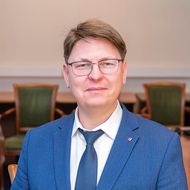
Roman Cheremin
‘There is always a certain gap between fundamental science and everyday practice. They are separated by various legal, financial, informational, and psychological barriers. The global goal of informal cooperation between those sectors is to destroy such barriers, to shorten as much as possible the track from the birth of brand new scientific ideas, discoveries, and inventions to the moment when they become active and efficient in medical practice and work for the benefit of the patient,’ comments Roman Cheremin, Director of the Centre for Speech Pathology and Neurorehabilitation in Moscow. ‘I am certain that the birth of the new consortium will allow us to solve such problems. Achievements in the field of interdisciplinary interaction should become available to all interested parties as quickly as possible, providing them with up-to-date information, multiplying the efforts of Russian scientists and practitioners on the path of technological breakthroughs in national applied science. And this is also where we pin our hopes and expectations of working as part of the new association.’

Oleg Karpov
‘The Pirogov National Medical and Surgical Centre is a multidisciplinary institution that is engaged in medical activities and medical science in a large number of scientific fields. However, our doctors alone will not be able to achieve the goals and objectives that they set for themselves. It makes a lot of sense for neuroscience, which combines several disciplines that study neural processes in a variety of aspects and manifestations. As part of scientific cooperation with HSE in the field of neuroscience, we have already obtained promising results. And now we really need collaboration with scientists and practitioners from other institutions. The new consortium will allow us not only to advance in fundamental sciences, but also to actively introduce the developments of HSE University and partners into our clinical practice,’ says General Director of the Pirogov National Medical and Surgical Centre Oleg Karpov.
The consortium is open to other organisations joining it. To participate, please send a written application from the candidate organisation to HSE University.

See also:

Why Ice Cream Tastes Better in Hot Weather: HSE's Science Republic Takes Part in Popular Science Festival at VDNKh
In early June, the Science Republic initiative of the Centre for Student Academic Development presented popular science projects at the Science and Ice Cream Festival at VDNKh. On June 5, 13, and 14, HSE University ran an extensive programme of events, from lectures to intellectual games. The events took place at the BIOTECH Museum, Museum of Urban Economy of Moscow, and Smart City pavilions.
Wearable Device Data and Saliva Biomarkers Help Assess Stress Resilience
A team of scientists, including researchers from HSE University, has proposed a method for assessing stress resilience using physiological markers derived from wearable devices and saliva samples. The participants who adapted better to stress showed higher heart rate variability, higher zinc concentrations in saliva, and lower potassium levels. The findings were published in the Journal of Molecular Neuroscience.
HSE Researchers Propose New Method of Verbal Fluency Analysis for Early Detection of Cognitive Impairment
Researchers from the HSE Center for Language and Brain and the Mental Health Research Centre have proposed a new method of linguistic analysis that enables the distinction between normal and pathological ageing. Using this approach, they showed that patterns in patients’ word choices during verbal fluency tests allow clinicians to more accurately differentiate clinically significant impairments from subjective memory complaints. Incorporating this type of analysis into clinical practice could improve the accuracy of early dementia diagnosis. The results have been published in Applied Neuropsychology: Adult.
Scientists Reveal How Language Supports Complex Cognitive Processing in the Brain
Valeria Vinogradova, a researcher at HSE University, together with British colleagues, studied how language proficiency affects cognitive processing in deaf adults. The study showed that higher language proficiency—regardless of whether the language is signed or spoken—is associated with higher activity and stronger functional connectivity within the brain network responsible for cognitive task performance. The findings have been published in Cerebral Cortex.
Scientists Show That Peer Influence Can Be as Effective as Expert Advice
Eating habits can be shaped not only by the authority of medical experts but also through ordinary conversations among friends. Researchers at HSE University have shown that advice from peers to reduce sugar consumption is just as effective as advice from experts. The study's findings have been published in Frontiers in Nutrition.
HSE Scientists Uncover How Authoritativeness Shapes Trust
Researchers at the HSE Institute for Cognitive Neuroscience have studied how the brain responds to audio deepfakes—realistic fake speech recordings created using AI. The study shows that people tend to trust the current opinion of an authoritative speaker even when new statements contradict the speaker’s previous position. This effect also occurs when the statement conflicts with the listener’s internal attitudes. The research has been published in the journal NeuroImage.
Language Mapping in the Operating Room: HSE Neurolinguists Assist Surgeons in Complex Brain Surgery
Researchers from the HSE Center for Language and Brain took part in brain surgery on a patient who had been seriously wounded in the SMO. A shell fragment approximately five centimetres long entered through the eye socket, penetrated the cranial cavity, and became lodged in the brain, piercing the temporal lobe responsible for language. Surgeons at the Burdenko Main Military Clinical Hospital removed the foreign object while the patient remained conscious. During the operation, neurolinguists conducted language tests to ensure that language function was preserved.
HSE Scientists Use MEG for Precise Language Mapping in the Brain
Scientists at the HSE Centre for Language and Brain have demonstrated a more accurate way to identify the boundaries of language regions in the brain. They used magnetoencephalography (MEG) together with a sentence-completion task, which activates language areas and reveals their functioning in real time. This approach can help clinicians plan surgeries more effectively and improve diagnostic accuracy in cases where fMRI is not the optimal method. The study has been published in the European Journal of Neuroscience.
Researchers Identify Link between Bilingualism and Cognitive Efficiency
An international team of researchers, including scholars from HSE University, has discovered that knowledge of a foreign language can improve memory performance and increase automaticity when solving complex tasks. The higher a person’s language proficiency, the stronger the effect. The results have been published in the journal Brain and Cognition.
‘Engagement in the Scientific Process’: HSE Launches Master’s Programme in Neurobiology
The HSE University Academic Council has elected to launch a new Master's programme in Neurobiology for students majoring in Biology. Students of the programme will have access to unique equipment and research groups, providing them with the knowledge and experience to pursue careers in science, medicine and pharmacy, IT and neurotechnology, and education and HR services.