

Scientists Show That Peer Influence Can Be as Effective as Expert Advice

Eating habits can be shaped not only by the authority of medical experts but also through ordinary conversations among friends. Researchers at HSE University have shown that advice from peers to reduce sugar consumption is just as effective as advice from experts. The study's findings have been published in Frontiers in Nutrition.
Excessive sugar consumption has become one of the major public health concerns worldwide. According to the World Health Organization, one in eight people globally lives with obesity, and many more are overweight. High intake of sugary foods contributes to an unbalanced diet and increases the risk of developing diabetes, tooth decay, atherosclerosis, cardiovascular disease, and other non-communicable conditions.
As a rule, campaigns promoting healthy eating rely on the authority of experts such as physicians and nutritionists. Scientists set out to determine whether advice from ordinary people—friends and peers—could be just as effective. Researchers at the HSE Institute for Cognitive Neuroscience conducted an experiment involving 88 young adults who answered questions about their consumer behaviour. Participants were randomly assigned to three groups and exposed to different types of messages. The first group listened to a lecture by a nutrition expert on the risks of sugar consumption; the second heard a monologue by a university student presenting the same arguments; and the third listened to a discussion among three students expressing different viewpoints. Before and after the intervention, participants indicated—using an auction-based method—the maximum amount they were willing to pay for various products, including those high in sugar. This approach allowed the researchers to assess participants’ actual intentions rather than self-reported attitudes.

The results showed that all three types of interventions significantly reduced participants’ willingness to pay for sugary products. The key finding was that no statistically significant differences were found between the groups, indicating that peer recommendations were just as effective as expert advice.

Nina Arzumanyan
'In earlier studies, we demonstrated how expert persuasion can influence consumers' decision-making. In this study, for the first time, we show that adults are equally susceptible to both forms of influence—expert and peer endorsement. This may be because adults tend to be more autonomous from authority figures and are more strongly guided by the social norms of their referent group,' notes Nina Arzumanyan, Research Assistant at the International Laboratory of Social Neurobiology of the HSE Institute for Cognitive Neuroscience and first author of the study.
When communicating with peers, identification processes are activated, leading individuals to adopt others’ attitudes in order to maintain relationships within their referent group or because such behaviour aligns with their own value system.
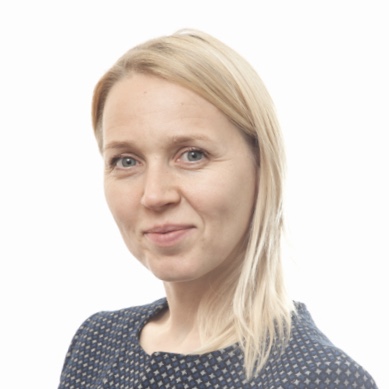
Anna Shestakova
'Using peer persuasion may be a more accessible and scalable approach than relying on experts. People tend to trust those who are similar to them and share comparable life experiences,' comments Anna Shestakova, Director of the Centre for Cognition and Decision Making at the HSE Institute for Cognitive Neuroscience and co-author of the study.
In future work, the researchers plan to investigate the neurocognitive mechanisms underlying the influence of experts and peers on eating behaviour. This research will help clarify why different forms of social influence produce similar outcomes and how interventions aimed at promoting healthy eating habits can be made more effective.

See also:

‘Hedgehog’ Versus ‘Relatives’: Researchers Measure How the Brain Responds to Unexpected Words During Natural Speech
Russian neurophysiologists, including researchers from HSE University, have demonstrated the feasibility of using event-related fields (ERFs) to study brain activity during natural speech perception. The researchers showed that this approach can be applied not only to individual words but also to continuous speech. Their findings indicate that words whose meanings differ significantly from the preceding context require longer processing times. The study also reveals that the brain processes function words in two stages: first, it identifies their grammatical role and then uses this information to predict the next word. The study has been published in Frontiers in Human Neuroscience.
HSE Researchers Create New Corpus of Early Child Speech in Russian
Researchers at the HSE Centre for Language and Brain have presented RusLan-M, an open multimedia corpus that makes it possible to trace the development of early child speech in Russian from first words to the emergence of complex grammatical constructions. The database contains around 41 hours of video recordings and more than 35,000 child utterances. The new resource will help researchers study more precisely how children acquire Russian and, in the longer term, develop more reliable tools for assessing speech development. The study has been published in Language Resources and Evaluation.
Hybrid Intelligence: Competencies in the Age of AI Discussed at Technoprom-2026
Artificial intelligence is not creating new professions, but rather transforming the nature of existing ones. This was the conclusion reached by participants in the panel session ‘Hybrid Intelligence: Digital and Human Drivers of Development,’ organised by the Institute for Statistical Studies and Economics of Knowledge (ISSEK) at HSE University as part of the 13th International Forum of Technological Development (Technoprom-2026). The experts discussed how the nature of work is changing, which skills are becoming increasingly sought after, and what prevents companies from fully capitalising on new technologies.
Scientists Develop New Solution for 6G Communication Systems
A terahertz neuromorphic circuit developed by scientists at HSE University could make 6G communication systems both more accurate and energy-efficient. The circuit enables indoor tracking of mobile devices with an accuracy of up to 99%. The results were presented at PIERS 2026, an international symposium on Photonics and Electromagnetism held in China.
Scientists Develop Algorithm for More Reliable Processors in Data Centres
Researchers from HSE MIEM and Samara University have developed the LRF-3D algorithm to automatically bypass idle nodes in three-dimensional networks-on-chip. Thanks to its hierarchical architecture, the algorithm outperforms existing solutions in both speed and path accuracy, improving processor reliability for use in data centres, supercomputers, and AI computing. The source code and test results are publicly available.
Researchers Rank Recommendation Algorithms Using Sports Tournament Model
Researchers from the AI and Digital Science Institute at the HSE Faculty of Computer Science have developed an approach for selecting recommendation algorithms more effectively. Their approach uses pairwise comparisons of algorithms to create a tournament table, with the overall ranking based on their performance across all datasets in the tournament. This can reduce the number of algorithms that need to be tested when developing new services, saving both time and money. The study was presented at the 32nd ACM SIGKDD Conference on Knowledge Discovery and Data Mining (KDD 2026).
Researchers Develop Method for Direct Generation of Regulatory DNA
Researchers at HSE University have developed a model for generating promoters and enhancers—DNA sequences that regulate gene activity. The model works directly with DNA nucleotides, without first transforming them into a continuous numerical representation. This solution could be useful for applications in synthetic biology and gene therapy. The study results were presented at the ICLR 2026 Workshop ‘Generative AI in Genomics (Gen^2): Barriers and Frontiers.’
Researchers at HSE University and Sber Train Neural Networks to Better Predict User Preferences
The HSE FCS AI and Digital Science Institute and Sber have introduced a new architecture for recommendation systems that combines two classes of models, enabling algorithms to better predict users’ interests and needs. A preprint of the paper has been published on arxiv.org and presented at Urban ML.
Physicists Discover What Happens Inside a Stable Vortex
Large vortices with characteristic spiral arms are often observed in the atmosphere and the ocean. Physicists from HSE University have explained how these structures form and why they retain their shape. The researchers found that velocities at points located along the same vortex arc remain correlated even over long distances. At the same time, this correlation weakens rapidly with increasing distance from the vortex centre. These differences help explain the formation of spiral arms and may improve models of atmospheric and oceanic currents. The findings have been published in Physical Review Fluids.
HSE Computer Science Researchers Win Gold Medal at International Machine Learning Competition
A team comprising HSE International Laboratory of Statistical and Computational Genomics researchers Aleksei Shmelev and Nikita Chervov, 2025 graduate of the HSE Faculty of Computer Science’s Master’s programme in Data Analysis in Biology and Medicine Ivan Gevorkov, and two students from the United States achieved an outstanding result at the 2026 NeuroGolf international machine learning championship. The team won a gold medal and placed seventh overall.