

International Laboratory of Social Neurobiology to Look at How Fake News Affects Human Behaviour
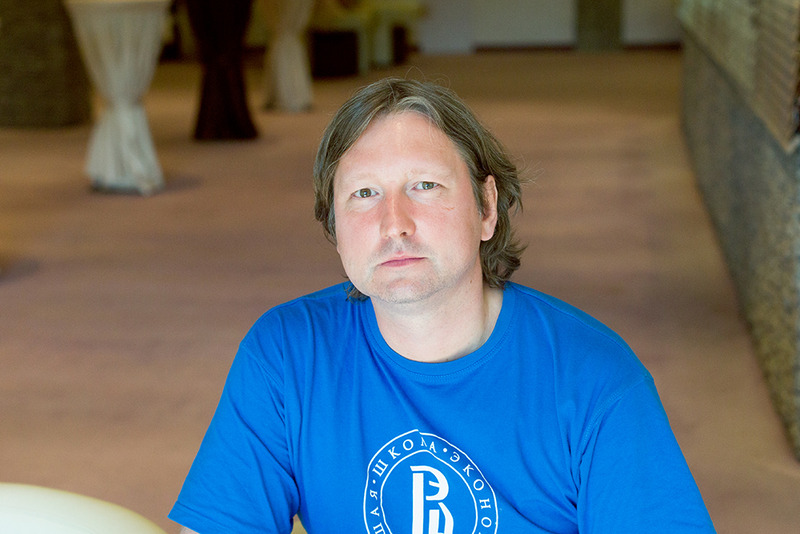
The mega-grant allocated by the Russian government to the International Laboratory of Social Neurobiology, has been extended for 2022-23. The laboratory was founded two years ago and is headed by Iiro Jaaskelainen, a leading neurobiologist from Finland. Laboratory Head Vasily Klucharev spoke to the HSE News Service about the results the lab has already achieved and the prospects for the next two years.
In a very short amount of time, we have managed to create the first world-class Russian laboratory that studies how our brain perceives social information and makes social decisions.
An important area of our work is related to economic behaviour. We study not only how our brain operations affect our economic decisions, but also how our decisions impact our brain. We are looking closely at the ideas of Nobel prize winner Robert Shiller, who believes that many things in our behaviour, including economic behaviour, depend on the narratives we hear around us. All these stories motivate (or demotivate) people in terms of certain economic actions.
Another important area is the study of social norms, and we have already received some interesting results here. For example, our researcher Oksana Zinchenko studied whether we are egoists or altruists by nature. Some academics believe that people have an inherent social motive to care about each other. Others say that people are natural egoists, and when they care, they have to suppress this intrinsic trait. Our study proves that, more likely than not, people are naturally inclined to help others. We were able to temporarily suppress cortical activity in the experiment participants and observe the changes in their prosocial behaviour.
I have to say that many brain studies have demonstrated the crucial role of the cortex in self-control processes. The question arises: if we suppress the neurobiological mechanisms of self-control in a human, will they become more of an altruist or more of an egoist? The ‘intuitive’ altruism theory suggests that cortex suppresses the intuitive altruistic behaviour, while the ‘reflexive’ theory assumes that cortex suppresses our egoistic impulses.
If the first theory is true, suppressing the cortex should increase the experiment participants’ generosity. According to the second theory, suppressing the cortex, on the contrary, would lead to egoistic behaviour. Our results showed that temporal suppression of the cortex through the use of transcranial magnet stimulation (TMS) increased altruistic behaviour: people shared with strangers more, particularly when this altruism demanded minimal personal cost from them. Our results confirm the ‘intuitive’ theory of altruism, which says that people are intuitive altruists, and suppression of the self-control system releases their natural pursue of justice.
I would also like to mention our fruitful cooperation with Aalto University, Finland: its researchers help us master the most cutting-edge methods for registering and processing the activity of the human brain and have assisted us in implementing machine learning methods in cognitive neurobiology studies. I was particularly happy to hear our Academic Supervisor Iiro Jaaskelainen say that ‘a similar intellectual atmosphere, and students as talented as those here, can probably only be found at Harvard’.
Over the next two years, the International Laboratory of Social Neurobiology will study how social disinformation (fake news) is perceived by people and how it can affect their behaviour. For this project, we are going to collaborate with our colleagues in media communications and computer science. We are going to use a method of studying brain activity in media narrative perception that is new for Russia.
We will use inter-subject correlation analysis to see how brain activity is synchronized in a group of people who are watching the same video, such as news coverage, or are listening to an audio message. This method will help us see synchronized activity in people who watch viral fake news, in order to better understand which parts of the message have the strongest impact on viewers.
We are also going to look for approaches in media literacy teaching that can promote critical perception of fake news. Semantic analysis of associations caused by fake news, through the use of the most up-to-date computer algorithms, will help us better understand the effects of disinformation on our perception. We hope that during the next stage of the project, we will be able to uncover the mechanisms of how the digital social environment, which is full of both true and false information, affects our brain.

See also:

Wearable Device Data and Saliva Biomarkers Help Assess Stress Resilience
A team of scientists, including researchers from HSE University, has proposed a method for assessing stress resilience using physiological markers derived from wearable devices and saliva samples. The participants who adapted better to stress showed higher heart rate variability, higher zinc concentrations in saliva, and lower potassium levels. The findings were published in the Journal of Molecular Neuroscience.
HSE Researchers Propose New Method of Verbal Fluency Analysis for Early Detection of Cognitive Impairment
Researchers from the HSE Center for Language and Brain and the Mental Health Research Centre have proposed a new method of linguistic analysis that enables the distinction between normal and pathological ageing. Using this approach, they showed that patterns in patients’ word choices during verbal fluency tests allow clinicians to more accurately differentiate clinically significant impairments from subjective memory complaints. Incorporating this type of analysis into clinical practice could improve the accuracy of early dementia diagnosis. The results have been published in Applied Neuropsychology: Adult.
Scientists Reveal How Language Supports Complex Cognitive Processing in the Brain
Valeria Vinogradova, a researcher at HSE University, together with British colleagues, studied how language proficiency affects cognitive processing in deaf adults. The study showed that higher language proficiency—regardless of whether the language is signed or spoken—is associated with higher activity and stronger functional connectivity within the brain network responsible for cognitive task performance. The findings have been published in Cerebral Cortex.
Scientists Show That Peer Influence Can Be as Effective as Expert Advice
Eating habits can be shaped not only by the authority of medical experts but also through ordinary conversations among friends. Researchers at HSE University have shown that advice from peers to reduce sugar consumption is just as effective as advice from experts. The study's findings have been published in Frontiers in Nutrition.
HSE Scientists Uncover How Authoritativeness Shapes Trust
Researchers at the HSE Institute for Cognitive Neuroscience have studied how the brain responds to audio deepfakes—realistic fake speech recordings created using AI. The study shows that people tend to trust the current opinion of an authoritative speaker even when new statements contradict the speaker’s previous position. This effect also occurs when the statement conflicts with the listener’s internal attitudes. The research has been published in the journal NeuroImage.
Language Mapping in the Operating Room: HSE Neurolinguists Assist Surgeons in Complex Brain Surgery
Researchers from the HSE Center for Language and Brain took part in brain surgery on a patient who had been seriously wounded in the SMO. A shell fragment approximately five centimetres long entered through the eye socket, penetrated the cranial cavity, and became lodged in the brain, piercing the temporal lobe responsible for language. Surgeons at the Burdenko Main Military Clinical Hospital removed the foreign object while the patient remained conscious. During the operation, neurolinguists conducted language tests to ensure that language function was preserved.
HSE Scientists Use MEG for Precise Language Mapping in the Brain
Scientists at the HSE Centre for Language and Brain have demonstrated a more accurate way to identify the boundaries of language regions in the brain. They used magnetoencephalography (MEG) together with a sentence-completion task, which activates language areas and reveals their functioning in real time. This approach can help clinicians plan surgeries more effectively and improve diagnostic accuracy in cases where fMRI is not the optimal method. The study has been published in the European Journal of Neuroscience.
Researchers Identify Link between Bilingualism and Cognitive Efficiency
An international team of researchers, including scholars from HSE University, has discovered that knowledge of a foreign language can improve memory performance and increase automaticity when solving complex tasks. The higher a person’s language proficiency, the stronger the effect. The results have been published in the journal Brain and Cognition.
‘Engagement in the Scientific Process’: HSE Launches Master’s Programme in Neurobiology
The HSE University Academic Council has elected to launch a new Master's programme in Neurobiology for students majoring in Biology. Students of the programme will have access to unique equipment and research groups, providing them with the knowledge and experience to pursue careers in science, medicine and pharmacy, IT and neurotechnology, and education and HR services.
Scientists Discover That the Brain Responds to Others’ Actions as if They Were Its Own
When we watch someone move their finger, our brain doesn’t remain passive. Research conducted by scientists from HSE University and Lausanne University Hospital shows that observing movement activates the motor cortex as if we were performing the action ourselves—while simultaneously ‘silencing’ unnecessary muscles. The findings were published in Scientific Reports.