

Specialists from the HSE Institute of Education Confirm GigaChat’s Erudition in Social Sciences
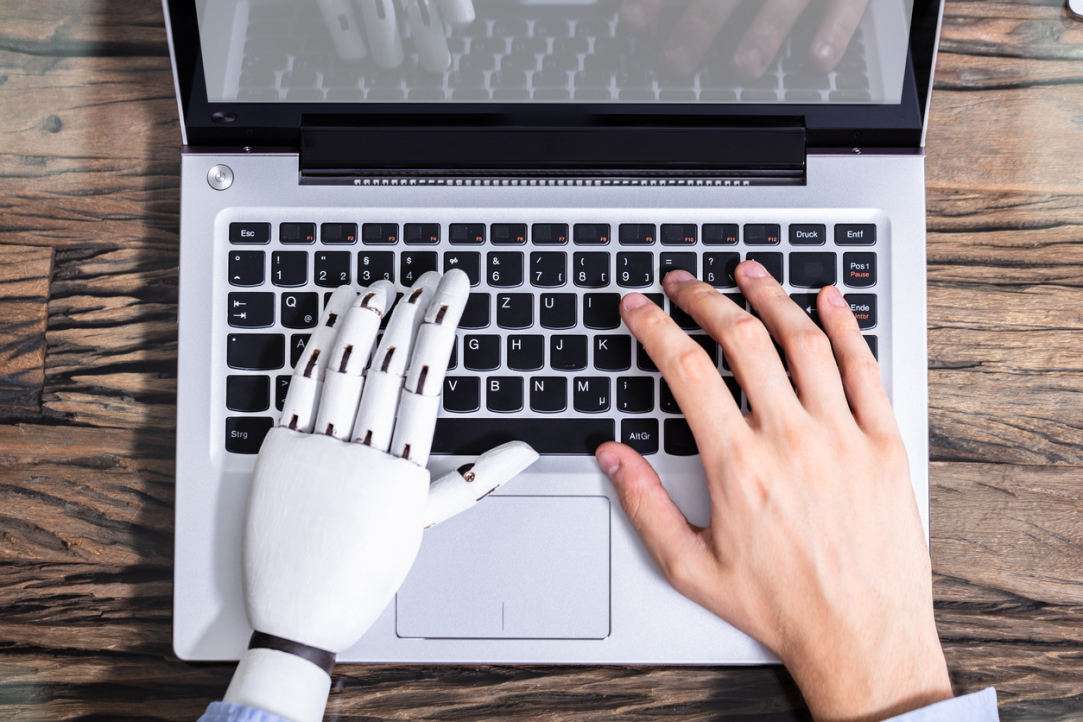
A multimodal neural network model by Sber, under the supervision of HSE University’s expert commission, has successfully passed the Unified State Exam in social studies. GigaChat completed all exam tasks and scored 67 points.
This result exceeds the minimum score for applying to university (45 points) and the average score for the subject in 2023 (56.4 points).
Denis Filippov, Vice President of Salyut Digital Surfaces, Sberbank, spoke about this at the AIJ 2023 conference.
The tests were held to check the capabilities of the updated version of GigaChat, which is based on a highly advanced model of the Russian language with 29 billion parameters.
To conduct the experiment, the chosen subject was social studies—a school discipline that covers the fields of economics, law, and social sciences. Thus, the model’s ability to successfully pass the exam demonstrates a high degree of maturity in its awareness of social norms, as well as economic and legal laws.
To test GigaChat’s knowledge, the team used only relevant test tasks for 2024, which were posted on the website of the Federal Institute of Pedagogical Measurements. Before the experiment, the team made sure that these tasks were not used to pre-train the model. GigaChat’s answers were checked first by an independent expert from HSE University, and then by an expert commission from HSE University’s Institute of Education. The correctness of the task setting and the reliability of GigaChat’s factual answers were assessed, as was the quality of performing creative (open) tasks.

Denis Filippov, Vice President of Salyut Digital Surfaces, Sberbank
‘It is important for us to evaluate the effectiveness of GigaChat not only by technical metrics, but also from the viewpoint of an ordinary person: whether the service is able to help in any particular area of knowledge and how smart and creative the model is. Tests used in the educational system, including the Unified State Exam, are well suited for such an assessment. The exam results show that GigaChat is “well-read” in the field of social sciences. This means that our artificial intelligence “understands” the basic laws of society and has a good sense of morality issues. This is further evidence that our service can be used to solve real-life fact-related problems: just ask a question in a natural way, and GigaChat will give you an accurate answer or help you understand a complex topic.’

Evgeniy Terentev, Director of HSE University’s Institute of Education
‘Our experts assessed GigaChat’s knowledge independently of Sber research and engineering teams. We checked the answers in the same way as if they were given by an ordinary high school graduate. The results show that the neural network model not only has a sufficient level of factual knowledge, but is also capable of thinking logically and choosing the best solution possible.’
Soon, anyone interested will be able to conduct an experiment similar to that conducted jointly with HSE University: GigaChat developers are preparing a special script for publication on GitHub. It will allow users to test how Sber’s neural network model passes the Unified State Exam with ‘one button’, without the need to manually enter the texts of tasks.

See also:

Neural Network Maps as a Method for Constructing Mathematical Models
Scientists from HSE University–Nizhny Novgorod and the Institute of Physics Belgrade, Serbia, are jointly exploring the application of machine learning techniques and neural networks to the study of nonlinear dynamics. Natalya Stankevich, Leading Research Fellow at the Laboratory of Topological Methods in Dynamics of the Faculty of Informatics, Mathematics, and Computer Science at HSE University–Nizhny Novgorod, spoke to the HSE News Service about this international project.
Teaching a Machine to Read the Past: HSE Develops Neural Network to Decipher Manuscripts
Diaries and letters are an invaluable resource for humanities scholars. But what can be done when the text is impossible to read? At the HSE Faculty of Humanities, this challenge has been translated into the language of mathematics: a team of philologists, historians, and machine learning specialists has created an information system that not only recognises illegible handwriting but also helps analyse archival content.
How Neural Networks Detect and Interpret Wordplay: New Insights from HSE Researchers
An international team including researchers from the HSE Faculty of Computer Science has presented KoWit-24, an annotated dataset of 2,700 Russian-language Kommersant news headlines containing wordplay. The dataset enables an assessment of how artificial intelligence detects and interprets wordplay. Experiments with five large language models show that even advanced systems still make mistakes, and that interpreting wordplay is more challenging for them than detecting it. The results were presented at the RANLP conference; the paper is available on Arxiv.org, and the dataset and the code for reproducing the experiments are available on GitHub.
Educational Programmes on Robotics and Neural Network Technologies Launch at HSE University’s Faculty of Computer Science
Every year, in response to IT industry demands, the Higher School of Economics Faculty of Computer Science launches new educational programmes while updating existing ones. In 2026, the faculty introduced Bachelor’s and Master’s degree programmes in robotics for the first time.
Group and Shuffle: Researchers at HSE University and AIRI Accelerate Neural Network Fine-Tuning
Researchers at HSE University and the AIRI Institute have proposed a method for quickly fine-tuning neural networks. Their approach involves processing data in groups and then optimally shuffling these groups to improve their interactions. The method outperforms alternatives in image generation and analysis, as well as in fine-tuning text models, all while requiring less memory and training time. The results have been presented at the NeurIPS 2024 Conference.
‘When You Have a Lot to Do, You Find Time for Everything’
Egor Churaev specialises in neural networks. In an interview for the HSE Young Scientists project, he talked about his program for determining the emotions and engagement of online conference participants, his trip to Brazil, and his sports hobbies.
Virtual Mozart, Venture Capital Bot, and Educational Video Generation: How AI is Used at HSE University
In mid-November, HSE University hosted a meetup where faculty, researchers, and administrators presented their projects and shared experiences with using AI technologies in education and research. The meeting was part of the continuing professional development programme 'Artificial Intelligence in Education and Research.'
Beauty in Details: HSE University and AIRI Scientists Develop a Method for High-Quality Image Editing
Researchers from theHSE AI Research Centre, AIRI, and the University of Bremen have developed a new image editing method based on deep learning—StyleFeatureEditor. This tool allows for precise reproduction of even the smallest details in an image while preserving them during the editing process. With its help, users can easily change hair colour or facial expressions without sacrificing image quality. The results of this three-party collaboration were published at the highly-cited computer vision conference CVPR 2024.
HSE University at VK Fest: VR Games and Emotion Recognition
On July 13-14, 2024, the annual large-scale VKontakte festival took place at Moscow’s Luzhniki Stadium. HSE University, as usual, participated in the event. The university's tent featured a variety of activities, including emotion recognition challenge, quizzes about artificial intelligence, IT career testing, a smile detector, VR gaming, and a blue tractor equipped with a smart sprinkler system.
Russian Researchers Improve Neural Networks' Spatial Navigation Performance
Researchers at HSE University, MISiS National University of Science and Technology, and the Artificial Intelligence Research Institute (AIRI) have developed an enhanced approach to reinforcement learning for neural networks tasked with navigation in three-dimensional environments. By using the attention mechanism, they managed to improve the performance of a graph neural network by 15%. The study results have been published in IEEE Access.