

Russia and China: A New Cooperation Trajectory Developed at HSE University
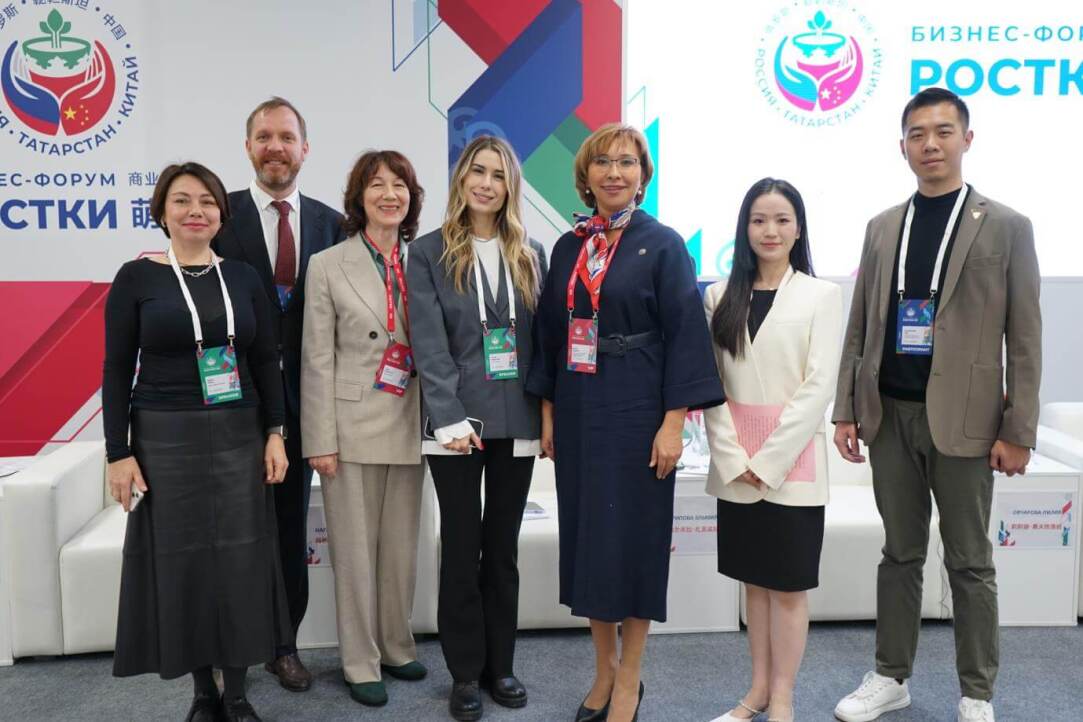
A unique approach to measuring human well-being has been developed at HSE University, opening up new opportunities for international collaboration. Russia and China, both of which have significantly reduced poverty in recent years, demonstrate a unique potential for joint efforts in this area. At an international forum in Kazan titled ‘SPROUTS: Russia and China–Mutually Beneficial Cooperation,’ HSE University representatives, including Vice Rector and initiator of the Human Capital Multidisciplinary Research Centre Lilia Ovcharova, and Deputy Vice Rector Maria Nagernyak, emphasised the importance of integrating the efforts of the two countries.
Speaking at the session ‘Best Practices in Poverty Reduction,’ organised as part of the forum by the Ministry of Labour, Employment, and Social Protection of the Republic of Tatarstan, HSE University representatives noted changes in Russia’s official approach to poverty measurement in 2021. Russia introduced two poverty lines: one for monitoring and the other for determining eligibility for social benefits.
‘Russia and China are two countries that have significantly reduced poverty over the last decade. Poverty is a relative concept in time and space. Criteria used to define poverty 20 years ago may no longer be relevant today. Since 2021, Russia has applied two poverty lines: one for monitoring and another for social benefit payments. Researchers also assess subjective poverty and deprivation poverty, and the groups identified under these concepts often do not overlap,’ Lilia Ovcharova explained.


Currently, both science and policy are undergoing a conceptual shift from measuring and evaluating poverty to focusing on well-being. Russia and China are two countries that have substantially reduced poverty over the last ten years, which is why their bilateral cooperation in enhancing well-being is seen as particularly promising.
‘We are witnessing a change in how the quality and standard of living are studied, shifting from poverty assessment to well-being evaluation. Both we and our Chinese colleagues are moving in this direction, which offers great potential for cooperation and joint scientific research and events,’ Maria Nagernyak concluded.
HSE University has already achieved notable results in studying human well-being. This includes developing an expanded definition of well-being, identifying key policy priorities for improving well-being and reducing poverty by 2030, and establishing new material well-being standards for families with two and three children in Russia.
Additionally, representatives from the Human Capital Multidisciplinary Research Centre highlighted strategic measures Russia is implementing to improve population well-being, which could form the basis for bilateral cooperation:
- income: raising the minimum wage, accelerating median wage growth, and introducing targeted benefits for families with children
- housing and living conditions: implementing maternity capital and family mortgages
- support for birth rates: increasing minimum wages, accelerating median wage growth, and introducing targeted benefits for families with children
- active longevity: increasing life expectancy to 78 years by 2030 and to 81 years by 2036
At the session’s conclusion, Elmira Zaripova, Minister of Labour, Employment, and Social Protection of the Republic of Tatarstan, thanked the forum participants and noted the evident prospects for cooperation between Russia and China, particularly between HSE University and Beijing Normal University.
‘Thanks to our esteemed colleagues, HSE University scholars Lilia Ovcharova and Maria Nagernyak, the session presented scientific findings on poverty analysis in Russia and the transition from the concept of poverty to well-being. A similar approach is supported by Zhang Qi, Director of the China Institute of Poverty Reduction at Beijing Normal University. Studying effective practices for raising incomes is a promising area of scientific and practical activity for both Russia and China, as well as for research institutions and practitioners working in the regions,’ Elmira Zaripova stated.

See also:

HSE Graduate School of Business and Alfa-Bank Hold Summer School for Students from China
Twenty-seven students from Chinese universities took part in the international summer school ‘Digital Product Management’ organised by the HSE Graduate School of Business and Alfa-Bank. Over the course of a week, participants explored the Russian economy and business environment, learned about current technology trends, and worked through the key stages of digital product development step by step—from researching user needs and defining a problem to developing a prototype and presenting their final project.
Advancing Collaboration: HSE Faculty of Computer Science and Harbin Institute of Technology Hold Joint Seminar
From July 13 to 16, 2026, the Faculty of Computer Science hosted the Russian–Sino Research Seminar on Machine Learning Applications, organised by the HSE Laboratory for Cloud and Mobile Technologies in partnership with the Harbin Institute of Technology (China). A delegation comprising seven students and three university representatives travelled to Moscow to take part in an intensive four-day programme.
‘There’s a Big Practical Component in My Programme—That’s Especially Important in This Field’
Zou Jiaxu moved to Moscow from Heihe, China, at a young age. Having finished high school in Moscow, she decided to enrol in the Bachelor’s in Media Communications at the Institute of Media of the HSE Faculty of Creative Industries. Now in her second year of studies, Zou talked to the HSE News Service about the opportunities for practical experience available to HSE students, her volunteering and extracurricular activities, why learning Russian is a never-ending process, and the importance of making friends wherever you go.
International Dialogue and New Approaches: Highlights from Fudan University’s Summer School
At the beginning of July 2026, students from the HSE Faculty of World Economy and International Affairs took part in the Summer School on International Relations organised by Fudan University (China), one of the leading international educational programmes in this field. Over the course of two weeks, they explored contemporary approaches to global governance and the development of the Global South, attended lectures by renowned scholars from around the world, and discussed current international issues with fellow students from across the globe.
‘We Are Always Open to Collaboration, and China Is One of Our Most Important Partners’
From July 20 to 27, 2026, the HSE Faculty of Urban and Regional Development (FURD) is hosting a summer school for students from Tianjin University dedicated to the preservation of cultural heritage. Throughout the week, participants have attended lectures, practical workshops, and field visits to some of Moscow’s most iconic heritage sites. The summer school is the faculty’s first international programme of this kind and forms part of the expanding educational cooperation between Russia and China.
HSE University and Peking University Expand Their Partnership
Peking University President Gao Song paid his first visit to HSE University as part of his first overseas trip since taking office in May 2026. The main purpose of the talks was to consolidate existing areas of cooperation and expand joint projects between HSE University and Peking University within the framework of the Cross Years of Russia–China Cooperation in Education (2026–2027).
Three Weeks in Shanghai: HSE University–St Petersburg Students Study International Politics at Leading Chinese University
Students of the Bachelor's programme 'Political Science and World Politics' at HSE University–St Petersburg participated in the Summer School at Fudan University in Shanghai. For three weeks, they studied world geopolitics and Chinese diplomatic strategies.
‘Architecture, Nature, Cuisine—Everything in China Is Astonishing’
This year, Elizaveta Zorina is completing her Master’s degree in Artificial Intelligence Hardware and Software at the HSE Tikhonov Moscow Institute of Electronics and Mathematics (HSE MIEM). In autumn 2025, she spent six months in China as part of an academic mobility programme. In this interview, she shares her experience of studying at the School of Information Science and Engineering at Shandong University.
Education in a Changing World: Russian–Chinese Dialogue in Beijing
How are universities, vocational education systems, and researcher training programmes evolving in response to new challenges? These questions were at the heart of the international forum ‘Reconfiguring Education in a Changing World: Russia–China Dialogues on Higher Education, Skills, and Research Training’, held in China in mid-June. The event was jointly organised by the HSE Institute of Education and the Graduate School of Education of Peking University, which hosted the forum on its campus.
Mathematicians from Nizhny Novgorod and Shanghai Study System Stability
Mathematicians at HSE University–Nizhny Novgorod, in collaboration with colleagues from Tongji University in Shanghai, are investigating the fundamental causes of structural stability in systems and the mechanisms underlying its disruption. In this interview with the HSE News Service, Prof. Olga Pochinka, Head of the International Laboratory of Dynamical Systems and Applications at HSE University–Nizhny Novgorod and leader of the project ‘Qualitative Theory of Systems of Ordinary and Partial Differential Equations,’ discusses the project, which is being implemented as part of HSE University's International Academic Cooperation programme.