

Can the Brain Resist the Group Opinion?
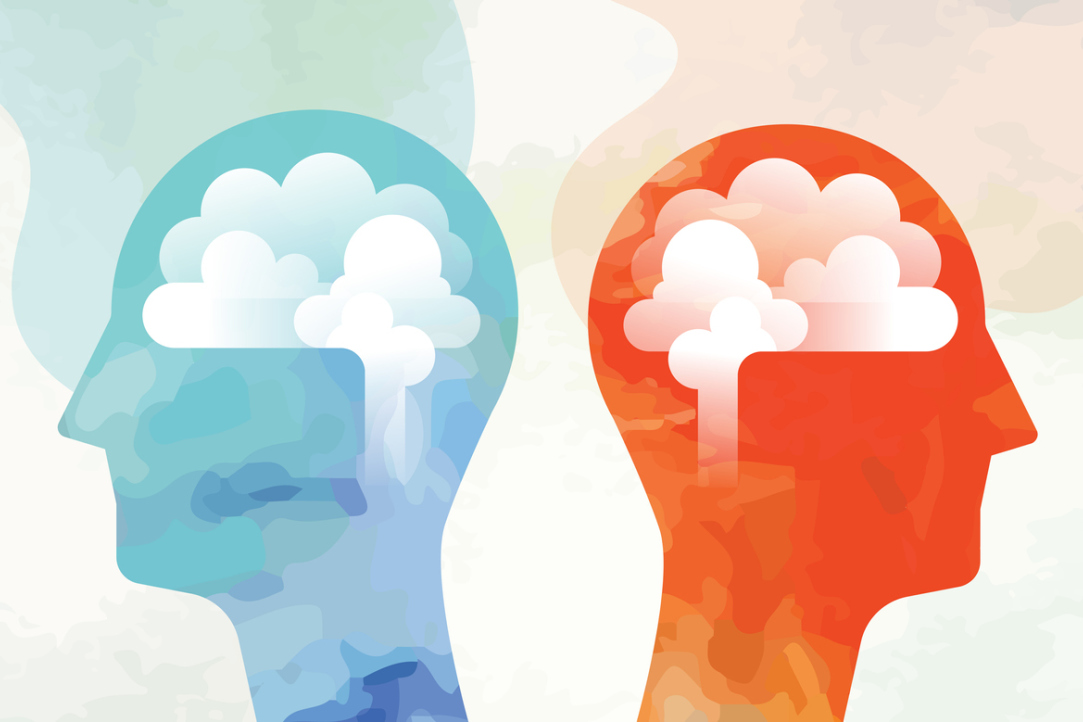
Scientists at HSE University have learned that disagreeing with the opinion of other people leaves a ‘trace’ in brain activity, which allows the brain to later adjust its opinion in favour of the majority-held point of view. The article was published in Scientific Reports.
We often change our beliefs under the influence of others. This social behavior is called conformity and explains varios components of our behaviour, from voting at elections to fashion trends among teenagers.
Brain research has recently well informed about short-term effects of social influence on decision making. If our choice coincides with the point of view of the people who are important to us, this decision is reinforced in the brain's “pleasure” centres involved in the larger dopaminergic system responsible for learning, motor activity and many other functions. Conversely, in instances of disagreement with others, the brain signals that a ‘mistake’ has been made and triggers conformity.
However, there is little study of how social influence affects brain activity once some time has passed after we have formed an opinion and learned of the opinion held by others. HSE neuroscientists decided to study whether the opinion of others causes long-term changes in brain activity. The scientists used magnetoencephalography (MEG), a unique method that allows you to see in detail activity of the human brain during information processing, and it has a temporal resolution higher than that of traditional fMRI.
At the beginning of the experiment, 20 female participants rated the degree to which they trusted strangers whose faces were depicted in a series of photographs. They then were informed about the collective opinion of a large group of peers on whether to trust these strangers. Sometimes the opinion of the group contradicted the opinion of the participants, and sometimes it coincided with it. After half an hour, the subjects were asked to reassess their trust to the same strangers.

HSE University Professor Vasily Klucharev, one of the authors of the study
‘Our study shows the dramatic influence of others’s opinion on how we perceive information. We live in social groups and automatically adjust our opinions to that of the majority, and the opinion of our peers can change the way our brain processes information for a relatively long time.’
The study showed that the participants changed their opinion about a stranger under the influence of their peers in about half of the cases. In addition, changes occurred in their brain activity: scientists discovered ‘traces’ of past disagreements with peers. When the subjects again saw the face of a stranger, after a split second, their brain signaled that last time their personal opinion did not coincide with the assessment given by their peers. Most likely, the fixation of this signal allows the brain to predict possible conflicts in the future arising from disagreements in order to avoid them, and this probably occurs subconsciously.
It is interesting that an area such as the superior parietal cortex, an area of the brain responsible for retrieving memories, is involved in coding the signal of past disagreements with the group. It is likely that the faces of strangers, about whom the brain encountered a difference of opinion, are remembered better than others.
Thus, the opinions of others not only influence our behavior, but also cause long-term changes in the way our brains work. Apparently, the brain not only quickly adjusts to the opinions of others, but also begins to perceive information through the eyes of the majority in order to avoid social conflicts in the future.

Aleksei Gorin, a PhD student at HSE University
‘It was very interesting to use modern methods of neuro-mapping and to see traces of past conflicts with the opinion of the group in the brain’s activity. The brain absorbs the opinion of others like a sponge and adjusts its functions to the opinion of its social group.’

Aleksei Gorin
Junior Research Fellow, International Laboratory of Social Neurobiology
Vasily Klucharev
Director of the Institute of Cognitive Neuroscience
See also:

Wearable Device Data and Saliva Biomarkers Help Assess Stress Resilience
A team of scientists, including researchers from HSE University, has proposed a method for assessing stress resilience using physiological markers derived from wearable devices and saliva samples. The participants who adapted better to stress showed higher heart rate variability, higher zinc concentrations in saliva, and lower potassium levels. The findings were published in the Journal of Molecular Neuroscience.
HSE Researchers Propose New Method of Verbal Fluency Analysis for Early Detection of Cognitive Impairment
Researchers from the HSE Center for Language and Brain and the Mental Health Research Centre have proposed a new method of linguistic analysis that enables the distinction between normal and pathological ageing. Using this approach, they showed that patterns in patients’ word choices during verbal fluency tests allow clinicians to more accurately differentiate clinically significant impairments from subjective memory complaints. Incorporating this type of analysis into clinical practice could improve the accuracy of early dementia diagnosis. The results have been published in Applied Neuropsychology: Adult.
Scientists Reveal How Language Supports Complex Cognitive Processing in the Brain
Valeria Vinogradova, a researcher at HSE University, together with British colleagues, studied how language proficiency affects cognitive processing in deaf adults. The study showed that higher language proficiency—regardless of whether the language is signed or spoken—is associated with higher activity and stronger functional connectivity within the brain network responsible for cognitive task performance. The findings have been published in Cerebral Cortex.
Scientists Show That Peer Influence Can Be as Effective as Expert Advice
Eating habits can be shaped not only by the authority of medical experts but also through ordinary conversations among friends. Researchers at HSE University have shown that advice from peers to reduce sugar consumption is just as effective as advice from experts. The study's findings have been published in Frontiers in Nutrition.
HSE Scientists Uncover How Authoritativeness Shapes Trust
Researchers at the HSE Institute for Cognitive Neuroscience have studied how the brain responds to audio deepfakes—realistic fake speech recordings created using AI. The study shows that people tend to trust the current opinion of an authoritative speaker even when new statements contradict the speaker’s previous position. This effect also occurs when the statement conflicts with the listener’s internal attitudes. The research has been published in the journal NeuroImage.
Language Mapping in the Operating Room: HSE Neurolinguists Assist Surgeons in Complex Brain Surgery
Researchers from the HSE Center for Language and Brain took part in brain surgery on a patient who had been seriously wounded in the SMO. A shell fragment approximately five centimetres long entered through the eye socket, penetrated the cranial cavity, and became lodged in the brain, piercing the temporal lobe responsible for language. Surgeons at the Burdenko Main Military Clinical Hospital removed the foreign object while the patient remained conscious. During the operation, neurolinguists conducted language tests to ensure that language function was preserved.
HSE Scientists Use MEG for Precise Language Mapping in the Brain
Scientists at the HSE Centre for Language and Brain have demonstrated a more accurate way to identify the boundaries of language regions in the brain. They used magnetoencephalography (MEG) together with a sentence-completion task, which activates language areas and reveals their functioning in real time. This approach can help clinicians plan surgeries more effectively and improve diagnostic accuracy in cases where fMRI is not the optimal method. The study has been published in the European Journal of Neuroscience.
Researchers Identify Link between Bilingualism and Cognitive Efficiency
An international team of researchers, including scholars from HSE University, has discovered that knowledge of a foreign language can improve memory performance and increase automaticity when solving complex tasks. The higher a person’s language proficiency, the stronger the effect. The results have been published in the journal Brain and Cognition.
‘Engagement in the Scientific Process’: HSE Launches Master’s Programme in Neurobiology
The HSE University Academic Council has elected to launch a new Master's programme in Neurobiology for students majoring in Biology. Students of the programme will have access to unique equipment and research groups, providing them with the knowledge and experience to pursue careers in science, medicine and pharmacy, IT and neurotechnology, and education and HR services.
Scientists Discover That the Brain Responds to Others’ Actions as if They Were Its Own
When we watch someone move their finger, our brain doesn’t remain passive. Research conducted by scientists from HSE University and Lausanne University Hospital shows that observing movement activates the motor cortex as if we were performing the action ourselves—while simultaneously ‘silencing’ unnecessary muscles. The findings were published in Scientific Reports.