

HSE Faculty of Law Students Make it to Final Round of European Human Rights Moot Court Competition
A team of students from the HSE Faculty of Law has made it to the final round of the international European Human Rights Moot Court Competition, which will take place in Strasbourg, France on February 15-18 of this year.
CFA Institute Confirms Partner Status of Two HSE Programmes
CFA Institute, an international organization that unites tens of thousands financial experts from all over the world, has confirmed the partner status of the Financial Analyst Master’s programme and the Investment Management MBA programme, both of which are taught at the HSE Banking Institute.
Science and Philosophy in Early Modern Europe
On Friday 29th January Andrea Strazzoni, a PhD candidate on Early Modern Philosophy at Erasmus University, Rotterdam and HSE Visiting Fellow gave a seminar at HSE on The Foundation of Science in Early Modern Philosophy: Mental Faculties, Physical Principles and Evident Knowledge.

'All Business Ideas Are Meaningless until You Bring Them to Life'
Working with fine art is not only about well-known artists and beautiful paintings; it also requires precise calculation, analysis, management, and even psychology. Art can be a business, and an entirely interesting business at that. HSE alumna Ekaterina Plastinina, who founded and co-owns the art agency Alma Arts, sat down with Success Builder to discuss how to become a connoisseur of the auction business, how to successfully purchase a painting, and why Dubai is better than London.
Young Scholar Explores the Effect of Weak Institutions on Support for Social Policy
On January 26, Israel Marques, Post-Doctoral Research Fellow at the HSE International Centre for the Study of Institutions and Development, delivered a lecture at HSE St. Petersburg entitled ‘Institutional Qualities and Individual Preferences in Social Policy’. Following the lecture, he agreed to speak with the HSE news service about his research interests, his time at HSE and his experience living and working in Russia.
‘I Heard Russian People Don't Like to Smile. That's a Misunderstanding’
Sophia Cao is an international student taking a semester at HSE Moscow. She attends courses at the World Economy and International Affairs Faculty and at the Public Policy Department. Sophia chose to take a semester in Moscow after she joined the AIESEC global citizen programme, which aims to empower young people to make a positive impact on society. She told HSE News how one thing led to another.
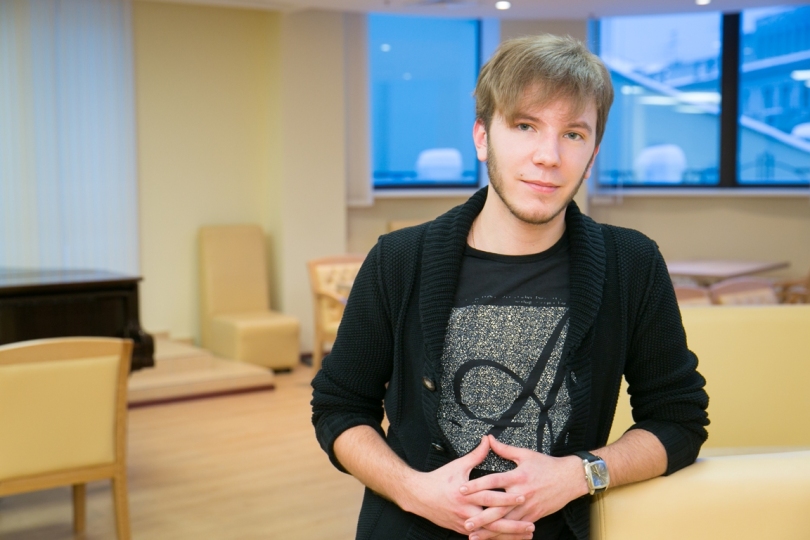
'I Want to Convince Students that Having an Ombudsman Is Helpful and Effective'
In December 2015, HSE elected its first Student Ombudsman — master’s student Ivan Chernyavsky. In an interview with HSE, Ivan talks about his upcoming plans, as well as the problems that he already faces in his new role as Ombudsman.
World War II in China — Seriously Understudied History
On 22 January, 2016 Judd Kinzley, Assistant Professor at the Department of History, University of Wisconsin-Madison, USA gave a presentation, ‘Wartime Atrocities and the Historical Legacies of World War II in China’at the academic seminar of the HSE International Center for the History and Sociology of World War II and Its Consequences.
-26%
was the consumer confidence index in the fourth quarter of 2015. This is one of the lowest indicators in the six years following the 2008-2009 crisis.
Open Houses for International Programmes
Interested in learning more about international programmes at HSE? Open House events are being held across HSE campuses in Moscow, St. Petersburg and Nizhny Novgorod. Prospective students and their parents are invited to attend and learn about HSE’s English-taught education programmes.
Registration Deadline: September 22, 2026