

‘Exploring Entrepreneurship’ Summer School: Results and Impressions
Entrepreneurship influences economics, social relations, and the dynamics of global development, and, of course, it needs to be studied on an interdisciplinary level. The European Summer School ‘Exploring Entrepreneurship’, of which the HSE is a founder and participant, recently took place in Thessaloniki (Greece).


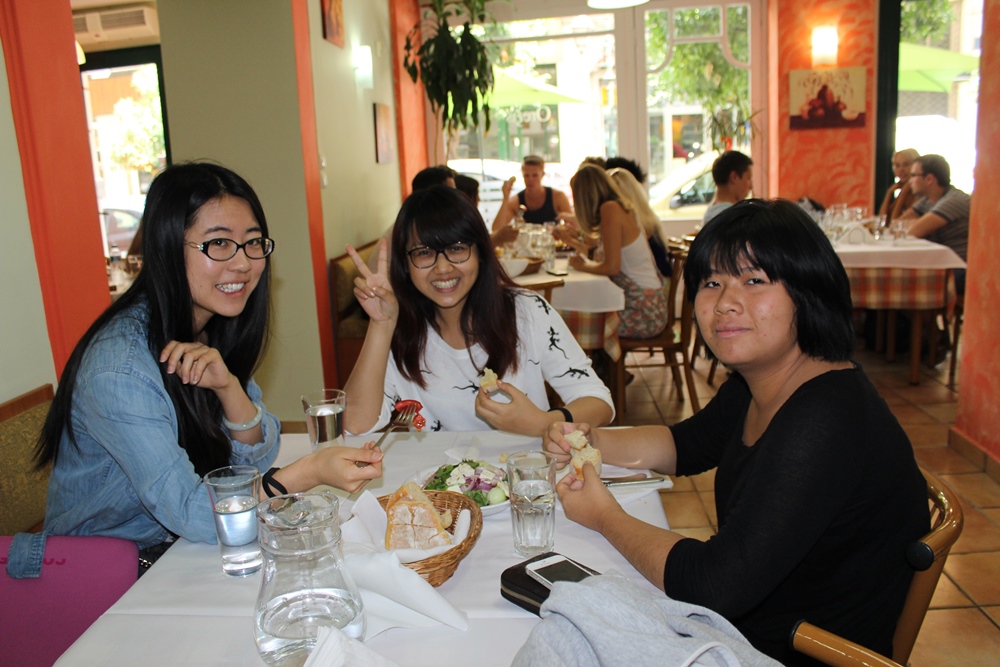

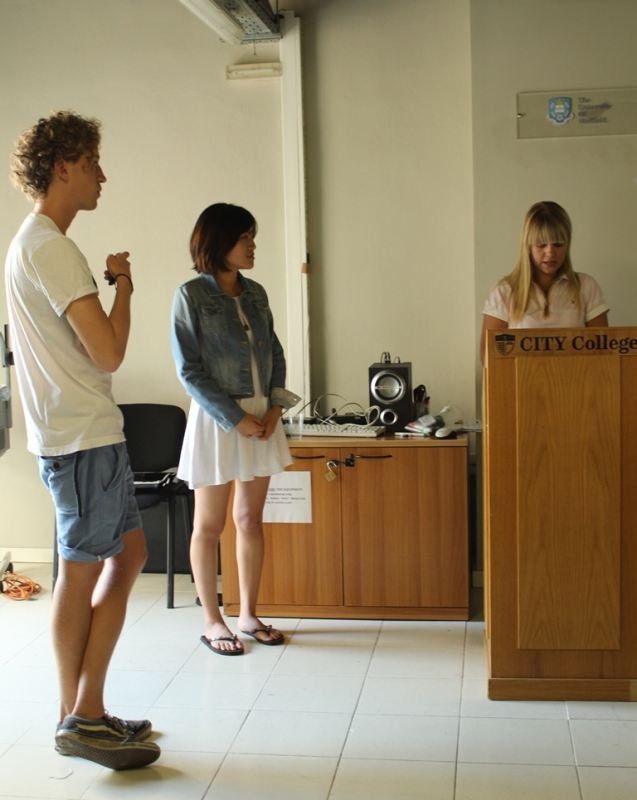
The HSE’s scientific-educational Laboratory of Entrepreneurship Research has been organizing a summer school since 2009, but in 2011 the school acquired a bilateral format (the HSE was joined by the University of Twente, the Netherlands). Then in 2012, the Technische Universität Berlin joined the school, and in 2013 as many as five universities from different European countries participated in the School’s organization: Great Britain (the University of Sheffield), Germany, the Netherlands, Greece (the City College in Thessaloniki, a branch of the University of Sheffield), and Russia. The key idea of the school, according to Alexander Chepurenko, Academic Supervisor of the HSE Laboratory of Entrepreneurship Research, is to involve students in the study of entrepreneurship as a rapidly developing interdisciplinary area.
Nearly 40 students from 14 countries (including Asian ones) participated in this year’s Summer School; 12 lecturers and experts addressed the participants.
The school already operates according to a specific format: in the mornings, professors address the participants through lectures and presentations, and in the afternoons, entrepreneurs and experts offer master classes and meetings, and students from various universities meet in teams to work on joint presentations which they unveil on the last day. Each evening features a cultural programme and free time. Every participating university had one day at its disposal, when its representatives conducted classes for students and gave a brief introduction to their university. This time, the HSE was represented by Alexander Chepurenko, Dean of the Faculty of Sociology, and John Round, Associate Professor of the Faculty.
The participating universities are very different from each other and have different approaches to studying entrepreneurship. That’s why the students had an opportunity to take part in various forms of classes, such as lectures, master classes, meetings with entrepreneurs, business games, and brainstorming sessions. ‘Each participant was willing to speak about how business is done in his or her own country, and that gave us a basis for comparative analysis’, Olga Solodskaya, a student of the HSE Faculty of Management, told us. ‘The lectures were very varied: from strictly theoretical to marketing-focused. But all of them were extremely interesting and useful’. Added Anna Shemetkova (HSE Faculty of Sociology): ‘It was not only entrepreneurship that we discussed but also everyday life, politics, global problems, and cultural differences’.
Probably the HSE will host the Summer School on the Theory of Entrepreneurship next year in Moscow. This was an idea suggested by all the participating universities.
This was the first time that the School was held in a country that has been severely affected by the economic crisis, and that’s why both the participants’ personal impressions and the classes prepared by the Greek colleagues helped participants to better understand the specific limitations and opportunities for developing entrepreneurship in such conditions.
According to Chepurenko, this year’s school exceeded all expectations, especially taking into account that the organizing universities had only one short meeting in January in Berlin to solve all aspects of the School’s organization and programme development. Most probably, next summer the existing participants will be joined by one or two more universities from other countries, and the number of participating students will grow. The structure of the school will have to become more complicated; classes on specific groups of topics will be split off from the general classes.
And probably the HSE will host the Summer School on the Theory of Entrepreneurship next year in Moscow. This was an idea suggested by all the participating universities.
Nikolay Ivanov, specially for the HSE News Service

See also:

Fourth Urbanist Summer School: Students from Across Russia Work on Tikhvin’s Tourism Development
How can tourism be developed in historic areas? How can the interests of residents, tourists, businesses, and local authorities be reconciled? And how can the specific context of a particular city be taken into account when developing project solutions? These were the questions explored at the Urbanist Summer School (USS), which brought together students from leading Russian universities for the fourth time.
Students from HSE and Brest State University Develop Proposals for Development of River in Brest
The Vysokovsky Graduate School of Urbanism at the HSE Faculty of Urban and Regional Development, together with the Department of Urban and Regional Development at Brest State Pushkin University, held a summer school in Brest, Belarus. Over ten days, students from Russia and Belarus studied the Mukhavets River—one of the city’s main natural axes—and developed concepts for its integrated development.
HSE Graduate School of Business and Alfa-Bank Hold Summer School for Students from China
Twenty-seven students from Chinese universities took part in the international summer school ‘Digital Product Management’ organised by the HSE Graduate School of Business and Alfa-Bank. Over the course of a week, participants explored the Russian economy and business environment, learned about current technology trends, and worked through the key stages of digital product development step by step—from researching user needs and defining a problem to developing a prototype and presenting their final project.
HSE University–St Petersburg Hosts Record Number of International Students at International Summer School
The HSE University–St Petersburg Summer School brought together about 50 students from ten countries. The participants studied political geography, modern Russian culture and language, statistical analysis, and intercultural communications. Read on to find out what opportunities HSE University–St Petersburg offers international students.
ICEF International Summer School 2026 Brings Together Students from Partner Universities
From July 5 to 15, 2026, HSE ICEF hosted its Second International Summer School in Economics and Finance, welcoming students from partner universities around the world. The programme brought together thirty bachelor’s and master’s students from China, Turkey, Vietnam, Malaysia, Uzbekistan, and Russia, offering a balanced blend of intensive academic training and rich cultural experiences. The academic component was delivered by ICEF and HSE faculty, along with industry experts in economics and financial markets.
International Dialogue and New Approaches: Highlights from Fudan University’s Summer School
At the beginning of July 2026, students from the HSE Faculty of World Economy and International Affairs took part in the Summer School on International Relations organised by Fudan University (China), one of the leading international educational programmes in this field. Over the course of two weeks, they explored contemporary approaches to global governance and the development of the Global South, attended lectures by renowned scholars from around the world, and discussed current international issues with fellow students from across the globe.
HSE University Holds Its First Summer School in Svalbard
The Centre for Interdisciplinary Arctic Studies at the Institute for Economics of Natural Resources and Climate Change organised HSE University's first summer school on international relations in the Svalbard archipelago. Alongside lectures and fieldwork, 14 participants from Russia and South Korea developed practical solutions for implementing multilateral cooperation projects in the Arctic.
Cardiogenetics of the Future: Sequencing Helps Treat Heart Disease
Future cardiologists, geneticists, and IT specialists gathered at HSE University to learn how to 'read' DNA for diagnosing cardiovascular diseases. They explored modern sequencing methods and the complexities of working with digital twins of cardiac patients.
Archival Impulse: Dubna Hosts Summer School Organised by HSE University and JINR
The Joint Institute for Nuclear Research (JINR) in Dubna hosted the Archival Impulse Summer School, co-organised by JINR physicists, historians from the HSE Faculty of Humanities, and staff from the Archives of the Russian Academy of Sciences (ARAS). This first archival summer school continued the joint initiative of HSE University and JINR to examine and preserve the unique historical legacy of physicists.
HSE Shares Its Experience of Urban Strategies at International Summer School in China
In the context of intensifying global geopolitical and technological competition, leading Chinese educational institutions—Zhejiang International Studies University and Peking University—organised an International Summer School. Their joint programme focused on studying global, regional, and urban development strategies. The HSE Faculty of Urban and Regional Development took part in this event.