

HSE University Students Win Prizes at the International Mathematics Competition for University Students

The 29th International Mathematics Competition for University Students (IMC 2022) took place in early August in a mixed format in Blagoevgrad (Bulgaria) and online. Eight students of the HSE Faculty of Computer Science and the HSE Faculty of Mathematics won prizes at the competition.
IMC features problems in algebra, mathematical analysis, geometry, and combinatorics. Students under 23 are eligible for participation.
The HSE University students demonstrated the following achievements:
Grand First Prize
Daniil Ivanik, third-year bachelor’s student of Applied Mathematics and Information Science, HSE Faculty of Computer Science (FCS)
First Prize
Fedor Kuyanov, second-year bachelor’s student of Applied Mathematics and Information Science, FCS
Alikhan Zimanov, second-year bachelor’s student of Applied Mathematics and Information Science, FCS
Temirkhan Zimanov, second-year bachelor’s student of Applied Mathematics and Information Science, FCS
Mikhail Petrov, third-year bachelor’s student of Applied Mathematics and Information Science, FCS
Mikhail Gorbunov, second-year bachelor’s student of Applied Mathematics and Information Science, FCS
Anastasiia Zhilina, second-year bachelor’s student of Mathematics, HSE Faculty of Mathematics
Second Prize
Danila Ivanov, third-year bachelor’s student of Applied Mathematics and Information Science, FCS
The winners shared their impressions of IMC 2022.
Daniil Ivanik

I must admit, it was nice to add a new achievement to our Faculty of Computer Sciences’ collection. But at first, I doubted whether to take part in this year’s IMC or not. I’m not that young anymore, and I thought maybe I should have given way to younger participants. But I’m addicted to the euphoria of having solved a beautiful mathematical problem. I decided to participate and did not regret it—during the competition, I found a really aesthetically pleasing solution to a problem. The other problems were more technical. For the fact that I solved them, I am particularly grateful to my school and university teachers.
Fedor Kuyanov
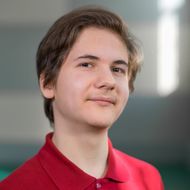
It felt like this year’s IMC problems were easier than last year’s ones—particularly in the second round, where we only needed methods we studied during the first year of university. Most of the problems were from discrete mathematics and linear algebra—the fields of maths I like the most.

See also:

HSE Students Win Six Gold Medals at International Mathematics Competition for University Students
Students from the HSE Faculty of Computer Science (FCS) and Faculty of Mathematics have won six gold medals at the International Mathematics Competition for University Students (IMC). HSE students also received silver and bronze medals. One of the world’s most prestigious international university mathematics competitions, IMC 2026 was held in July–August this year in Blagoevgrad, Bulgaria.
‘AI Enables Researchers to Tackle More Complex and Important Problems’
In late July 2026, Dmitry Rybin, a graduate of the HSE Faculty of Mathematics who is now working in China, used ChatGPT to disprove a longstanding mathematical hypothesis. In an interview with the HSE News Service, he discussed AI's ability to make discoveries in mathematics, reflected on his time at HSE University, and spoke about his doctoral research at the Chinese University of Hong Kong.
‘The Conference Strengthened Our Sense of Belonging to the International Mathematics Community’
From July 13 to 17, 2026, the HSE Faculty of Mathematics hosted the international conference ‘Moduli, Dynamics, and Integrability,’ bringing together leading mathematicians from Russia, the United States, China, the United Kingdom, and other countries.
Fair Division: How Mathematics Helps to Divide the Indivisible
How can items be allocated among participants so that no one feels short-changed? Alexander Karpov, Assistant Professor at the Faculty of Economic Sciences, and his Singaporean colleague, Prof. Warut Suksompong, set out to find a mathematical answer to this question. In this interview, they discuss how a model of rational preferences is constructed, why one cannot rely on a simple sum of values, and where an algorithm that asks a minimal number of questions can be useful.
HSE Students Win Gold Medals at International Mathematics Olympiad in Turkmenistan
The VI Open Mathematical Olympiad for University Students (OMOUS-2026) was held in Ashgabat, bringing together teams from Russia, Germany, Greece, Hungary, the Netherlands, Turkmenistan, Tajikistan, Uzbekistan, Iran, and the UAE. Around 600 students took part in the competition.
'Sometimes, Finding Ways to Solve Problems Feels Like Trying to Cross Mountains without a Map'
Yulia Zaitseva became interested in mathematics in third grade, when her parents enrolled her in a math club, and she now holds a PhD. In this interview with the HSE Young Scientists project, she explains what an algebraic variety is, discusses operations beyond addition and multiplication, and shares her love for Kolomenskoye Park.
Mathematician from HSE University–Nizhny Novgorod Solves Equation Considered Unsolvable in Quadratures Since 19th Century
Mathematician Ivan Remizov from HSE University–Nizhny Novgorod and the Institute for Information Transmission Problems of the Russian Academy of Sciences has made a conceptual breakthrough in the theory of differential equations. He has derived a universal formula for solving problems that had been considered unsolvable in quadratures for more than 190 years. This result fundamentally reshapes one of the oldest areas of mathematics and has potential to have important implications for fundamental physics and economics. The paper has been published in Vladikavkaz Mathematical Journal.
‘Our Subject Is Absolute Truth in the Literal Sense’
What path does one have to follow to become a theoretical mathematician? Is there such a thing as a ‘mathematical personality’? And is it really true that all mathematicians are a bit eccentric? Valery Gritsenko, Professor at the Faculty of Mathematics and Head of the International Laboratory for Mirror Symmetry and Automorphic Forms, talks about 13-year-long referee reports and good films about mathematics.
HSE Scholars Win Young Russian Mathematics Contest
Associate Professor Yulia Zaitseva of the Faculty of Computer Science’s Big Data and Information Retrieval School and Research Assistant Ekaterina Nistyuk of the Laboratory on Algebraic Transformation Groups have been named among the winners of the Young Russian Mathematics research grant competition. Also among the awardees is Vladislav Pokidkin, a PhD student at the Faculty of Mathematics.
HSE University Wins Seven Medals at International Mathematics Competition for University Students
HSE students were among the winners of the International Mathematics Competition for University Students (IMC), which was held in August in Bulgaria. The medallists are students of the HSE Faculty of Computer Science (FCS) programme in Applied Mathematics and Information Science and the Faculty of Mathematics programme in Mathematics.