

‘These are the People Who Will Shape the Agenda in the Humanities’
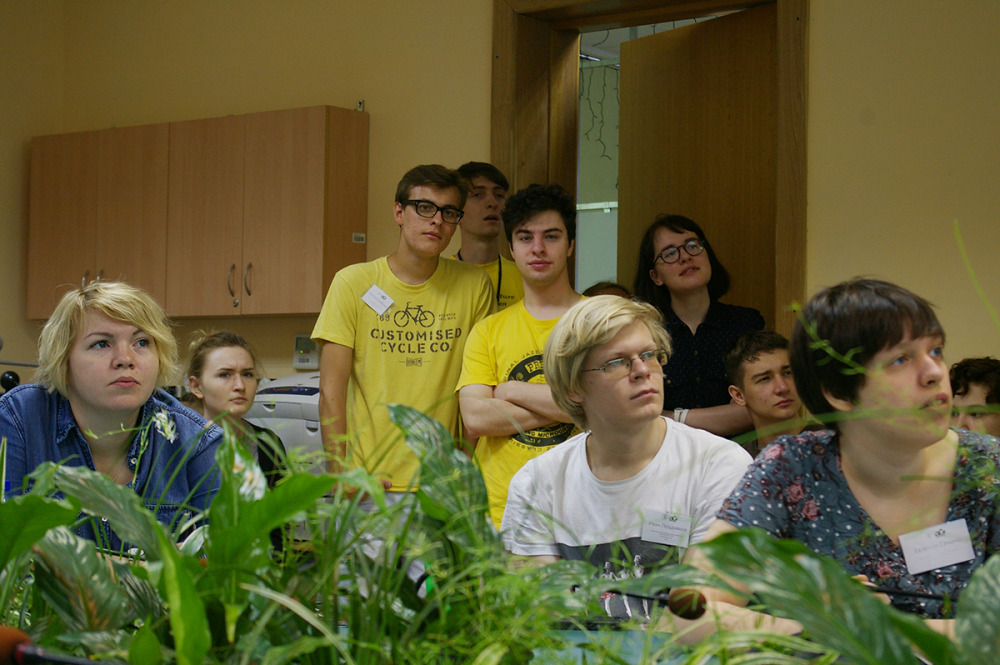

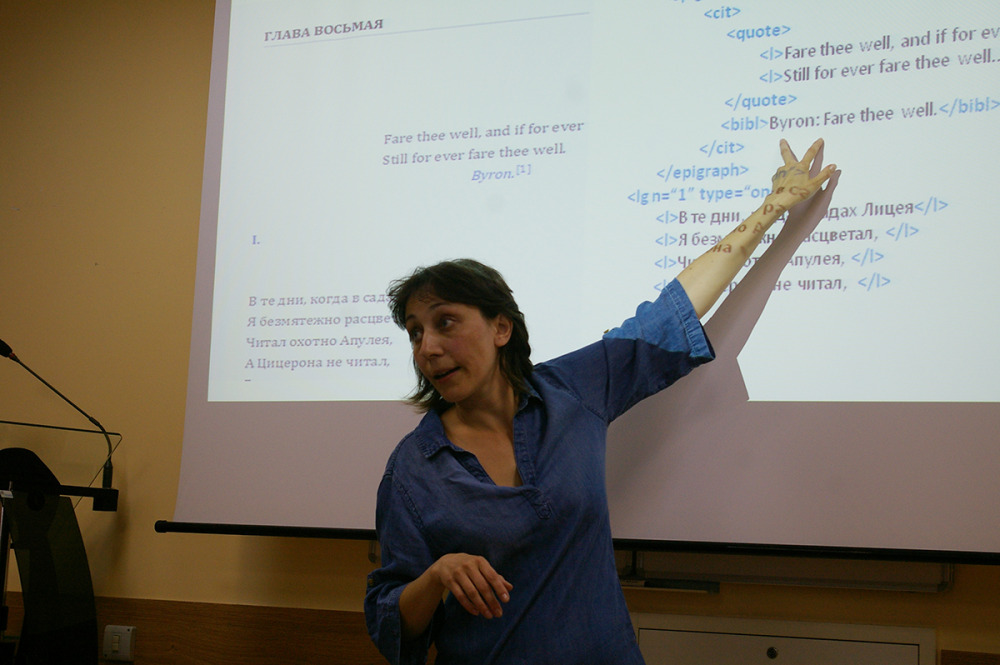
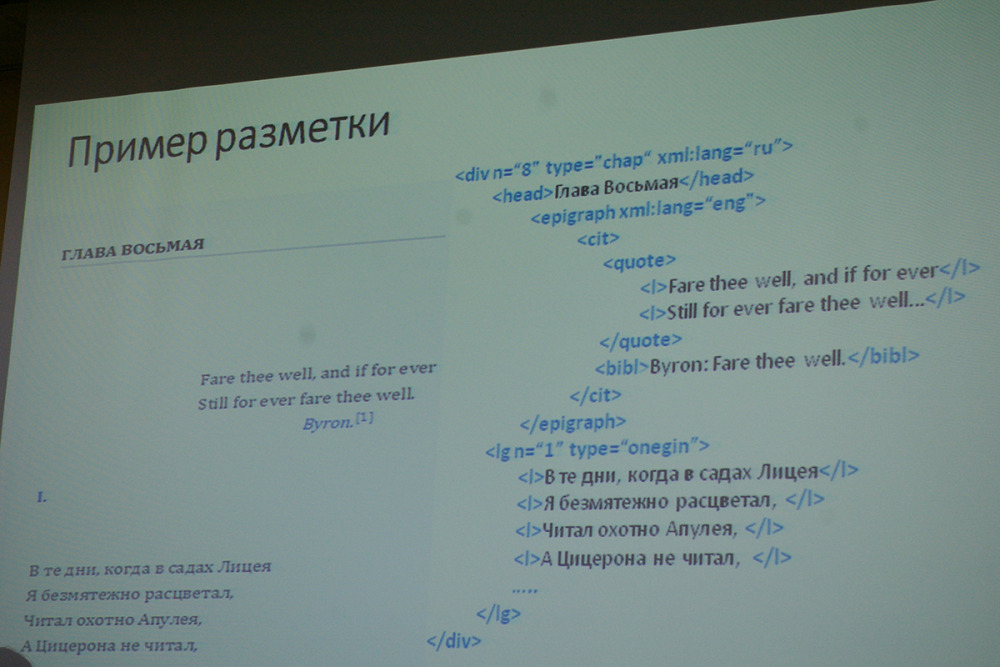
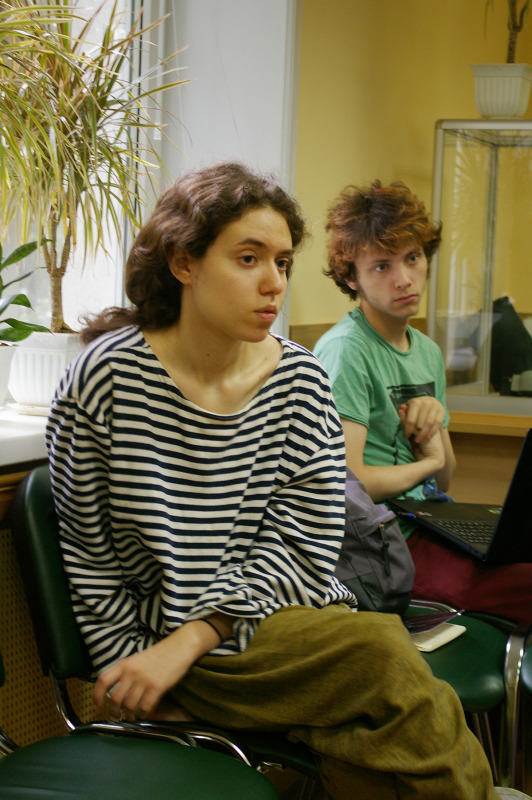


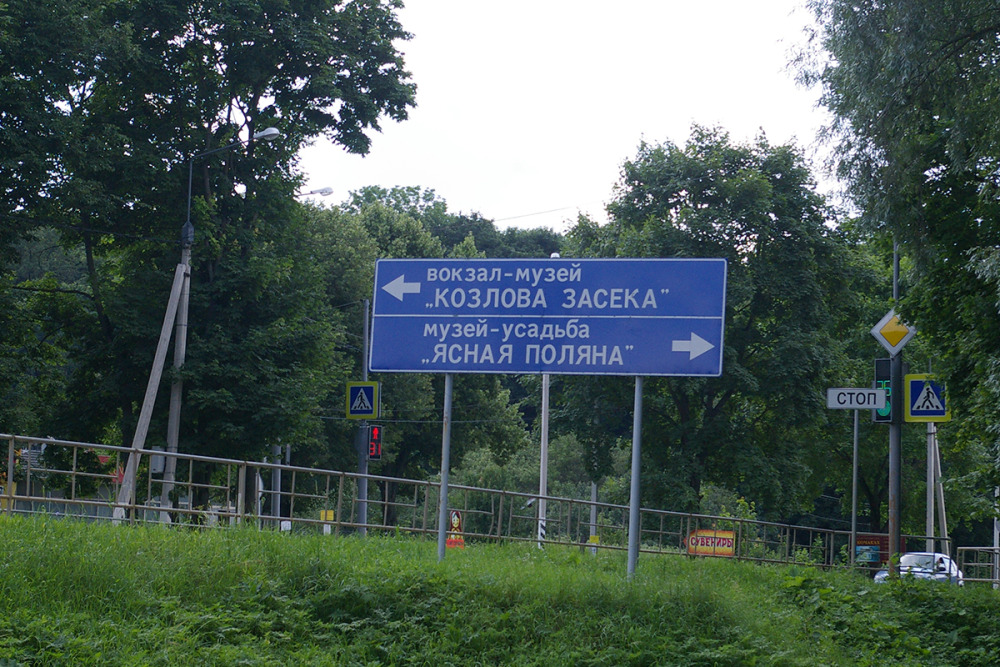
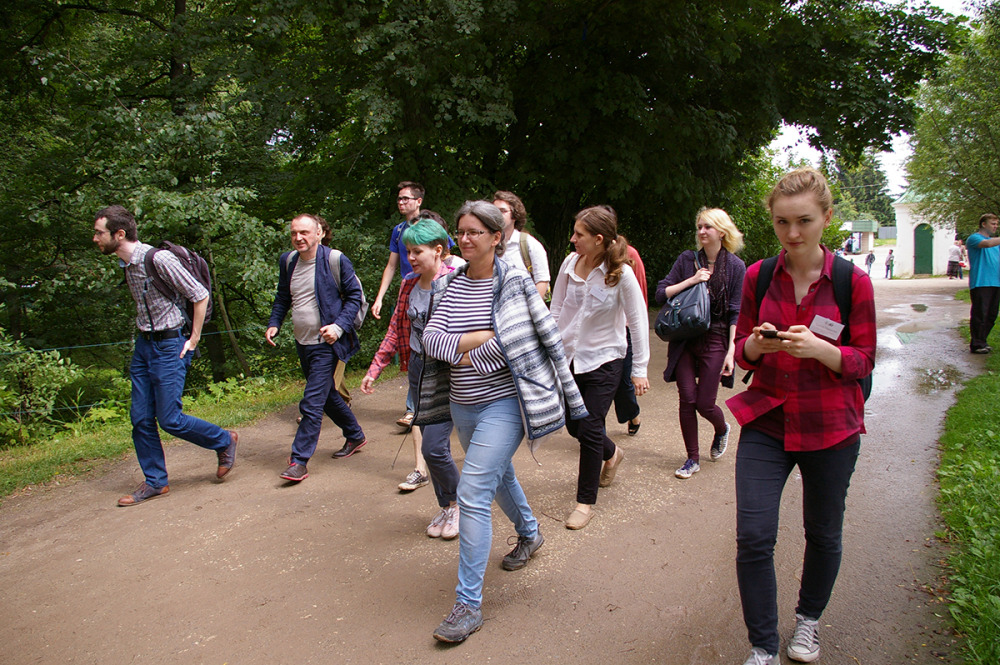
The first Moscow-Tartu School in Digital Humanities has taken place at the Leo Tolstoy House and Museum in Yasnaya Polyana. The school‘s aim is to create an interdisciplinary academic environment in which modern computer methods are applied to the study of texts. The school was organized by the HSE School of Linguistics, Leo Tolstoy House and Museum in Yasnaya Polyana, and the Department of Russian Literature at the University of Tartu.
‘Digital humanities is an important area of development in today’s computer science, when computer facilities, methods and models are used in data processing in the humanities’, said Anastasia Bonch-Osmolovskaya, Associate Professor at the HSE School of Linguistics and one of the school’s organizers, ‘Unfortunately, this area is not as well developed in Russia as it is in the West, where a lot of researchers are involved in it. On the other hand, Russian philology has a very good tradition of various formal approaches to studying texts. We wanted to integrate this tradition with modern methods. And we also wanted to let the students see how important it is not only to be able to apply particular methods, but also to understand how the results can be interpreted. I believe this is something the other schools, European schools for example, lack: they are more about skills than interpretation’.
Roman Leibov, Associate Professor at the University of Tartu Department of Slavic Studies, said that the idea of the school developed out of the regular student philological conference in Tartu, where an additional section discussed modern approaches to philological problems related to new technologies. The decision was made to continue this debate – but not at the Conference. ‘The resulting summer school format selected by Anastasia Bonch-Osmolovskaya was a success; it includes lectures and practical tutorials on work with philological data’, said Roman Leibov.
The school attracted young researchers from various backgrounds, including philology, mathematics, computer science, and linguistics: 300 applications were received for the 30 available places. Participants came from Moscow, St. Petersburg, Petrozavodsk, Perm, Siberia, Tula, Tartu and the United States.
Some expert lectures focused on linguistics, others on traditional philological problems, and small groups of students had the opportunity to solve specific problems in workshops over that two day period.
‘The school has become an important academic event for several reasons’, said Boris Orekhov, Associate Professor at the HSE School of Linguistics, ‘First, it follows the traditions of the Moscow-Tartu semiotic school. That was a large-scale intellectual project of the Soviet era that became fertile grounds for the development of concepts and methods that have since become central pillars of contemporary humanities. In recent decades, our science hasn’t seen anything as interesting as that. And the school aimed to revive these processes, to refresh this invention and co-creation of methodological principles that all the participants are aware of.’
‘Second, students attending the school had passed a strict, highly competitive, selection process (it is pleasing that many HSE students were among the candidates). I can say that these are the people who will shape the agenda in the humanities in 20 or 25 years. The things the students heard at the school, things they agreed or argued with must have influenced them to a certain extent, and in future they will be among the factors determining key trends in philology and related areas’.

Elizaveta Kornakova, MSU
Deciding to attend the Moscow-Tartu School in Digital Humanities was a spur of the moment thing. I’ve never been interested in digital humanities before, it was something I had only heard about, but I never regretted my decision. What I liked was that the participants included people with highly varied backgrounds: philologists, programmers, linguists, mathematicians, and historians. It was great to go beyond my professional circle and talk to people who are used to approaching research from a different angle.
I took part in a tutorial in which we built social networks from classical literature. We turned works by Griboyedov, Ostrovsky, Chekhov, Mayakovsky and other authors into graphs. As a result, we got a visualization of how the structure of Russian plays changed over time. Daniil Skorinkin and Frank Fischer, our wonderful instructors from HSE, quickly and easily explained the key information to us, and always offered help when something didn’t work out or wasn’t understood.
The Moscow-Tartu school was an interesting experience for me, but it was too short. I think we could have done a lot more in our tutorial if we had a couple more days. I hope that the second Moscow-Tartu school will be longer.

Maria Krivosheina, HSE
I was part of Boris Orekhov’s tutorial on: ‘Dispersion analysis and the Iron Throne: What can statistics predict in Westeros?’ It turned out to be useful not only for HBO and George Martin fans. The saga is important here if viewed as a big mass of data, which can be used to demonstrate what digital approaches can do (for example, detecting patterns in the text).
It was exciting that we didn’t study one specific method in too much detail, and instead tried to discuss a number of different approaches, including graph theory, cluster analysis, vector analysis, etc. I was pleased with what we achieved during the tutorial. I believe we managed to accomplish quite a lot and even tried to make some predictions on future plot twists on the basis of the data we produced.

Arseny Samsonov, California State University, Los Angeles
I am part of the project studying drama using network theory. Characters were viewed as nodes in the graph, and the contacts between them were viewed as the values of edges connecting them. This approach allowed us to look at the balance of power in the drama and to detect the most influential characters using the indicators developed through the graph theory. As is common in any research, we received a lot of anomalous and obvious results. But we also detected some characters who defined the course of events and yet were not obvious for the reader. This was when realized that our effort had borne fruit.
I saw a new science evolving. Philology is not about making and proving hypotheses. Works by philologists I’ve read are literary works written under the impression from other literary works. The aim of digital humanities is to make strong conclusions about how a text works. A program is unable to detect moral contents of the book or answer questions on what the author’s intentions might have been, but it can calculate the frequency of use of certain types of words, or detect the poem’s metre. These observations can be a tool for philologists in a traditional sense and spark new ideas, but, most probably, computer analysis of literature will prompt researchers to ask some brand new questions.

German Palchikov, HSE
On the one hand, I acquired new skills and knowledge (it is thanks to the school that I finalized the topic of my master’s thesis and even wrote a draft plan). On the other hand, I met some very interesting people, both tutors in the tutorials and the students who came to study literature and humanities from a new perspective. I have continued to talk with them since the school, and I hope this may evolve into new projects.
I was in the tutorial ‘Social networks in classical works’. We not only learned about graph theory and learned to create social networks, but also wrote scripts that will be useful for future research, created social networks for several classical plays, and expanded the material for future studies.
Prepared by Alena Churakova, intern at the HSE Public Relations Office

See also:

Fourth Urbanist Summer School: Students from Across Russia Work on Tikhvin’s Tourism Development
How can tourism be developed in historic areas? How can the interests of residents, tourists, businesses, and local authorities be reconciled? And how can the specific context of a particular city be taken into account when developing project solutions? These were the questions explored at the Urbanist Summer School (USS), which brought together students from leading Russian universities for the fourth time.
Students from HSE and Brest State University Develop Proposals for Development of River in Brest
The Vysokovsky Graduate School of Urbanism at the HSE Faculty of Urban and Regional Development, together with the Department of Urban and Regional Development at Brest State Pushkin University, held a summer school in Brest, Belarus. Over ten days, students from Russia and Belarus studied the Mukhavets River—one of the city’s main natural axes—and developed concepts for its integrated development.
HSE Graduate School of Business and Alfa-Bank Hold Summer School for Students from China
Twenty-seven students from Chinese universities took part in the international summer school ‘Digital Product Management’ organised by the HSE Graduate School of Business and Alfa-Bank. Over the course of a week, participants explored the Russian economy and business environment, learned about current technology trends, and worked through the key stages of digital product development step by step—from researching user needs and defining a problem to developing a prototype and presenting their final project.
HSE University–St Petersburg Hosts Record Number of International Students at International Summer School
The HSE University–St Petersburg Summer School brought together about 50 students from ten countries. The participants studied political geography, modern Russian culture and language, statistical analysis, and intercultural communications. Read on to find out what opportunities HSE University–St Petersburg offers international students.
ICEF International Summer School 2026 Brings Together Students from Partner Universities
From July 5 to 15, 2026, HSE ICEF hosted its Second International Summer School in Economics and Finance, welcoming students from partner universities around the world. The programme brought together thirty bachelor’s and master’s students from China, Turkey, Vietnam, Malaysia, Uzbekistan, and Russia, offering a balanced blend of intensive academic training and rich cultural experiences. The academic component was delivered by ICEF and HSE faculty, along with industry experts in economics and financial markets.
International Dialogue and New Approaches: Highlights from Fudan University’s Summer School
At the beginning of July 2026, students from the HSE Faculty of World Economy and International Affairs took part in the Summer School on International Relations organised by Fudan University (China), one of the leading international educational programmes in this field. Over the course of two weeks, they explored contemporary approaches to global governance and the development of the Global South, attended lectures by renowned scholars from around the world, and discussed current international issues with fellow students from across the globe.
HSE University Holds Its First Summer School in Svalbard
The Centre for Interdisciplinary Arctic Studies at the Institute for Economics of Natural Resources and Climate Change organised HSE University's first summer school on international relations in the Svalbard archipelago. Alongside lectures and fieldwork, 14 participants from Russia and South Korea developed practical solutions for implementing multilateral cooperation projects in the Arctic.
Cardiogenetics of the Future: Sequencing Helps Treat Heart Disease
Future cardiologists, geneticists, and IT specialists gathered at HSE University to learn how to 'read' DNA for diagnosing cardiovascular diseases. They explored modern sequencing methods and the complexities of working with digital twins of cardiac patients.
Archival Impulse: Dubna Hosts Summer School Organised by HSE University and JINR
The Joint Institute for Nuclear Research (JINR) in Dubna hosted the Archival Impulse Summer School, co-organised by JINR physicists, historians from the HSE Faculty of Humanities, and staff from the Archives of the Russian Academy of Sciences (ARAS). This first archival summer school continued the joint initiative of HSE University and JINR to examine and preserve the unique historical legacy of physicists.
HSE Shares Its Experience of Urban Strategies at International Summer School in China
In the context of intensifying global geopolitical and technological competition, leading Chinese educational institutions—Zhejiang International Studies University and Peking University—organised an International Summer School. Their joint programme focused on studying global, regional, and urban development strategies. The HSE Faculty of Urban and Regional Development took part in this event.