

After the Summer School, no More Questions about Why Learn Mathematical Finance
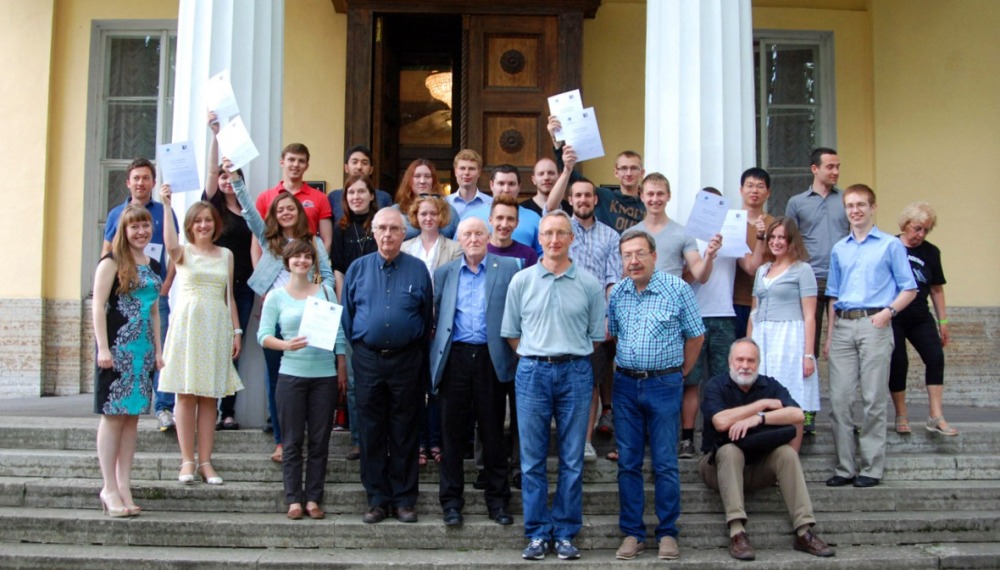
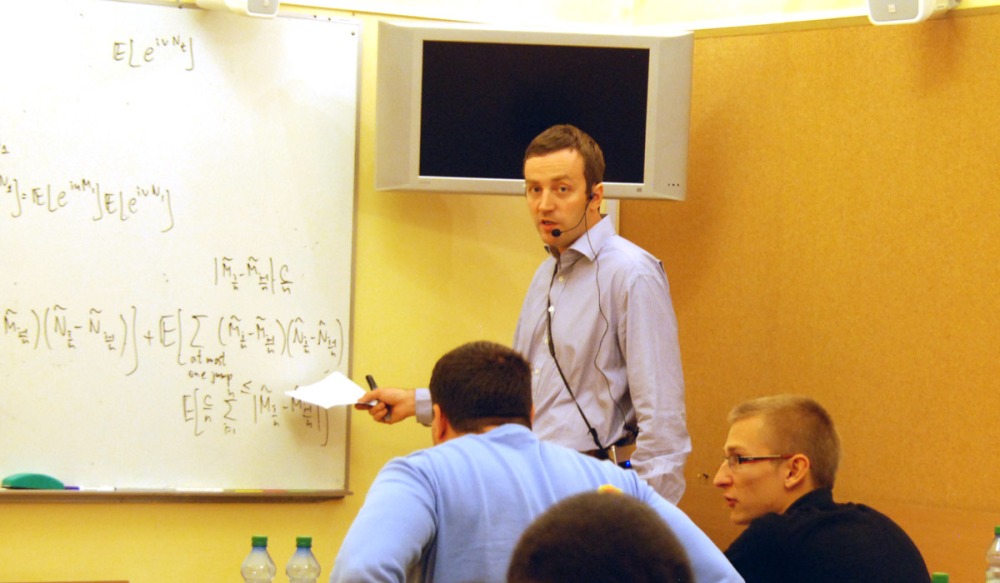
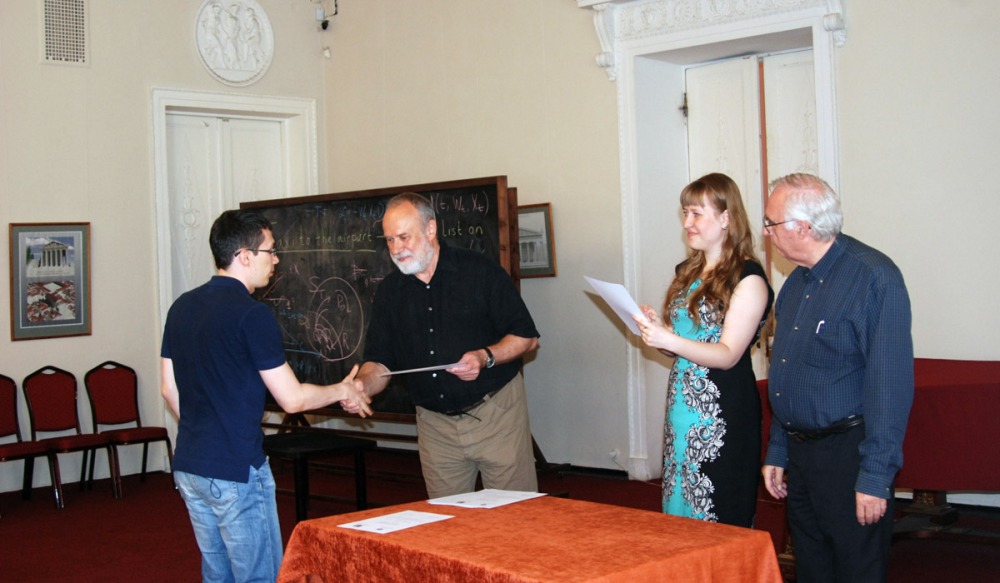
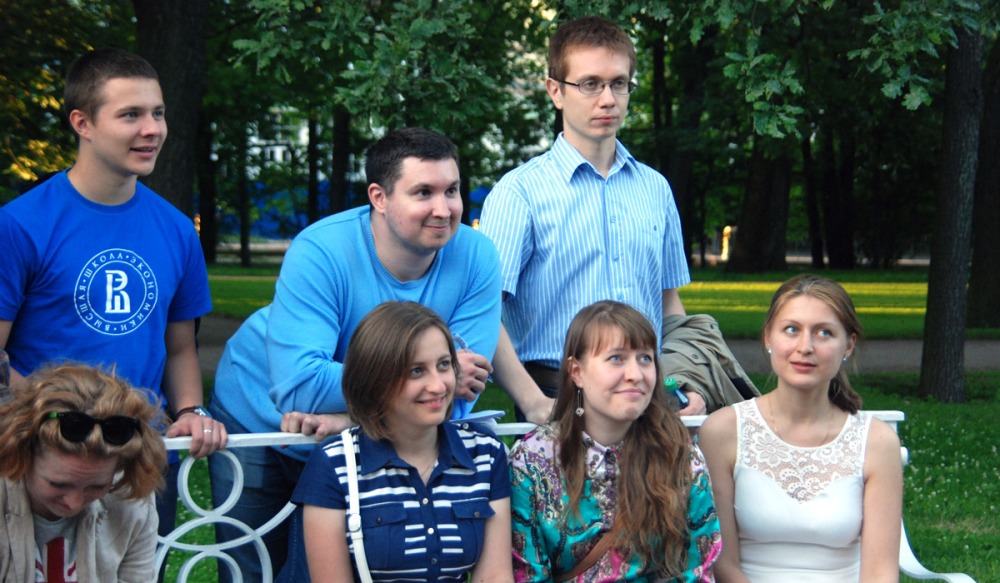
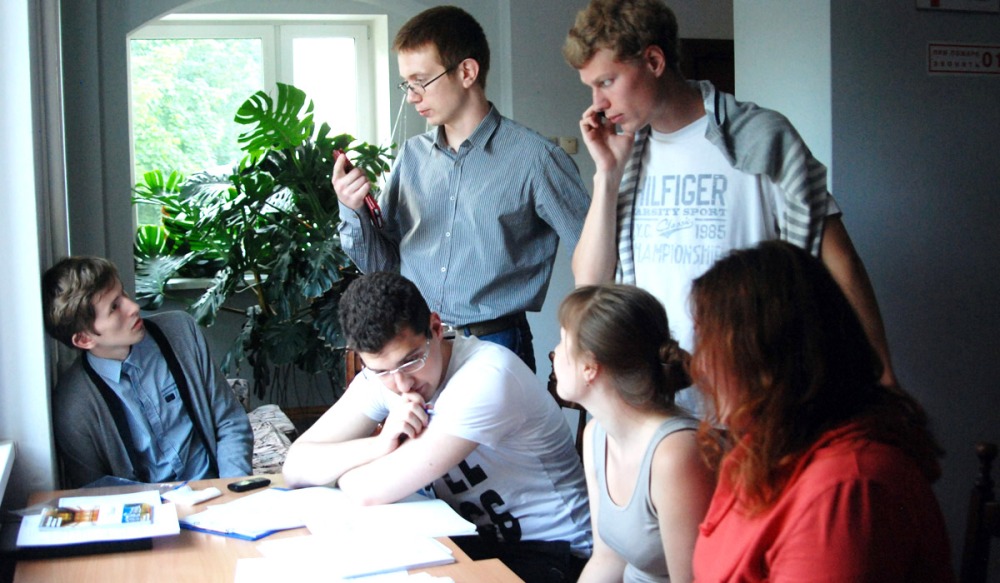


The HSE International Laboratory of Quantitative Finance (ILQF) ran a near St. Petersburg. The lecturers were leading international academics and representatives of major investment funds, one of which opened its own representation in the laboratory.
Summer schools on mathematical finance are organised regularly in the best universities around the world but this was a first for Russian universities. The head of research at the ILQF Yuri Kabanov said that their main aim is to show young mathematicians those areas of the discipline which could be called “mathematics without compromises”.
Those who don’t have much to do with mathematical finance often muddle it up with financial engineering and there is an opinion among students that if it is mathematics then it is of a rather inferior sort.
The best lecturers on Quantitative Finance were invited to the summer school. Freddy Delbaen (Eidgenossische Technische Hochschule, Zurich), Dmitry Kramkov (Carnegie Mellon University, Pittsburg), Peter Tankov (Université Paris-7). At the same time there was an international conference at Pushkino on Stochastic Calculus, Martingales and Financial Modeling. Some of the speakers at the conference dropped in to the summer school and the students got to meet one of the leading academics on the theory of probability and mathematical finance, RAS Academician Albert Shiryaev and Professor Kostas Kardaras from the LSE.
“Those who don’t have much to do with mathematical finance often muddle it up with financial engineering and there is an opinion among students that if it is mathematics then it is of a rather inferior sort,” says Professor Kabanov. “To overcome this misconception we chose topics which would demonstrate just how short a distance it is from elementary modelling to deep conceptual results.”
25 of the 100 students at the school had won grants to cover their expenses including accommodation. There were students from the top Russian universities and several young researchers among them Daniel Schwartz from Carnegie Mellon University, and Tsiatu Tsaiya from University Paris-7.
The lectures were open to any St Petersburg students interested in mathematical finance.
There were four courses on the summer school programme: Mathematics behind risk measures (taught by Freddy Delbaen), Arbitrage theory for markets with transaction costs (Yuri Kabanov), Arbitrage-free pricing, optimal investment, and equilibrium (Dmitry Kramkov), Jump processes in risk management (Peter Tankov). Each day was divided into four teaching sessions but the discussions continued long into the evenings.
“Thanks to the opportunity to talk to the professors outside class every day I have now got a pretty good idea of the state of mathematical finance in the world, possible areas for research and work in leading laboratories,” says MSU mechanical maths aspirant (PhD equivalent graduate student), Yulia Gusak. “After several walks around The Catherine Park in the company of teachers, I’m convinced I want a career in academic research and I am keen to get down to work on my dissertation”
London’s FM Investment Management has opened a representation at the HSE’s ILQF and will fund three aspirantura (PhD equivalent) students annually and give them an internship at their office in the laboratory.
FM Management and one of the world’s largest quantitative hedge funds, WorldQuant both gave presentations at the school. WorldQuant recently opened an office in St Petersburg and expressed an interest in attracting specialists with a strong mathematical education and knowledge of finance.
Professor Dmitry Kramkov, Carnegie Mellon University
— I taught similar courses on mathematical finance at summer schools in Oxford and Mumbai, but the school at Pushkino was different because of the participants. Class work is about connecting with your students so who they are is really important.
The worse thing when you are giving a lecture is when students are closed and indifferent. Here it was the opposite, the students approached me to ask questions, and not just at the end of the lecture but all day long. It was similar in Mumbai - there we had meals together which made it easier to get to know the students. At Pushkino, the organisers went a step further and put us all in one hotel so we came across one another outside classes and that created a feeling of total immersion in the educational process.
It was also good that young academics like my postdoc student at Carnegie Mellon, Daniel Schwartz joined us. It think it is helpful for the students to have contact with young academics who have just defended their dissertations. They can be easier for students to talk to and can explain how academia works.
— What do you see as the main differences between university courses and summer schools?
— Summer schools are about learning a little about everything. Students can discover new areas of knowledge, get a picture that they couldn’t buy for love or money. From the point of view of mathematics, summer courses can go into the details of a thing in a way that university doesn’t allow.
— The students said that you have a way of grabbing your audience and that you have unusual office hours...
— I like to run in the morning and wherever I go in the world, I always take my trainers. The run gives me a burst of energy that lasts all day, so I say office hours at 6.30 am, and we meet in the hall. Where else can you talk to your professor while running though Catherine Park? And during classes, when I was lecturing and I looked at one of the organisers, Nastya Cherkashina who is always smiling and that put me in a good mood every time.
— How did you feel when the school was over? What are you plans now?
— At the end of the course I felt like I used to at the end of pioneer camp - a little bit sad. The summer school at Pushkino was a rare coming together of circumstances, it was a truly remarkable event. Now I feel like grabbing a pen and paper and working on some mathematics. Often in daily life we wonder why, but this summer school made it absolutely clear. I saw that there are lots of other ‘crazy’ people like me. Next week I’ll be in Moscow and I already have lots of plans for research.
Mikhail Savostyanov, for the HSE News Website
Photos by Margarita Kabanova

Yuri Kabanov
See also:

Fourth Urbanist Summer School: Students from Across Russia Work on Tikhvin’s Tourism Development
How can tourism be developed in historic areas? How can the interests of residents, tourists, businesses, and local authorities be reconciled? And how can the specific context of a particular city be taken into account when developing project solutions? These were the questions explored at the Urbanist Summer School (USS), which brought together students from leading Russian universities for the fourth time.
Students from HSE and Brest State University Develop Proposals for Development of River in Brest
The Vysokovsky Graduate School of Urbanism at the HSE Faculty of Urban and Regional Development, together with the Department of Urban and Regional Development at Brest State Pushkin University, held a summer school in Brest, Belarus. Over ten days, students from Russia and Belarus studied the Mukhavets River—one of the city’s main natural axes—and developed concepts for its integrated development.
HSE Graduate School of Business and Alfa-Bank Hold Summer School for Students from China
Twenty-seven students from Chinese universities took part in the international summer school ‘Digital Product Management’ organised by the HSE Graduate School of Business and Alfa-Bank. Over the course of a week, participants explored the Russian economy and business environment, learned about current technology trends, and worked through the key stages of digital product development step by step—from researching user needs and defining a problem to developing a prototype and presenting their final project.
HSE University–St Petersburg Hosts Record Number of International Students at International Summer School
The HSE University–St Petersburg Summer School brought together about 50 students from ten countries. The participants studied political geography, modern Russian culture and language, statistical analysis, and intercultural communications. Read on to find out what opportunities HSE University–St Petersburg offers international students.
ICEF International Summer School 2026 Brings Together Students from Partner Universities
From July 5 to 15, 2026, HSE ICEF hosted its Second International Summer School in Economics and Finance, welcoming students from partner universities around the world. The programme brought together thirty bachelor’s and master’s students from China, Turkey, Vietnam, Malaysia, Uzbekistan, and Russia, offering a balanced blend of intensive academic training and rich cultural experiences. The academic component was delivered by ICEF and HSE faculty, along with industry experts in economics and financial markets.
International Dialogue and New Approaches: Highlights from Fudan University’s Summer School
At the beginning of July 2026, students from the HSE Faculty of World Economy and International Affairs took part in the Summer School on International Relations organised by Fudan University (China), one of the leading international educational programmes in this field. Over the course of two weeks, they explored contemporary approaches to global governance and the development of the Global South, attended lectures by renowned scholars from around the world, and discussed current international issues with fellow students from across the globe.
HSE University Holds Its First Summer School in Svalbard
The Centre for Interdisciplinary Arctic Studies at the Institute for Economics of Natural Resources and Climate Change organised HSE University's first summer school on international relations in the Svalbard archipelago. Alongside lectures and fieldwork, 14 participants from Russia and South Korea developed practical solutions for implementing multilateral cooperation projects in the Arctic.
Cardiogenetics of the Future: Sequencing Helps Treat Heart Disease
Future cardiologists, geneticists, and IT specialists gathered at HSE University to learn how to 'read' DNA for diagnosing cardiovascular diseases. They explored modern sequencing methods and the complexities of working with digital twins of cardiac patients.
Archival Impulse: Dubna Hosts Summer School Organised by HSE University and JINR
The Joint Institute for Nuclear Research (JINR) in Dubna hosted the Archival Impulse Summer School, co-organised by JINR physicists, historians from the HSE Faculty of Humanities, and staff from the Archives of the Russian Academy of Sciences (ARAS). This first archival summer school continued the joint initiative of HSE University and JINR to examine and preserve the unique historical legacy of physicists.
HSE Shares Its Experience of Urban Strategies at International Summer School in China
In the context of intensifying global geopolitical and technological competition, leading Chinese educational institutions—Zhejiang International Studies University and Peking University—organised an International Summer School. Their joint programme focused on studying global, regional, and urban development strategies. The HSE Faculty of Urban and Regional Development took part in this event.
Yuri Kabanov
Academic Supervisor at ILQF