

Russia and China Becoming Closer
On July 3-10, the IV International Russian-Chinese Summer School on International Relations, ‘Space and Time in the Eurasian Era,’ took place in Moscow. The event was organized by the HSE and East China Normal University. A total of 15 Russian and 12 Chinese students are taking part in the summer school. The summer school, whose working language is English, is intended for undergraduate and graduate students from Russia and China that are interested in international relations.


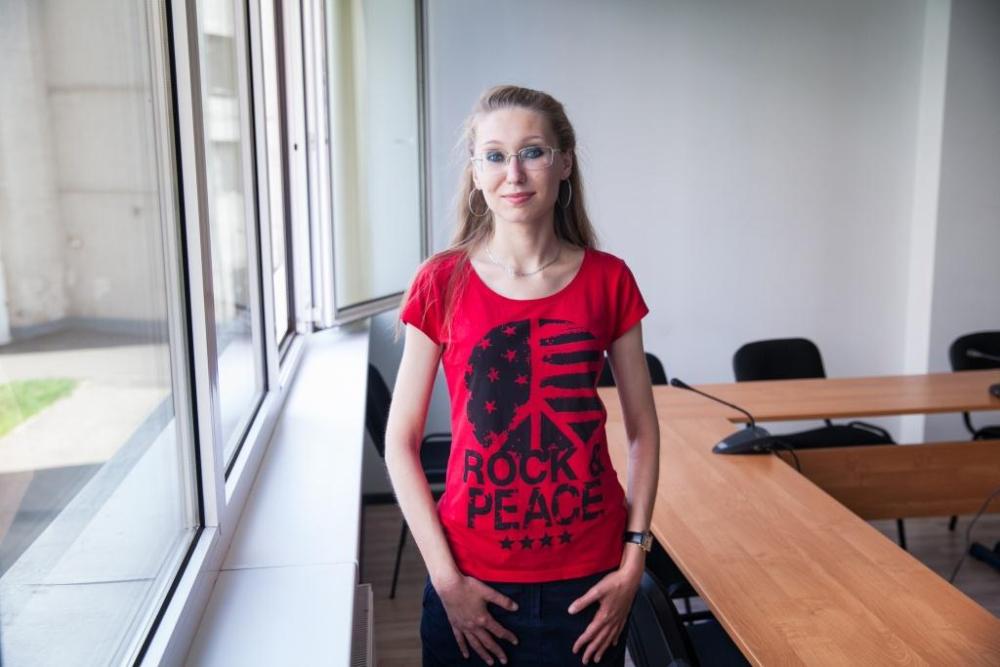

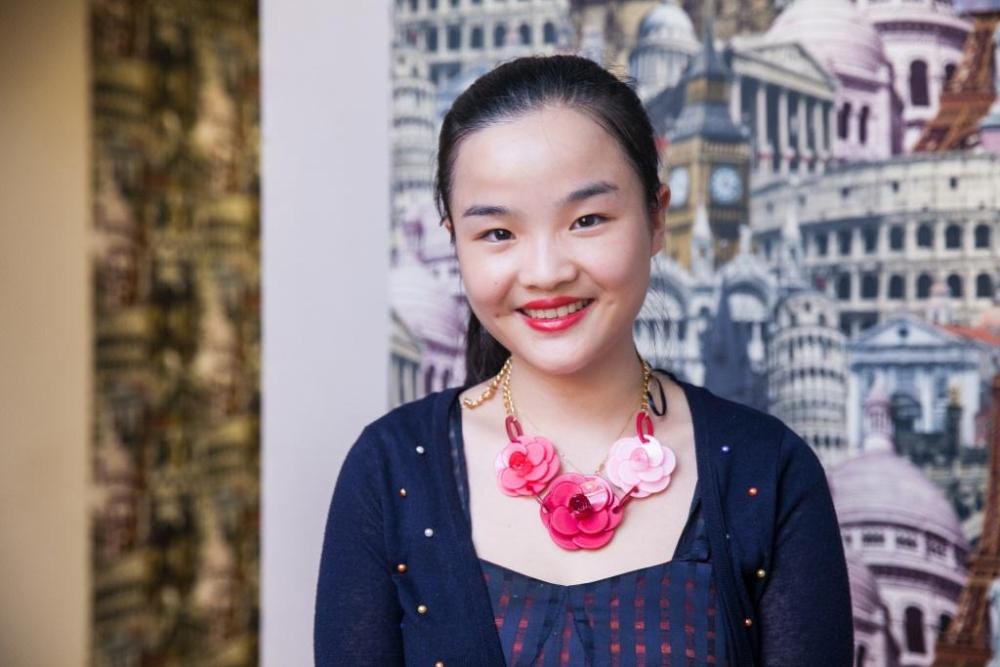


On July 3-10, the IV International Russian-Chinese Summer School on International Relations, ‘Space and Time in the Eurasian Era,’ is taking place in Moscow. The event was organized by the HSE and East China Normal University.
A total of 15 Russian and 12 Chinese students are taking part in the summer school. The summer school, whose working language is English, is intended for undergraduate and graduate students from Russia and China that are interested in international relations.
Among the lecturers from the HSE are Sergey Karaganov, Dean of the Faculty of World Economy and International Affairs; Timofey Bordachev, Deputy Dean for Strategic Planning, Faculty of World Economy and International Affairs; Oleg Barabanov, Professor of the Faculty of World Economy and International Affairs (Department of International Affairs); Evgeny Kanaev, Professor of the Faculty of World Economy and International Affairs; Igor Macarov, lecturer of the Faculty of World Economy and International Affairs; Alina Savelyeva, lecturer of the Faculty of World Economy and International Affairs and Dmitry Suslov, Senior Lecturer, Faculty of World Economy and International Affairs (Department of International Affairs). Igor Pellicciari, University of Salento's professor, who is joining the Faculty of World Economy and International Affairs next year also gave a lecture.
The traditional Sunday master class was given by Fedor Lukyanov, editor in chief of the journal Russia in Global Affairs. East China Normal University was represented by professors Li Wei, Yang Cheng, Zhang Xin.
This year, the work of the school focuses on the development of the Asian Pacific region and Russia’s increasing involvement in the economic and political processes of the region. ‘In 2014, there were a number of important geopolitical shifts and milestone events that demonstrated that Russia’s turn towards Asia is becoming increasingly important for both Russia and its Asian neighbors and partners,' commented Alina Savelyeva, Assistant Dean for International Cooperation from the Faculty of World Economy and International Affairs at the HSE, and member of the summer school’s organizing committee. ‘That is why we decided to focus on the untapped potential of Russia as the largest country whose history is inextricably linked with the region,’ she added.
The majority of Russian lecturers presented their views of the development of Siberia and the Far East, as well as the structural factors that are part of world economics and politics, such as climate, water, food and other opportunities Russia could use to strengthen positive cooperation at the regional and global level. Chinese lecturers in turn focused attention on the misalignment in world politics and economics in Eurasia.
Last year I was a participant in the Third Summer School, and it became one of the deciding factors in choosing my scientific career.
Dmitry Novikov, postgraduate HSE student and member of the Centre for Comprehensive European and International Studies at the HSE, shares his impressions of the school: ‘The summer school, held annually by the Faculty of World Economy and International Affairs, is characterized by its surprisingly friendly and easygoing atmosphere. Undergraduates and graduates from the two countries can exchange ideas and thoughts on key issues in politics and the world economy and discuss them with experts. Last year I was a participant in the Third Summer School, and it became one of the deciding factors in choosing my scientific career. Now, I work at the Centre for Comprehensive European and International Studies.’
Volunteers take part in the school’s organization, helping lead different cultural activities such as Russian and Chinese cultural nights, which allow for a deeper understanding of the traditions and cultures of the two countries.
According to Alina Savelyeva, the Faculty of World Economy and International Affairs is continually developing its cooperation with East China Normal University, which now consists of ongoing lectures by Russian and Chinese experts, master classes, and regular exchanges among undergraduates and graduates for internships and participation in the summer schools.

Oleg Nikolaevich Barabanov
See also:

Fourth Urbanist Summer School: Students from Across Russia Work on Tikhvin’s Tourism Development
How can tourism be developed in historic areas? How can the interests of residents, tourists, businesses, and local authorities be reconciled? And how can the specific context of a particular city be taken into account when developing project solutions? These were the questions explored at the Urbanist Summer School (USS), which brought together students from leading Russian universities for the fourth time.
Students from HSE and Brest State University Develop Proposals for Development of River in Brest
The Vysokovsky Graduate School of Urbanism at the HSE Faculty of Urban and Regional Development, together with the Department of Urban and Regional Development at Brest State Pushkin University, held a summer school in Brest, Belarus. Over ten days, students from Russia and Belarus studied the Mukhavets River—one of the city’s main natural axes—and developed concepts for its integrated development.
HSE Graduate School of Business and Alfa-Bank Hold Summer School for Students from China
Twenty-seven students from Chinese universities took part in the international summer school ‘Digital Product Management’ organised by the HSE Graduate School of Business and Alfa-Bank. Over the course of a week, participants explored the Russian economy and business environment, learned about current technology trends, and worked through the key stages of digital product development step by step—from researching user needs and defining a problem to developing a prototype and presenting their final project.
HSE University–St Petersburg Hosts Record Number of International Students at International Summer School
The HSE University–St Petersburg Summer School brought together about 50 students from ten countries. The participants studied political geography, modern Russian culture and language, statistical analysis, and intercultural communications. Read on to find out what opportunities HSE University–St Petersburg offers international students.
ICEF International Summer School 2026 Brings Together Students from Partner Universities
From July 5 to 15, 2026, HSE ICEF hosted its Second International Summer School in Economics and Finance, welcoming students from partner universities around the world. The programme brought together thirty bachelor’s and master’s students from China, Turkey, Vietnam, Malaysia, Uzbekistan, and Russia, offering a balanced blend of intensive academic training and rich cultural experiences. The academic component was delivered by ICEF and HSE faculty, along with industry experts in economics and financial markets.
International Dialogue and New Approaches: Highlights from Fudan University’s Summer School
At the beginning of July 2026, students from the HSE Faculty of World Economy and International Affairs took part in the Summer School on International Relations organised by Fudan University (China), one of the leading international educational programmes in this field. Over the course of two weeks, they explored contemporary approaches to global governance and the development of the Global South, attended lectures by renowned scholars from around the world, and discussed current international issues with fellow students from across the globe.
HSE University Holds Its First Summer School in Svalbard
The Centre for Interdisciplinary Arctic Studies at the Institute for Economics of Natural Resources and Climate Change organised HSE University's first summer school on international relations in the Svalbard archipelago. Alongside lectures and fieldwork, 14 participants from Russia and South Korea developed practical solutions for implementing multilateral cooperation projects in the Arctic.
‘Studying at HSE Has Been the Most Important and Enriching Experience of My Life’
Lucas Akolzin, from Brazil, is a third-year student of the International Programme 'International Relations and Global Studies.' In his interview with the HSE News Service, he spoke about why he decided to pursue education in international relations, what political leaders inspire him, and how his Russian background encouraged him to study in Moscow.
HSE Student Looks at Short-Term Education Programmes in Morocco as Instruments of Soft Power
This spring, Taisiya Bakhareva, a student on the Bachelor's International Programme ‘International Relations and Global Studies,’ travelled to Morocco to attend an international conference, where she presented a paper based on her dissertation research. Taisiya and her academic supervisor, Eriks Varpahovskis, spoke to the HSE News Service about how an undergraduate student can successfully present at a genuine academic conference rather than a student-focused event.
Cardiogenetics of the Future: Sequencing Helps Treat Heart Disease
Future cardiologists, geneticists, and IT specialists gathered at HSE University to learn how to 'read' DNA for diagnosing cardiovascular diseases. They explored modern sequencing methods and the complexities of working with digital twins of cardiac patients.
Dmitry Novikov
Postgraduate student at the Department of International Affairs