

Transition to Sustainable Development Requires Deep Structural Transformation of Business

A group of researchers has proposed assessing the ESG transformation of businesses through the partner turnover ratio in raw material and distribution supply chains. The researchers note that the path towards sustainability requires a deep and often costly restructuring of partner networks. This and other papers were presented at the Third International Annual Conference ‘ESG Corporate Dynamics: the Challenges for Emerging Capital Markets.’
The conference, organised by the School of Finance of the Faculty of Economic Sciences at HSE University, took place in December 2025. Over two days, more than 20 papers were presented by researchers from universities in China, Pakistan, Iran, Canada, and Romania. Russia was represented by scholars from HSE University, Lomonosov Moscow State University, MGIMO University, St Petersburg State University, Ural Federal University, RUDN University, and other institutions.

‘Over the past three years, the conference initiated by the School of Finance and the Corporate Finance Centre has become a platform for discussing advanced research on ESG transformation in companies operating in emerging capital markets. Such academic discussions help shape a roadmap for the transition of businesses to new development models based on the principles of sustainability,’ said Irina Ivashkovskaya, Tenured Professor and Head of the HSE School of Finance.
The keynote event of the conference was the presentation entitled ‘The Hidden Costs of Greening Supply Chains’ by Wu Kai, Executive Director of the Private Investment Fund Research Centre at the School of Finance, Central University of Finance and Economics (China).
Together with his co-authors, Wu Kai analysed data from 7,300 companies in 42 countries over the period from 2004 to 2023. The study showed that ESG transformation cannot be reduced to the gradual optimisation of existing supply chains but instead requires a deep and often costly restructuring of business partnerships.

‘Our research shows that a company’s environmental strategy is not a matter of declarations or incremental improvements, but a process of profound structural transformation. When sustainability becomes a strategic priority, companies are forced to rebuild their supply chains, abandoning partners with a high carbon footprint and replacing them with more environmentally responsible ones,’ Wu Kai noted.
The authors proposed an original assessment indicator—the churn rate, or the rate of partner replacement in raw material and distribution supply chains—and identified its connection with ESG strategy elements and the growing financial burden of the transition. The study revealed that the intensity of supply chain restructuring and operational risks are significantly higher at the raw material procurement stage than at the stage of delivering finished products to consumers. Companies with stronger environmental performance demonstrate much higher dynamics of supply chain transformation: an increase of one point in ESG ratings is associated with changes in supply chains of more than 40 percent. At the same time, it is precisely this painful transformation that enables businesses to adapt to the demands of investors, regulators, and global markets. In this sense, sustainable development acts as a form of creative destruction necessary for long-term corporate competitiveness.
The topic of ESG transition in BRICS countries was developed in a presentation by Adel Dalal, Senior Lecturer at the Graduate School of Management of St Petersburg State University, devoted to the role of foreign direct investment (FDI) in climate finance. The study was based on an analysis of data from more than 180 countries between 1995 and 2022, using machine learning methods.

The results show that FDI should not be viewed either as an automatic source of pollution or as a universal climate solution. ‘FDI becomes an environmentally significant factor only when combined with human capital, strong institutions, and progress in the energy transition. Therefore, the key task of public policy is not to restrict FDI, but to create conditions for its sustainable climatic and economic impact,’ Adel Dalal emphasised.
The issue of shaping corporate strategies for a new quality of growth became the central focus of the paper ‘The Quest for Inclusive Growth. Measuring Contribution to Societal Capital,’ prepared at the Corporate Finance Centre of the HSE Faculty of Economic Sciences by Tenured Professor and Head of the School of Finance Irina Ivashkovskaya, Associate Professors Sergei Grishunin and Elena Makeeva, and research assistant Egor Pashkov.
The authors proposed the concept of inclusive growth as a new quality of corporate development in which the engagement of key stakeholders ensures more sustainable and long-term growth in company value. In their view, existing ESG ratings do not fully capture corporate sustainability, as they focus primarily on the formalisation of practices rather than on measurable outcomes.
As an alternative, the researchers introduced an Inclusive Growth Index, which integrates indicators of resource provision, financial and non-financial characteristics of business models, and elements of corporate strategy. Testing the index on seven of Russia’s largest metallurgical companies (using data from 2021–2023) showed that high index values are associated with balanced development of human, organisational, customer, and social capital, as well as with organisational antifragility. The index can be applied both at the company level and in the design of government support measures aimed at assessing business contributions to social capital.

A separate section of the conference highlighted ESG practices in China. Sergey Grishunin, Associate Professor at the HSE School of Finance, presented a study on the impact of ESG practices on the financial performance of nearly 3,000 Chinese companies, both state-owned and private, over the period from 2018 to 2024.
The analysis showed that overall ESG ratings are positively associated with return on capital and company value; however, individual ESG components demonstrate differing effects depending on ownership structure. Environmental initiatives increase the valuation of state-owned enterprises but reduce the return on capital of private companies due to the high costs of transition. Social practices act as a ‘hygiene factor,’ while corporate governance may have a negative impact on the financial performance of state-owned firms. Private companies generally respond less strongly to ESG factors, while regional state-owned enterprises face scale-related constraints.
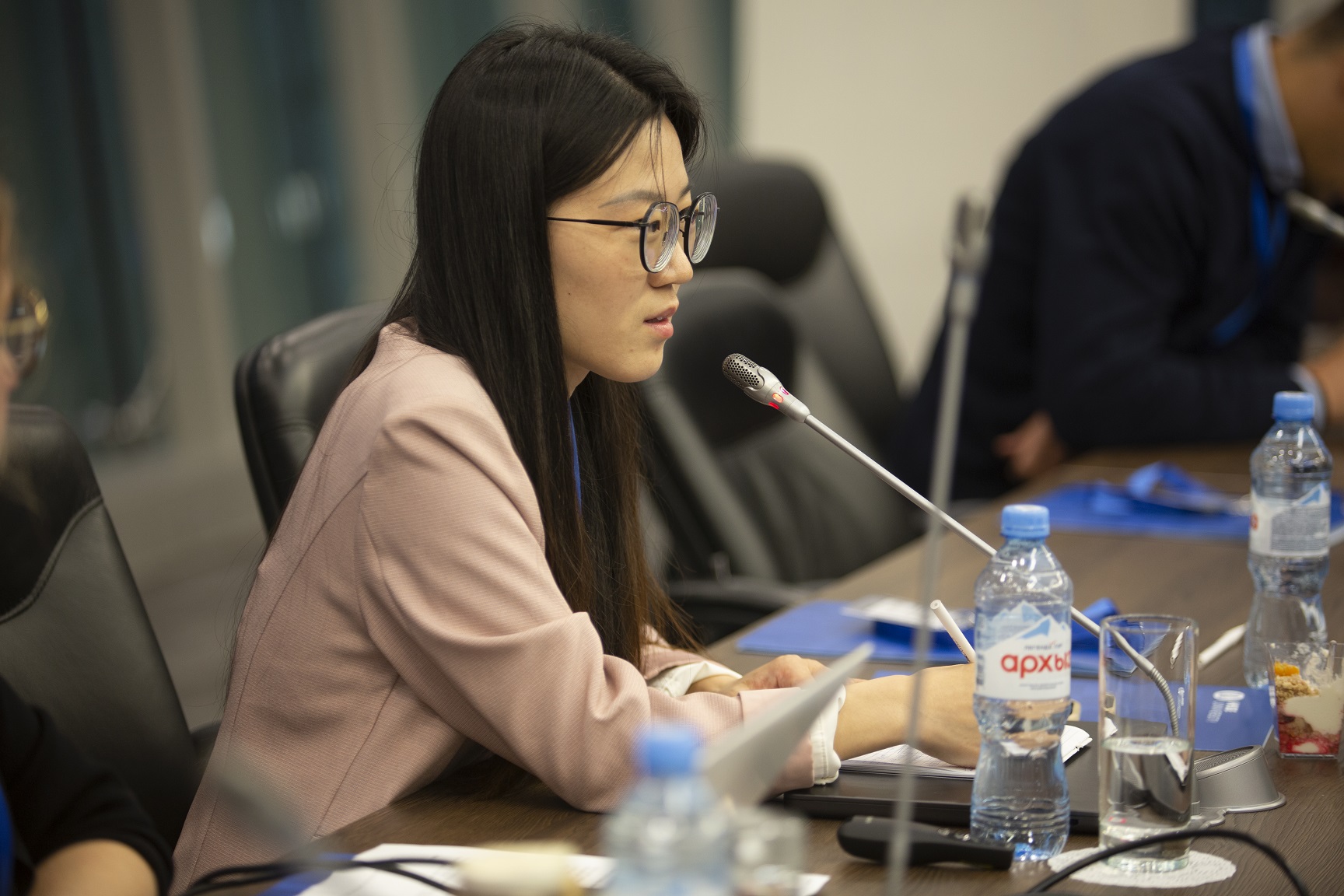
Wu Yanfei, research assistant at the Corporate Finance Centre of the HSE School of Finance, presented a report on the relationship between ESG performance and managerial myopia. Together with colleagues from RUDN University and the Faculty of Economic Sciences at HSE University, she analysed data on Chinese A-share companies from 2009 to 2023.
‘High ESG performance significantly reduces managerial myopia. This effect is strengthened by external government oversight, particularly through the corporate governance channel,’ Wu Yanfei noted. According to her, for managers this serves as a signal of the importance of internal governance; for investors, it highlights the value of ESG ratings as an indicator of strategic time horizons; and for regulators, it demonstrates the synergy between internal and external control mechanisms in ensuring sustainable development.

In a report presented by Prof. Elena Rogova of the Graduate School of Management at St Petersburg State University, it was shown that integrating ESG factors into company valuation models increases long-term value, reduces operational and regulatory risks, and creates a sustainability premium. Using the example of PJSC Severstal, the authors analysed the impact of ESG adjustments on business valuation.
‘A comparative analysis of baseline and ESG-adjusted models showed that sustainable practices stabilise company value under risk conditions and enhance growth potential under favourable scenarios. ESG factors, including emissions reduction and improvements in occupational safety, form a kind of insurance against regulatory and reputational threats,’ Elena Rogova emphasised.

See also:

HSE Computer Science Researchers Win Gold Medal at International Machine Learning Competition
A team comprising HSE International Laboratory of Statistical and Computational Genomics researchers Aleksei Shmelev and Nikita Chervov, 2025 graduate of the HSE Faculty of Computer Science’s Master’s programme in Data Analysis in Biology and Medicine Ivan Gevorkov, and two students from the United States achieved an outstanding result at the 2026 NeuroGolf international machine learning championship. The team won a gold medal and placed seventh overall.
‘Working with AI Solves a Wide Range of Engineering Problems’
Artificial intelligence is a working tool based on a balanced combination of algorithms and engineering. Experts and doctoral students from the HSE Moscow Institute of Electronics and Mathematics explain how AI technologies can improve an application, device, or system, and what engineering tasks are solved in the process.
‘The Peak of Stupidity’ and ‘The Valley of Despair’: HSE Economists Propose an Explanation for the Dunning–Kruger Effect
The Dunning–Kruger effect, which describes a sharp surge in self-confidence among beginners followed by an equally rapid decline as they gain experience, can be explained by the nature of the learning process and the acquisition of new knowledge. This conclusion was reached by Andrey Vorchik of the HSE Faculty of Economic Sciences together with independent researcher Murat Mamyshev. They developed a mathematical model of learning and demonstrated how subjective confidence is formed and changes as knowledge accumulates, as well as how teachers can reduce the ‘valley of despair’ experienced by learners.
Advancing Collaboration: HSE Faculty of Computer Science and Harbin Institute of Technology Hold Joint Seminar
From July 13 to 16, 2026, the Faculty of Computer Science hosted the Russian–Sino Research Seminar on Machine Learning Applications, organised by the HSE Laboratory for Cloud and Mobile Technologies in partnership with the Harbin Institute of Technology (China). A delegation comprising seven students and three university representatives travelled to Moscow to take part in an intensive four-day programme.
‘There’s a Big Practical Component in My Programme—That’s Especially Important in This Field’
Zou Jiaxu moved to Moscow from Heihe, China, at a young age. Having finished high school in Moscow, she decided to enrol in the Bachelor’s in Media Communications at the Institute of Media of the HSE Faculty of Creative Industries. Now in her second year of studies, Zou talked to the HSE News Service about the opportunities for practical experience available to HSE students, her volunteering and extracurricular activities, why learning Russian is a never-ending process, and the importance of making friends wherever you go.
A New Section on AI and a Prizewinning Paper: Early-Career HSE Researchers Take Part in IEEE EDM Conference
The 27th IEEE International Conference of Young Professionals in Electron Devices and Materials (EDM) has taken place in the Altai Republic. This year, researchers from HSE University presented the results of their research and were involved in organising a new section on artificial intelligence. A paper by HSE master’s student Rodion Sidorenko was awarded third place in the research paper competition at the conference.
HSE and Karakalpak State University Agree on Cooperation
HSE University and Berdakh Karakalpak State University have signed a cooperation agreement to strengthen collaboration in research, education, and innovation. Through the expertise of its Сentre of Digital Technologies for Nature-Based Solutions of the Carbon Measurement Supersites Programme, HSE University will work with colleagues from Uzbekistan to assess climate risks and evaluate opportunities for implementing nature-based climate projects in the region. The partners also plan to develop joint research and educational programmes.
HSE Initiates Development of Ethical Standard for Anthropomorphic Robots
Beyond technological solutions, the development of anthropomorphic robotics also demands ethical ones. In July 2026, the HSE Institute for Robotics Systems hosted a foresight session dedicated to developing an Ethical Standard for Anthropomorphic Robotic Complexes. Representatives from businesses, government bodies, scientific organisations, and universities gathered to discuss key ethical and legal issues surrounding the development of anthropomorphic robotic complexes. The main outcome of the meeting was a draft of the Ethical Standard.
International Dialogue and New Approaches: Highlights from Fudan University’s Summer School
At the beginning of July 2026, students from the HSE Faculty of World Economy and International Affairs took part in the Summer School on International Relations organised by Fudan University (China), one of the leading international educational programmes in this field. Over the course of two weeks, they explored contemporary approaches to global governance and the development of the Global South, attended lectures by renowned scholars from around the world, and discussed current international issues with fellow students from across the globe.
‘We Are Always Open to Collaboration, and China Is One of Our Most Important Partners’
From July 20 to 27, 2026, the HSE Faculty of Urban and Regional Development (FURD) is hosting a summer school for students from Tianjin University dedicated to the preservation of cultural heritage. Throughout the week, participants have attended lectures, practical workshops, and field visits to some of Moscow’s most iconic heritage sites. The summer school is the faculty’s first international programme of this kind and forms part of the expanding educational cooperation between Russia and China.