

Intellectual Capital in the Face of Shocks: Russia and Iran Explore Internationalisation
.jpg "Intellectual Capital in the Face of Shocks: Russia and Iran Explore Internationalisation")
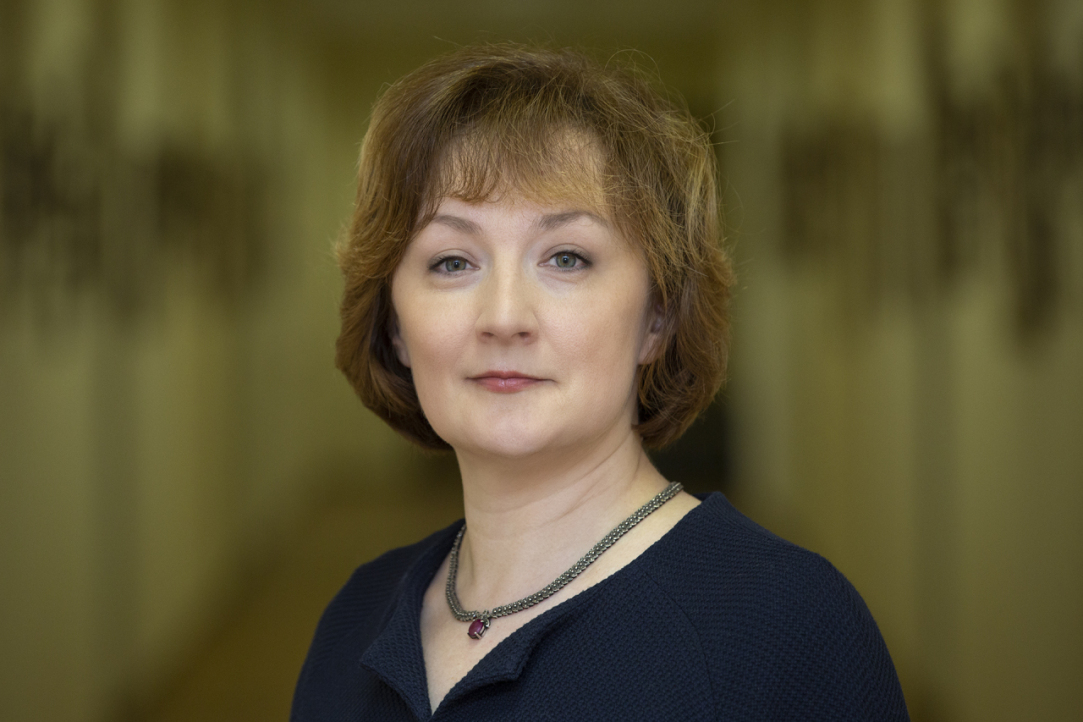
In today's issue of Schola, Mariya Molodchik, Senior Research Fellow at the International Laboratory of Intangible-Driven Economy and Professor at the School of Economics and Finance at HSE University’s Campus in Perm, discusses a joint project with Iran University of Science and Technology, titled 'Internationalization of Companies from Developing Countries: The Role of Intellectual Resources in Response to Exogenous Shocks.'
The joint project received support from the International Academic Cooperation (IAC) competition, which promotes international academic partnerships, broadens research agendas, and fosters interdisciplinary approaches in research paradigms. The competition also encourages the involvement of students, including doctoral students at HSE University, in collaborative basic research projects. This year, the competition received 30 applications from HSE University’s research subdivisions across all campuses.
The projects’ international partners included 28 research and educational institutions from nine countries: Brazil, China, Ethiopia, India, Iran, Kazakhstan, Qatar, Serbia, and the UAE.
As in the previous year, the largest number of applications were submitted in collaboration with academic teams from Chinese universities. The competition committee ultimately approved eight research projects.
— How did HSE University's collaboration with Iran University of Science and Technology begin and unfold?
— As is often the case in academia, it started with a letter from a research group at Iran University of Science and Technology proposing a joint grant application. Amir Zakery, Head of the Iran Think Tank for Export Development, came across an article I co-authored with my Spanish colleague Carlos Jardon, titled ‘What Types of Intangible Resources Are Important for Emerging Market Firms When Going International?,’ published in the Journal of East European Management Studies (2017. Vol. 22. No. 4. pp. 579–595), and sent a letter proposing a joint project. This was in 2020, when we submitted a joint application for an RSF grant. Unfortunately, it was not approved (as that particular call for applications did not support sociological or humanities projects—ed.). Nevertheless, the collaboration between the research teams continued through knowledge exchange on the study of intellectual resources and mutual peer review of papers. When HSE University announced its International Academic Cooperation competition in 2024, we decided to submit a new joint research proposal with the Iran Think Tank for Export Development at Iran University of Science and Technology.
Winning the funding was certainly very encouraging, as financial support for scientific work enables us to reach a new level of intellectual effort, ensures the regularity of joint events, and makes it possible to involve new participants in our research.
— Please tell us about the project team. In what way do the teams from the two countries complement each other? Have any particular challenges—such as linguistic or methodological ones—arisen during the collaboration?
— On our side, 20 people are expected to participate in the research project. Of these, 12 are already employees of the International Laboratory of Intangible-Driven Economy (IDLab), while eight were specifically invited to carry out the project’s tasks. The project also actively involves students at all levels—bachelor’s, master’s, and doctoral—with half of the Russian participants being students. From Iran University of Science and Technology, five individuals are involved, including two PhD students.
In terms of research competencies, the Russian and Iranian teams complement each other. IDLab’s strength lies in working with open data and employing advanced econometric analysis methods. In turn, our Iranian colleagues excel in applying case study methods and in developing applied analytical materials for government agencies to stimulate non-primary exports.
I would also like to highlight the anticipated exchange of best practices in working with master’s and doctoral students, as well as the organisation of a wide range of scientific and educational events within the framework of the project.
We experience no communication difficulties, as we are accustomed to online meetings, and both our discussions and publications are in English.
The academic community has its own professional style of communication that minimises national differences, enabling productive discussions and effective problem-solving. This, of course, does not diminish either party’s interest in learning about the cultural characteristics of the partner country.
I believe that at this stage we have only a very general understanding of Iran, and our partners know little about Russia. Therefore, we are looking forward to our first face-to-face meetings and conversations that go beyond scientific topics.

— What is the relevance of studying the role of intellectual resources in the internationalisation of companies from developing countries? Are there differences in how Russian and Iranian companies approach the use of intellectual resources? Which types of exogenous shocks—such as sanctions, pandemics, or geopolitical conflicts—have the greatest impact on the companies under study?
— Studying the internationalisation processes of companies in developing countries and identifying internal sources of growth is particularly relevant given the high instability of the global economy, the long-term consequences of the pandemic, and the additional pressures caused by sanctions from Western countries. It is known from practice that sanctions severely restrict access to international markets, complicate trade relations, and deter foreign investment, significantly aggravating the economic difficulties faced by these countries. Thus, strengthening domestic resources and capabilities becomes essential for maintaining competitiveness in international markets amid numerous environmental pressures. The project aims to examine the role of intellectual resources as a key component of a firm’s internal assets in the internationalisation of Russian and Iranian companies in the context of exogenous shocks. We hypothesise—and plan to test our hypothesis using empirical data—that shocks of different origins have varying effects on companies’ performance in foreign markets; in other words, the shock from the pandemic, the imposition of trade restrictions, and changes in tax legislation are likely to impact firms differently.
The economic and geopolitical landscapes of Russia and Iran share notable similarities, making them highly relevant subjects for fundamental and comparative studies of company behaviour, particularly regarding international expansion driven by intangible resources.
Studies of Russian and Iranian companies show that intellectual resources play a crucial role in shaping competitiveness in both domestic and international markets.
— What are some of the tasks facing the research teams? What will the project outcomes look like?
— As part of the project, we plan to address the following research questions:
● Is a higher level of intellectual resources in internationalised companies a necessary condition for their efficiency and resilience to external shocks? The project aims to examine the relationship between human, structural, and relational resources and the performance indicators of internationalised companies, including profitability, productivity, market share, and adaptability.
● What are the similarities and differences in the incentives and barriers to the internationalisation of Russian and Iranian companies? This study aims to identify the key factors that motivate or hinder the internationalisation processes of companies in Russia and Iran, taking into account their unique economic, political, and cultural contexts, industry specifics, and historical trade relations.
● Is government support important for effective internationalisation of companies? By examining various forms of government assistance—such as targeted financing, information support, trade agreements, and export capacity-building programmes—we aim to assess their impact on the success of international expansion and identify best practices that other countries can adopt to enhance their global competitiveness.
● What is the impact of knowledge gained from foreign stakeholders on a company’s performance from the perspective of resource dependence theory? This research question seeks to understand how knowledge acquired from foreign partners, suppliers, customers, and board members influences a company’s operational efficiency, innovation capabilities, and strategic decision-making.
● What constitutes the most effective infrastructure for export development at the regional and national levels? By considering the development of transport networks, logistics systems, trade promotion services, and digital platforms that support export activities, the study aims to identify the components that have the greatest impact on enhancing international trade efficiency and competitiveness.
The significance of the project for HSE University lies in:
- strengthening its international expertise in studying the internationalisation processes of firms under sanctions, with a focus on effective use of intellectual resources.
- creating a point of attraction for early-career researchers focused on addressing economic challenges through quantitative data analysis methods, including the use of artificial intelligence tools.
- producing applied results aimed at addressing practical challenges related to enhancing the internationalisation of Russian companies.
— As part of the project, will you examine how the cultural characteristics of each country affect the internationalisation process?
— Certainly. Specific practices in the use of human, relational, and structural resources may vary due to cultural differences, institutional and legislative features, and religious traditions. When entering foreign markets, companies need to understand how their competitors manage intellectual resources. We have yet to determine how the tools and methods used to enhance intellectual resources differ between Russian and Iranian companies. It should be noted that our project is not limited to a comparative analysis of the two countries. The methodology for studying the internationalisation of companies based on intellectual resources developed within this project can be applied to companies from any developing country. More information about our methodology will be shared at our seminars and conferences, with the next conference scheduled for the end of October.
Read the original in Russian on Schola.

See also:

HSE Graduate School of Business and Alfa-Bank Hold Summer School for Students from China
Twenty-seven students from Chinese universities took part in the international summer school ‘Digital Product Management’ organised by the HSE Graduate School of Business and Alfa-Bank. Over the course of a week, participants explored the Russian economy and business environment, learned about current technology trends, and worked through the key stages of digital product development step by step—from researching user needs and defining a problem to developing a prototype and presenting their final project.
Physicists Discover What Happens Inside a Stable Vortex
Large vortices with characteristic spiral arms are often observed in the atmosphere and the ocean. Physicists from HSE University have explained how these structures form and why they retain their shape. The researchers found that velocities at points located along the same vortex arc remain correlated even over long distances. At the same time, this correlation weakens rapidly with increasing distance from the vortex centre. These differences help explain the formation of spiral arms and may improve models of atmospheric and oceanic currents. The findings have been published in Physical Review Fluids.
‘The Peak of Stupidity’ and ‘The Valley of Despair’: HSE Economists Propose an Explanation for the Dunning–Kruger Effect
The Dunning–Kruger effect, which describes a sharp surge in self-confidence among beginners followed by an equally rapid decline as they gain experience, can be explained by the nature of the learning process and the acquisition of new knowledge. This conclusion was reached by Andrey Vorchik of the HSE Faculty of Economic Sciences together with independent researcher Murat Mamyshev. They developed a mathematical model of learning and demonstrated how subjective confidence is formed and changes as knowledge accumulates, as well as how teachers can reduce the ‘valley of despair’ experienced by learners.
Advancing Collaboration: HSE Faculty of Computer Science and Harbin Institute of Technology Hold Joint Seminar
From July 13 to 16, 2026, the Faculty of Computer Science hosted the Russian–Sino Research Seminar on Machine Learning Applications, organised by the HSE Laboratory for Cloud and Mobile Technologies in partnership with the Harbin Institute of Technology (China). A delegation comprising seven students and three university representatives travelled to Moscow to take part in an intensive four-day programme.
HSE and Karakalpak State University Agree on Cooperation
HSE University and Berdakh Karakalpak State University have signed a cooperation agreement to strengthen collaboration in research, education, and innovation. Through the expertise of its Сentre of Digital Technologies for Nature-Based Solutions of the Carbon Measurement Supersites Programme, HSE University will work with colleagues from Uzbekistan to assess climate risks and evaluate opportunities for implementing nature-based climate projects in the region. The partners also plan to develop joint research and educational programmes.
‘We Are Always Open to Collaboration, and China Is One of Our Most Important Partners’
From July 20 to 27, 2026, the HSE Faculty of Urban and Regional Development (FURD) is hosting a summer school for students from Tianjin University dedicated to the preservation of cultural heritage. Throughout the week, participants have attended lectures, practical workshops, and field visits to some of Moscow’s most iconic heritage sites. The summer school is the faculty’s first international programme of this kind and forms part of the expanding educational cooperation between Russia and China.
Physicists at HSE University and FIAN Discover Way to 'Photograph' Sound for Testing Materials Used in 6G Communications
Researchers at HSE University, in collaboration with colleagues from the Lebedev Physical Institute of the Russian Academy of Sciences (FIAN), have developed a method for rapidly determining how firmly a film is bonded to a substrate. This is important for the creation of ultrahigh-frequency acoustic filters, which are key components of next-generation 5G and 6G communications. For the first time, researchers have succeeded in measuring the lateral rigidity of the bond between a two-dimensional material film and a substrate in this way. The study results have been published in Applied Physics Letters.
HSE University and Peking University Expand Their Partnership
Peking University President Gao Song paid his first visit to HSE University as part of his first overseas trip since taking office in May 2026. The main purpose of the talks was to consolidate existing areas of cooperation and expand joint projects between HSE University and Peking University within the framework of the Cross Years of Russia–China Cooperation in Education (2026–2027).
Biologists Discover Unique Properties of MiR-93-5p MicroRNA in Prostate Cancer
Researchers at the International Laboratory of Microphysiological Systems of the HSE Faculty of Biology and Biotechnology investigated how different isoforms of the same microRNA influence gene function in prostate adenocarcinoma. The study found that in some cases, microRNAs can reinforce each other’s effects by targeting and suppressing the same genes. This finding offers a fresh perspective on the molecular mechanisms underlying tumour development and on the search for disease biomarkers. The results have been published in PeerJ.
Researchers Discover How Spelling Errors Slow Down Reading in Russian
Psycholinguists from the Centre for Language and Brain at HSE University–St Petersburg have shown that words that are frequently misspelled are processed more slowly by readers, even when presented with the correct spelling. The researchers confirmed this effect for the first time using Russian-language materials and found that response speed is most strongly linked to how confidently individuals can distinguish the correct spelling of a word from an incorrect one. The study has been published in The Mental Lexicon.