

Students from HSE and Other Universities Carry Out Research Expedition at New Chersonesos
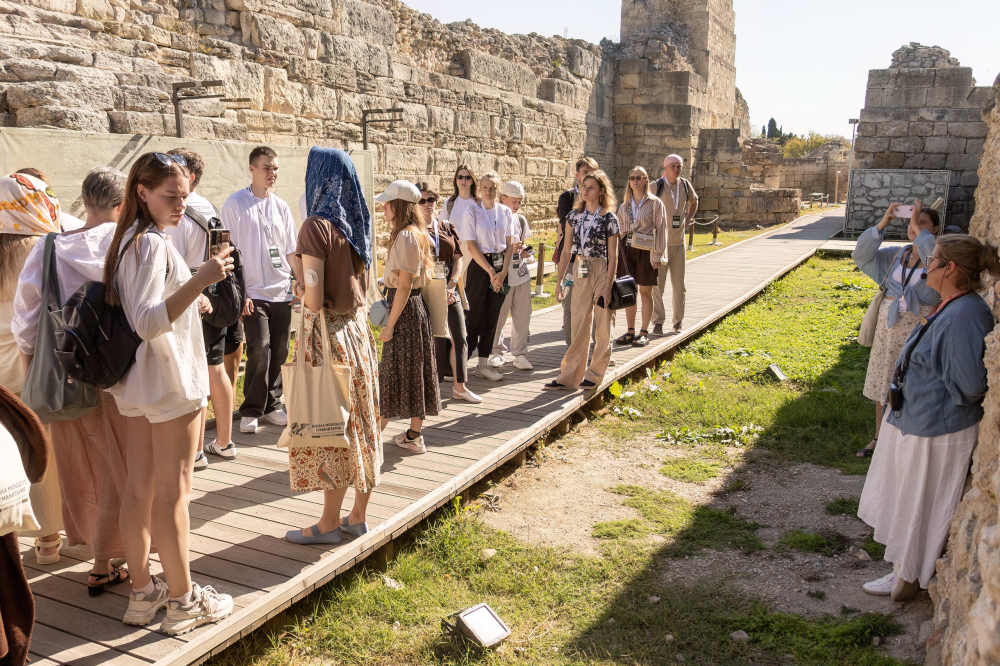


As part of the Rediscovering Russia student expedition programme, HSE University organised a research trip under the framework of the School for Young Humanities Scholars to the New Chersonesos museum and church complex in Sevastopol. The results of this expedition will form the basis for proposals on educational projects aimed at shaping young people’s historical memory of the role of Chersonesos, Crimea, and the Byzantine legacy in the history of Russian culture and statehood.
The expedition took place on September 13–20 and involved 30 participants—students from HSE and other universities selected through an application process. The expeditions are supported by Rosmolodezh’s ‘More than a Trip’ programme and the ‘Russia—Land of Opportunity’ presidential platform.
During the trip, students from across Russia conducted a sociological study of young people’s historical memory regarding the Baptism of Rus’ by Prince Vladimir and the influence of Orthodoxy and Byzantium on the formation of the Russian civilisation. They also analysed existing practices and projects of the New Chersonesos museum and church complex.
Chersonesos is the site where, in 988, Prince Vladimir was baptised together with his army and married the sister of the Byzantine emperor. Then he returned to Kiev as a Christian and subsequently baptised the inhabitants of Kiev and Novgorod, the largest cities in Rus’. New Chersonesos is a museum and church complex covering 22.4 hectares. Its territory includes museums of Christianity, Crimea and Novorossiya, Antiquity and Byzantium; an archaeological park; an amphitheatre; and a reconstructed Byzantine quarter with a mint, an ancient villa, craft workshops, and a winemaker’s estate.
In addition, students took part in an educational intensive course organised by the School for Young Humanities Scholars Over the course of a week, they attended lectures, met with clergy, and went on guided tours.

‘I was delighted by the students’ interest in the historical significance of New Chersonesos and by the enthusiasm with which they engaged in the research. In a short time, they completed a large volume of work and launched an important applied study. I hope the process will not stop here, that more visitors to the complex will be surveyed, and that more data will be collected—data that we, the staff of New Chersonesos, can rely on in our future work and planning,’ said Daria Khavchenko, Head of Event Management at the My History Charitable Foundation of the New Chersonesos museum and church complex, and Head of the Tochka Opory Crimean Youth Centres.

Dmitry Zemtsov, HSE Vice Rector, noted that this was the first project of the Rediscovering Russia programme and the School for Young Humanities Scholars. ‘We conceived the expeditions as an opportunity for students to discover their own country and put part of their soul into it. We managed to hold such an expedition here, in Chersonesos, where Russia inherited the legacy of the Roman (Byzantine) Empire and adopted Orthodoxy. And from the students’ reports, from the look in their eyes, I could see that this was also very important for them. They truly felt the spirit of this place and came to love it sincerely. I am sure we will continue with these formats, bringing more young researchers here to contribute to Chersonesos. It is a remarkable place,’ he stressed.
The School for Young Humanities Scholars’ session at the New Chersonesos site, held jointly with HSE University, was a vivid example of the synthesis of education, science, and practice, according to Natalia Karmazina, Vice Rector of Crimean Federal University.

‘It was important for us to create an environment where students could apply theoretical knowledge in real conditions. The philosophy group explored the value foundations of the complex, the sociology group conducted fieldwork with visitors, and the media team documented the implementation of the school’s programme. We see the results in the participants’ high-quality projects, their professional growth, and a well-tested model of cooperation between the university and cultural institutions. This experience confirms the effectiveness of a practice-oriented approach to training a new generation of humanities scholars,’ she noted.
Participants of the expedition shared their impressions of working at the New Chersonesos museum and church complex.

‘Our main task in the media group is to translate the vast layers of history, archaeology, and spirituality into formats that are accessible and engaging for young people,’ said Vitalia Prosyanik, a second-year master’s student on the Interactive Media and Digital Industries programme at HSE University. ‘We, the media team, are in constant contact with philosophers and sociologists, which allows us to see the project from different angles—from the deep meanings embedded by the creators of the complex to practical demands. Part of our responsibility is to help plan the future of the new complex. While preparing materials, we decided to make a film about people’s lives and how they changed after encountering New Chersonesos. Every day we attended lectures, visited museums, archaeological sites, churches, and parishioners in order to collect material and prepare our project on the development of the complex. We are looking for answers to the question of how to make the site personally meaningful for everyone who engages with it—especially for those who have never been here before. Why might it interest them? Which places should they visit in order to learn more about their past, about their history? How can we unite the spiritual with the popular in the present day? We want this place to become not just a dot on the map, but a true discovery.’

‘The New Chersonesos museum and church complex has inestimable historical significance. As a historian, I simply could not miss this trip,’ said Nikita Butyaev, a third-year student at Yaroslavl Demidov State University. ‘I would not call myself a practising believer, but I have great respect for Orthodoxy and fully recognise its immense cultural, historical, and political significance for our country. The main topics of my academic interest are medieval Rus’ architecture and medieval pilgrim guides to holy places, which are directly linked to Byzantium and the Greek world. I wanted to take part in the expedition and contribute to achieving positive results in our work.’ The student went on to explain how participants gathered opinions from experts—those shaping the meanings and policies of New Chersonesos. ‘We learnt about their contribution to this complex,’ he noted. ‘We also stayed in close contact with the sociologists—another of our teams. They shared with us how young people, the project’s target audience, express what they want to find in New Chersonesos, and what we could propose to the organisers in this respect. We considered which directions to take to ensure that the complex becomes even more attractive, more profound, and an even more historically significant project in the history of modern Russia.’
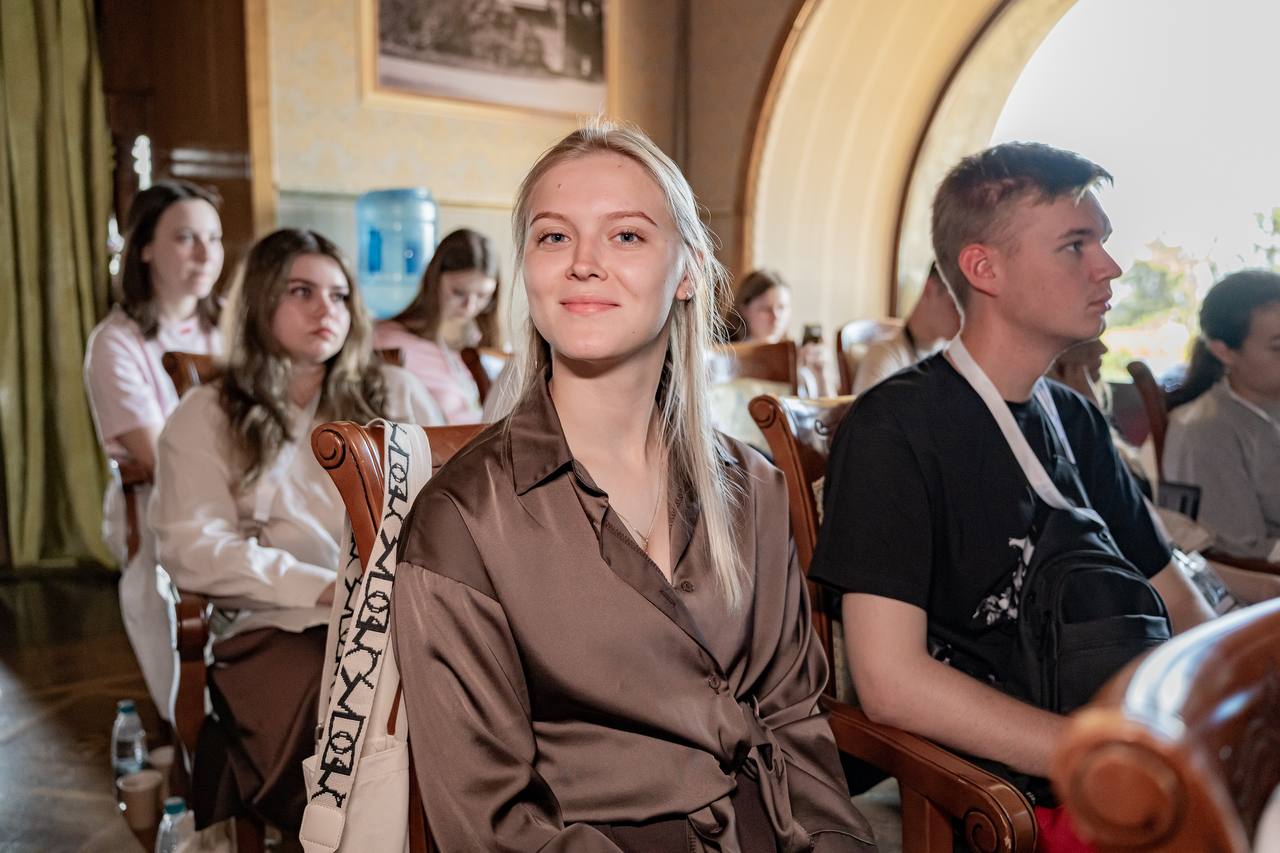
Ksenia Avdonina, a second-year master’s student in Sociology at the Financial University under the Government of the Russian Federation, was part of the team of sociologists. Their aim was to analyse the audience of New Chersonesos: its composition, interests, perceptions, and motivations. ‘We deliberately focused on young people and how to attract them to the complex,’ Ksenia added. ‘We were also interested in finding out the views of those who had never visited the site: what they knew about it and about the Baptism of Rus’—the event linked to the founding of New Chersonesos.’ The team of sociologists conducted an exploratory study with 49 respondents, using a quantitative semi-structured survey to obtain a more detailed assessment. The researchers found that young people did not fully grasp some of the narratives of the complex, particularly the religious one. Most often, young visitors came to New Chersonesos for tourist purposes. ‘They may pick up the historical context, but even here the indicator is weak: only about half (55%) recognised this narrative,’ noted Ksenia Avdonina. ‘We also observed a trend that older visitors (aged 37+) were more likely to say that New Chersonesos is connected with the Baptism of Rus’ (65%). They were also more likely to mention that religion is important in their lives. Another point we recorded: the more important religion was in a person’s life, the more clearly they understood the religious meanings of the complex. In addition, 35% of young people aged 18–25 said that their favourite elements of the complex were the zoo and the pond. This is linked to the fact that these spaces and activities are free. The main problems young visitors identified were the high cost of excursions and the lack of information boards explaining the exhibits within New Chersonesos.’
The expedition participants designed a special route for young visitors. Its key advantage lies in combining not only museums for educational enrichment but also free activities for leisure. ‘We have genuinely become enthusiastic about Chersonesos, and we plan to continue our research. During our work we formulated many hypotheses that we would like to test in the next stage, with a larger-scale survey,’ Ksenia Avdonina concluded.
From July to October 2025, the Simferopol and Crimean Diocese, with the support of Crimean Federal University, Sevastopol State University, HSE University, Kuban State University, Samara State University of Economics, Tauride Theological Seminary, Sretensky Theological Academy, and the regional branches of the Russian Society Znanie in the Republic of Crimea and Sevastopol, is holding eight sessions of the School for Young Humanities Scholars.

See also:

‘The Peak of Stupidity’ and ‘The Valley of Despair’: HSE Economists Propose an Explanation for the Dunning–Kruger Effect
The Dunning–Kruger effect, which describes a sharp surge in self-confidence among beginners followed by an equally rapid decline as they gain experience, can be explained by the nature of the learning process and the acquisition of new knowledge. This conclusion was reached by Andrey Vorchik of the HSE Faculty of Economic Sciences together with independent researcher Murat Mamyshev. They developed a mathematical model of learning and demonstrated how subjective confidence is formed and changes as knowledge accumulates, as well as how teachers can reduce the ‘valley of despair’ experienced by learners.
Physicists at HSE University and FIAN Discover Way to 'Photograph' Sound for Testing Materials Used in 6G Communications
Researchers at HSE University, in collaboration with colleagues from the Lebedev Physical Institute of the Russian Academy of Sciences (FIAN), have developed a method for rapidly determining how firmly a film is bonded to a substrate. This is important for the creation of ultrahigh-frequency acoustic filters, which are key components of next-generation 5G and 6G communications. For the first time, researchers have succeeded in measuring the lateral rigidity of the bond between a two-dimensional material film and a substrate in this way. The study results have been published in Applied Physics Letters.
Biologists Discover Unique Properties of MiR-93-5p MicroRNA in Prostate Cancer
Researchers at the International Laboratory of Microphysiological Systems of the HSE Faculty of Biology and Biotechnology investigated how different isoforms of the same microRNA influence gene function in prostate adenocarcinoma. The study found that in some cases, microRNAs can reinforce each other’s effects by targeting and suppressing the same genes. This finding offers a fresh perspective on the molecular mechanisms underlying tumour development and on the search for disease biomarkers. The results have been published in PeerJ.
Researchers Discover How Spelling Errors Slow Down Reading in Russian
Psycholinguists from the Centre for Language and Brain at HSE University–St Petersburg have shown that words that are frequently misspelled are processed more slowly by readers, even when presented with the correct spelling. The researchers confirmed this effect for the first time using Russian-language materials and found that response speed is most strongly linked to how confidently individuals can distinguish the correct spelling of a word from an incorrect one. The study has been published in The Mental Lexicon.
HSE Economists Reveal How the Wage Gap Emerges Among Vocational School Graduates
HSE researchers examined the careers of 600,000 graduates of Russian secondary vocational education programmes and found that at the start of their careers, the gender wage gap reaches 23%, doubling after three years. This disparity is largely due to male and female students choosing different occupations when enrolling in vocational schools. These were the findings made by Sergey Roshchin, Natalya Yemelina, and Ksenia Rozhkova from of the HSE Faculty of Economic Sciences. The article has been published in Educational Studies.
HSE Researchers Make Aldehydes Perform Dual Function
Chemists from HSE University have discovered a way to carry out a reductive addition reaction without using an external reducing agent. Instead, the required 'resource' is supplied by the aldehyde itself, one of the reaction participants. This approach helps prevent unwanted side reactions, reduces toxicity, and simplifies the production and synthesis of organic molecules, including those used in the manufacture of medicines. The study has been published in Journal of Catalysis.
HSE Scientists Develop Method to Compress Large Language Models Without Losing Quality
Researchers from the AI and Digital Science Institute at the HSE Faculty of Computer Science have developed a new compression method for large language models such as GPT and LLaMA that reduces their size by 25–36% without additional training or significant loss of accuracy. This is the first approach to use mathematical transformations—specifically, rotations of model weights—to make models more amenable to compression with structured matrices. The study results have been published in ACL Findings 2025. The code is available on GitHub.
Machine Learning Models Can Help Reduce Volatility and Boost Stock Market Returns
The use of machine learning models makes it possible to achieve greater accuracy in predicting risks in the Russian stock market compared to classical econometric approaches. The predictive power of these models increases by 23%, while the average investor’s return can reach up to 13% per annum. These conclusions were drawn by Nikita Lysenok from the Department of Financial Market Infrastructure at the HSE Faculty of Economic Sciences. The paper has been published in Fundamental and Applied Mathematics.
HSE Study Reveals Imbalance in the Generative AI Market
Researchers at HSE University analysed how effectively the global generative artificial intelligence market converts investment into real revenue, concluding that AI is currently developing faster than it is paying off. The results have been published in the journal Foresight and STI Governance.
Teaching a Machine to Read the Past: HSE Develops Neural Network to Decipher Manuscripts
Diaries and letters are an invaluable resource for humanities scholars. But what can be done when the text is impossible to read? At the HSE Faculty of Humanities, this challenge has been translated into the language of mathematics: a team of philologists, historians, and machine learning specialists has created an information system that not only recognises illegible handwriting but also helps analyse archival content.