

AI to Enable Accurate Modelling of Data Storage System Performance

Researchers at the HSE Faculty of Computer Science have developed a new approach to modelling data storage systems based on generative machine learning models. This approach makes it possible to accurately predict the key performance characteristics of such systems under various conditions. Results have been published in the IEEE Access journal.
Data storage systems play an important role in today’s digital world, as they are responsible for the safety and prompt availability of vast amounts of information. These systems consist of many components, including controllers, HDD and SSD disks, as well as cache memory, which work together to ensure fast and efficient operation. To achieve optimal performance, it is essential to accurately predict how these systems will function in different scenarios, such as when the load on the system changes.
Researchers at the HSE Faculty of Computer Science developed a new approach to modelling data storage system performance, which relies on generative machine learning models. The authors proposed a method that provides high-precision predictions of the key performance characteristics of the systems: the number of input/output operations per second (IOPS) and latency.
The modelling includes two stages. First, the scientists collect data by measuring the system’s performance under various loads and configurations. This data is then fed to two special generative models: the CatBoost regression model and the normalizing flow model. CatBoost works well with tabular data and can accurately predict average values and performance deviations. The normalizing flow model produces a complete distribution of possible outcomes, taking into account data uncertainties and variability.
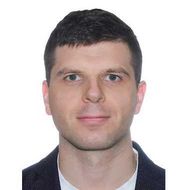
Mikhail Hushchyn
‘One of the main advantages of our method is that it does not require detailed knowledge of the internal structure of the system components. This is often impossible due to the manufacturers’ trade secrets. Instead, our generative models are trained directly on real-world data. For instance, in our study, we trained a model using 300,000 measurements. This makes our approach versatile and applicable to any type of data storage system,’ says study author Mikhail Hushchyn, a senior research fellow at the HSE Faculty of Computer Science.
The researchers tested the accuracy of the proposed approach using Little's law, a fundamental principle of queuing theory. According to test results, these predictions are highly consistent with real observations: prediction errors range from just 4–10% for IOPS and 3–16% for latency, while the correlation with the observed values reaches 0.99.

Aziz Temirkhanov
‘Our proposed approach opens up broad prospects for optimising and planning the operation of data centres. It makes it possible to predict the behaviour of the system amid load changes, identify potential performance issues, and optimise power consumption. Furthermore, expensive physical experiments are no longer required for accurate modelling,’ stated Aziz Temirkhanov, a junior research fellow at the Laboratory of Methods for Big Data Analysis.
The experimental code and measurements of the storage system performance are publicly available.
The research was carried out within the Mirror Laboratories project of HSE University on improving the efficiency of data centres and data storage systems using artificial intelligence methods.

See also:

Biologists Discover 'Molecular Fingerprint' of Preeclampsia
Researchers at HSE University employed a new method to model hypoxia in placental cells during pregnancies complicated by preeclampsia and identified molecular markers of tissue hypoxia. Since hypoxia is one of the key mechanisms underlying preeclampsia, these findings are important for a more accurate and timely diagnosis of the disease and for the development of effective treatment methods. The paper has been published in Placenta.
‘Hedgehog’ Versus ‘Relatives’: Researchers Measure How the Brain Responds to Unexpected Words During Natural Speech
Russian neurophysiologists, including researchers from HSE University, have demonstrated the feasibility of using event-related fields (ERFs) to study brain activity during natural speech perception. The researchers showed that this approach can be applied not only to individual words but also to continuous speech. Their findings indicate that words whose meanings differ significantly from the preceding context require longer processing times. The study also reveals that the brain processes function words in two stages: first, it identifies their grammatical role and then uses this information to predict the next word. The study has been published in Frontiers in Human Neuroscience.
HSE Researchers Create New Corpus of Early Child Speech in Russian
Researchers at the HSE Centre for Language and Brain have presented RusLan-M, an open multimedia corpus that makes it possible to trace the development of early child speech in Russian from first words to the emergence of complex grammatical constructions. The database contains around 41 hours of video recordings and more than 35,000 child utterances. The new resource will help researchers study more precisely how children acquire Russian and, in the longer term, develop more reliable tools for assessing speech development. The study has been published in Language Resources and Evaluation.
Hybrid Intelligence: Competencies in the Age of AI Discussed at Technoprom-2026
Artificial intelligence is not creating new professions, but rather transforming the nature of existing ones. This was the conclusion reached by participants in the panel session ‘Hybrid Intelligence: Digital and Human Drivers of Development,’ organised by the Institute for Statistical Studies and Economics of Knowledge (ISSEK) at HSE University as part of the 13th International Forum of Technological Development (Technoprom-2026). The experts discussed how the nature of work is changing, which skills are becoming increasingly sought after, and what prevents companies from fully capitalising on new technologies.
Scientists Develop Algorithm for More Reliable Processors in Data Centres
Researchers from HSE MIEM and Samara University have developed the LRF-3D algorithm to automatically bypass idle nodes in three-dimensional networks-on-chip. Thanks to its hierarchical architecture, the algorithm outperforms existing solutions in both speed and path accuracy, improving processor reliability for use in data centres, supercomputers, and AI computing. The source code and test results are publicly available.
Researchers Rank Recommendation Algorithms Using Sports Tournament Model
Researchers from the AI and Digital Science Institute at the HSE Faculty of Computer Science have developed an approach for selecting recommendation algorithms more effectively. Their approach uses pairwise comparisons of algorithms to create a tournament table, with the overall ranking based on their performance across all datasets in the tournament. This can reduce the number of algorithms that need to be tested when developing new services, saving both time and money. The study was presented at the 32nd ACM SIGKDD Conference on Knowledge Discovery and Data Mining (KDD 2026).
Researchers Develop Method for Direct Generation of Regulatory DNA
Researchers at HSE University have developed a model for generating promoters and enhancers—DNA sequences that regulate gene activity. The model works directly with DNA nucleotides, without first transforming them into a continuous numerical representation. This solution could be useful for applications in synthetic biology and gene therapy. The study results were presented at the ICLR 2026 Workshop ‘Generative AI in Genomics (Gen^2): Barriers and Frontiers.’
Researchers at HSE University and Sber Train Neural Networks to Better Predict User Preferences
The HSE FCS AI and Digital Science Institute and Sber have introduced a new architecture for recommendation systems that combines two classes of models, enabling algorithms to better predict users’ interests and needs. A preprint of the paper has been published on arxiv.org and presented at Urban ML.
Physicists Discover What Happens Inside a Stable Vortex
Large vortices with characteristic spiral arms are often observed in the atmosphere and the ocean. Physicists from HSE University have explained how these structures form and why they retain their shape. The researchers found that velocities at points located along the same vortex arc remain correlated even over long distances. At the same time, this correlation weakens rapidly with increasing distance from the vortex centre. These differences help explain the formation of spiral arms and may improve models of atmospheric and oceanic currents. The findings have been published in Physical Review Fluids.
‘Working with AI Solves a Wide Range of Engineering Problems’
Artificial intelligence is a working tool based on a balanced combination of algorithms and engineering. Experts and doctoral students from the HSE Moscow Institute of Electronics and Mathematics explain how AI technologies can improve an application, device, or system, and what engineering tasks are solved in the process.