

‘My PhD Journey Was Made Possible by My Studies at HSE’
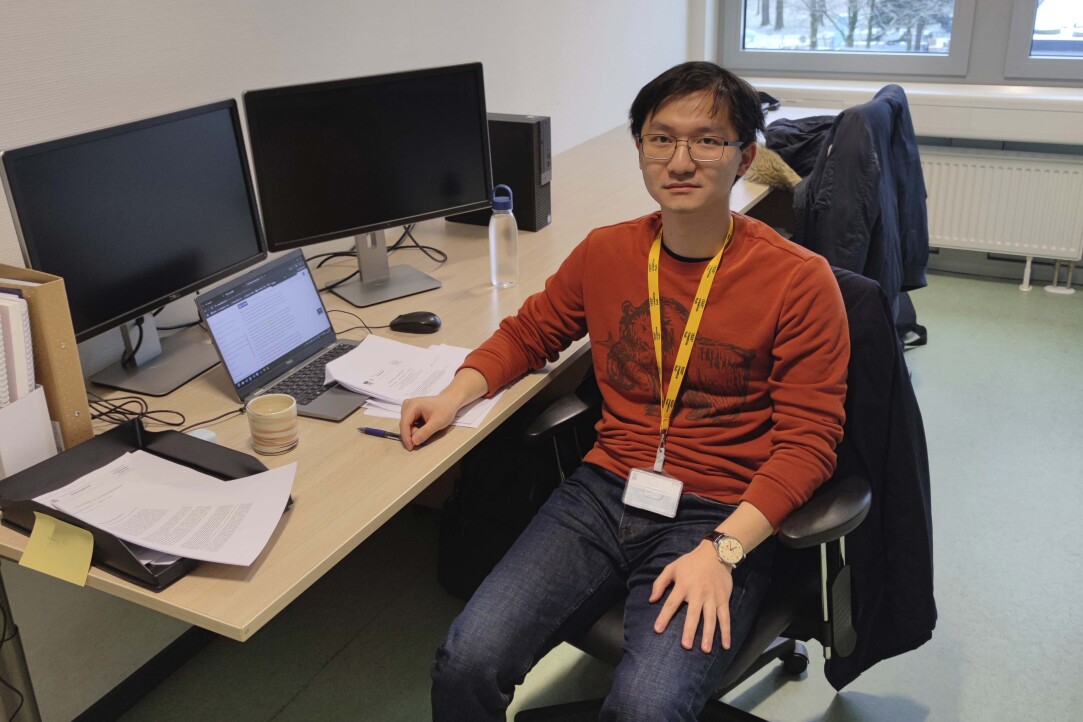
Tianxiong Yu, 25, completed his Master’s in Economics and Economic Policy at HSE University in Moscow. He spent the second year of the programme at the University of Luxembourg and has since enrolled there on a doctoral programme. While it is no longer a joint programme, HSE graduates continue to successfully pursue PhDs at international universities. Tianxiong spoke to the HSE News Service about his memories of his master’s course and how his time at HSE paved the way for his doctoral research.
— Why did you choose HSE University?
— I had the privilege of studying at HSE Moscow in the Master's programme in Economics and Economic Policy (Research track). Before that, I completed my bachelor's degree at East China Normal University in my hometown of Shanghai.
I chose HSE primarily because of its outstanding reputation (especially in the field of economics) and potential. In just 30 years, it has established itself as one of the most prestigious institutions in Russia and is recognised globally. Many HSE graduates have gone on to achieve significant success in both academia and industry worldwide.
The university's international environment and well-designed accommodation made it easier for me to live and study in Moscow, even without speaking Russian
Although I spent only one year at HSE, the experience was truly amazing. HSE provides everything a student needs to focus fully on their studies. The university offers countless opportunities, including conferences, seminars, and research teams that students can join, all of which helped me refine my research ideas and gain valuable experience.
— What memories stand out from your studies?
— What I particularly loved about HSE was its friendly and open atmosphere, both academically and socially. The supportive environment inspires students to contribute enlightening ideas and collaborate on producing high-quality research.
Professors are approachable, and you are encouraged to share your ideas—sometimes by simply knocking on their office doors (though, of course, scheduling an appointment is more polite!)
As for the courses, I enjoyed all of them—from maths, micro, macro, to metrics—because they laid the foundation for further studies. The machine learning classes (using Python) were particularly valuable and remain highly relevant today. To deepen my understanding of my areas of interest, I also selected courses related to applied micro, which continue to benefit me to this day.
The most challenging aspect for me was navigating some legal documents written in Russian. However, with the help of a buddy or translator, this difficulty became mild.
Overall, my time at HSE was invaluable, providing me with knowledge, opportunities, and a supportive community that significantly shaped my academic journey
— Besides hard skills, what else did you learn at HSE? What advice do you have for new arrivals?
— I learned how to allocate time and tasks efficiently, especially during finals with tight deadlines. I also developed effective learning strategies, which were essential given the four exam periods per year. Staying organised, preparing in advance, and keeping up with coursework made the exam periods much more manageable.

My advice is to be prepared (for Moscow’s winters, for example) and to use your time wisely. While earning a bachelor’s or master’s diploma is important, it shouldn’t be your ultimate goal.
HSE offers many opportunities for personal and professional growth. Engage in extracurricular activities, build your network, and explore new experiences
By focusing on holistic development and striving to excel, you’ll find that the degree will come naturally as part of your journey.
— How did your master's programme prepare you for your PhD in Luxembourg?
— My journey toward pursuing a PhD in Luxembourg began with enrolling in the Master's programme in Quantitative Economics and Finance (MQEF) at the University of Luxembourg, an opportunity made possible by my studies at HSE.
The MQEF programme provides an exceptional foundation for both academic and professional advancement, and graduates go on to work in top-tier roles across academia, business, and public institutions.
For me, the strong connection between HSE and the University of Luxembourg played a pivotal role. HSE graduates have established an excellent reputation at the University of Luxembourg
This, coupled with my strong academic performance, was instrumental in my acceptance into the PhD programme.
My deepest gratitude to my supervisor, Prof. Marina Sandomirskaia, for her outstanding micro classes and tremendous support, including during my academic mobility. I am also immensely thankful to Prof. Kirill Bukin for his fantastic ‘Mathematics for Economists’ course, which laid a strong foundation for my future studies. Additionally, I extend my heartfelt thanks to Prof. Bogdan Potanin for offering me the opportunity to collaborate on research and for his invaluable support throughout. I owe a special thanks to Professors Aleksei Smirnov, Tatiana Mayskaya, Arsenii Mishin, Elena Kotyrlo, and Pasha Andreyanov for their exceptional courses spanning micro, macro, metrics, and machine learning. Finally, I’d like to express my sincere appreciation to Maria Geroeva and Oxana P. Budjko for their unwavering support in ensuring a smooth exchange experience and handling all related paperwork. Their efforts made the process seamless and allowed me to focus on my studies and research.
— Tell us about your PhD and your future plans.
Since I just began my doctoral programme this fall, everything is progressing slowly but steadily. My current research focuses on topics related to collective learning and decision-making, such as how committee members gradually acquire knowledge and ultimately make joint decisions.
Being a PhD student is fundamentally about thinking deeply. It involves learning from the literature, engaging in discussions with others to exchange ideas, and working diligently to refine and develop a good idea
At this stage, I am immersing myself in this process—striving to shape a research idea that is both meaningful and feasible.
My future professional plans still involve a career in academia, but this is contingent on making meaningful contributions during my PhD studies. While there is still a lot of uncertainty ahead, I hope to secure a position at a research institute in the future.
For those who may be considering a career path similar to mine but with more focus on industry, I believe this is definitely achievable. In that case, you might spend more time on job interviews or internships, focusing less on academics compared to my approach.
Regardless of the path you choose, stay hungry and keep striving for excellence

See also:

HSE Graduate School of Business and Alfa-Bank Hold Summer School for Students from China
Twenty-seven students from Chinese universities took part in the international summer school ‘Digital Product Management’ organised by the HSE Graduate School of Business and Alfa-Bank. Over the course of a week, participants explored the Russian economy and business environment, learned about current technology trends, and worked through the key stages of digital product development step by step—from researching user needs and defining a problem to developing a prototype and presenting their final project.
Advancing Collaboration: HSE Faculty of Computer Science and Harbin Institute of Technology Hold Joint Seminar
From July 13 to 16, 2026, the Faculty of Computer Science hosted the Russian–Sino Research Seminar on Machine Learning Applications, organised by the HSE Laboratory for Cloud and Mobile Technologies in partnership with the Harbin Institute of Technology (China). A delegation comprising seven students and three university representatives travelled to Moscow to take part in an intensive four-day programme.
‘There’s a Big Practical Component in My Programme—That’s Especially Important in This Field’
Zou Jiaxu moved to Moscow from Heihe, China, at a young age. Having finished high school in Moscow, she decided to enrol in the Bachelor’s in Media Communications at the Institute of Media of the HSE Faculty of Creative Industries. Now in her second year of studies, Zou talked to the HSE News Service about the opportunities for practical experience available to HSE students, her volunteering and extracurricular activities, why learning Russian is a never-ending process, and the importance of making friends wherever you go.
International Dialogue and New Approaches: Highlights from Fudan University’s Summer School
At the beginning of July 2026, students from the HSE Faculty of World Economy and International Affairs took part in the Summer School on International Relations organised by Fudan University (China), one of the leading international educational programmes in this field. Over the course of two weeks, they explored contemporary approaches to global governance and the development of the Global South, attended lectures by renowned scholars from around the world, and discussed current international issues with fellow students from across the globe.
‘We Are Always Open to Collaboration, and China Is One of Our Most Important Partners’
From July 20 to 27, 2026, the HSE Faculty of Urban and Regional Development (FURD) is hosting a summer school for students from Tianjin University dedicated to the preservation of cultural heritage. Throughout the week, participants have attended lectures, practical workshops, and field visits to some of Moscow’s most iconic heritage sites. The summer school is the faculty’s first international programme of this kind and forms part of the expanding educational cooperation between Russia and China.
HSE University and Peking University Expand Their Partnership
Peking University President Gao Song paid his first visit to HSE University as part of his first overseas trip since taking office in May 2026. The main purpose of the talks was to consolidate existing areas of cooperation and expand joint projects between HSE University and Peking University within the framework of the Cross Years of Russia–China Cooperation in Education (2026–2027).
Three Weeks in Shanghai: HSE University–St Petersburg Students Study International Politics at Leading Chinese University
Students of the Bachelor's programme 'Political Science and World Politics' at HSE University–St Petersburg participated in the Summer School at Fudan University in Shanghai. For three weeks, they studied world geopolitics and Chinese diplomatic strategies.
‘Architecture, Nature, Cuisine—Everything in China Is Astonishing’
This year, Elizaveta Zorina is completing her Master’s degree in Artificial Intelligence Hardware and Software at the HSE Tikhonov Moscow Institute of Electronics and Mathematics (HSE MIEM). In autumn 2025, she spent six months in China as part of an academic mobility programme. In this interview, she shares her experience of studying at the School of Information Science and Engineering at Shandong University.
Education in a Changing World: Russian–Chinese Dialogue in Beijing
How are universities, vocational education systems, and researcher training programmes evolving in response to new challenges? These questions were at the heart of the international forum ‘Reconfiguring Education in a Changing World: Russia–China Dialogues on Higher Education, Skills, and Research Training’, held in China in mid-June. The event was jointly organised by the HSE Institute of Education and the Graduate School of Education of Peking University, which hosted the forum on its campus.
Mathematicians from Nizhny Novgorod and Shanghai Study System Stability
Mathematicians at HSE University–Nizhny Novgorod, in collaboration with colleagues from Tongji University in Shanghai, are investigating the fundamental causes of structural stability in systems and the mechanisms underlying its disruption. In this interview with the HSE News Service, Prof. Olga Pochinka, Head of the International Laboratory of Dynamical Systems and Applications at HSE University–Nizhny Novgorod and leader of the project ‘Qualitative Theory of Systems of Ordinary and Partial Differential Equations,’ discusses the project, which is being implemented as part of HSE University's International Academic Cooperation programme.