

HSE University and Sber Researchers to Make AI More Empathetic
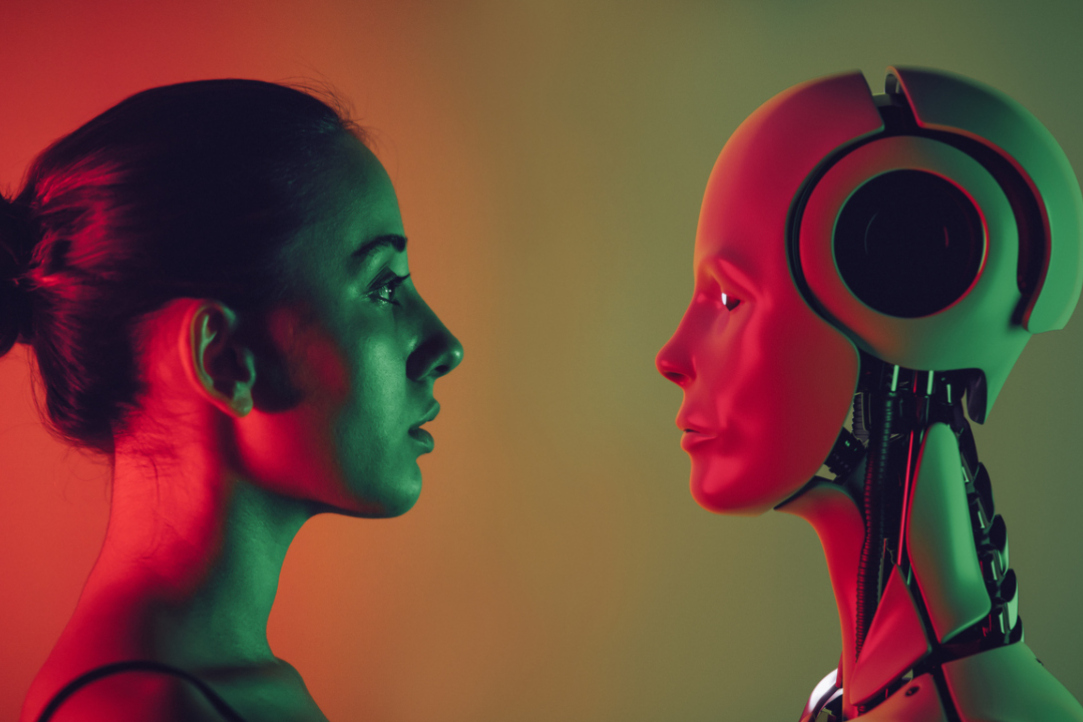
Researchers at the HSE AI Research Centre and Sber AI Lab have developed a special system that, using large language models, will make artificial intelligence (AI) more emotional when communicating with a person. Multi-agent models, which are gaining popularity, will be engaged in the synthesis of AI emotions. The article on this conducted research was published as part of the International Joint Conference on Artificial Intelligence (IJCAI) 2024.
The system is based on effective AI models of computer vision developed by the authors for recognising user facial expressions, which can be run directly on their devices. While using these models during a dialogue the emotions of the interlocutor are analysed in real time, including AI responses, which can help in building special datasets for training and improving the system for generating emotional responses to user requests.

One of the article authors, Associate Professor at the Department of Information Systems and Technologies at HSE University in Nizhny Novgorod
‘In our system, the recognised emotion is used to select a more empathic AI response, which is generated simultaneously by several language models tuned to basic emotions: joy, sadness, fear or anger. As a result, the received response contains a more detailed analysis of the recommendations issued by AI, their advantages and disadvantages in terms of the emotional reaction of users to them.’
The HSE University and Sber solution can be applied to situations when it is important to take into account the emotional state of users: in company chatbots, support services, educational applications and other areas where contact with the client is required. As a result, suggestions and recommendations of products and services will look more natural and empathetic. This will allow companies to better communicate with customers, give researchers a new tool for exploring emotions, and let users interact with AI more effectively. Today, AI models have already been applied in the development of GigaPevt, a medical diagnostic assistant based on the large GigaChat language model, to analyse the user's emotional state.

See also:

Hybrid Intelligence: Competencies in the Age of AI Discussed at Technoprom-2026
Artificial intelligence is not creating new professions, but rather transforming the nature of existing ones. This was the conclusion reached by participants in the panel session ‘Hybrid Intelligence: Digital and Human Drivers of Development,’ organised by the Institute for Statistical Studies and Economics of Knowledge (ISSEK) at HSE University as part of the 13th International Forum of Technological Development (Technoprom-2026). The experts discussed how the nature of work is changing, which skills are becoming increasingly sought after, and what prevents companies from fully capitalising on new technologies.
Researchers Rank Recommendation Algorithms Using Sports Tournament Model
Researchers from the AI and Digital Science Institute at the HSE Faculty of Computer Science have developed an approach for selecting recommendation algorithms more effectively. Their approach uses pairwise comparisons of algorithms to create a tournament table, with the overall ranking based on their performance across all datasets in the tournament. This can reduce the number of algorithms that need to be tested when developing new services, saving both time and money. The study was presented at the 32nd ACM SIGKDD Conference on Knowledge Discovery and Data Mining (KDD 2026).
Researchers Develop Method for Direct Generation of Regulatory DNA
Researchers at HSE University have developed a model for generating promoters and enhancers—DNA sequences that regulate gene activity. The model works directly with DNA nucleotides, without first transforming them into a continuous numerical representation. This solution could be useful for applications in synthetic biology and gene therapy. The study results were presented at the ICLR 2026 Workshop ‘Generative AI in Genomics (Gen^2): Barriers and Frontiers.’
Researchers at HSE University and Sber Train Neural Networks to Better Predict User Preferences
The HSE FCS AI and Digital Science Institute and Sber have introduced a new architecture for recommendation systems that combines two classes of models, enabling algorithms to better predict users’ interests and needs. A preprint of the paper has been published on arxiv.org and presented at Urban ML.
‘Working with AI Solves a Wide Range of Engineering Problems’
Artificial intelligence is a working tool based on a balanced combination of algorithms and engineering. Experts and doctoral students from the HSE Moscow Institute of Electronics and Mathematics explain how AI technologies can improve an application, device, or system, and what engineering tasks are solved in the process.
A New Section on AI and a Prizewinning Paper: Early-Career HSE Researchers Take Part in IEEE EDM Conference
The 27th IEEE International Conference of Young Professionals in Electron Devices and Materials (EDM) has taken place in the Altai Republic. This year, researchers from HSE University presented the results of their research and were involved in organising a new section on artificial intelligence. A paper by HSE master’s student Rodion Sidorenko was awarded third place in the research paper competition at the conference.
‘AI Enables Researchers to Tackle More Complex and Important Problems’
In late July 2026, Dmitry Rybin, a graduate of the HSE Faculty of Mathematics who is now working in China, used ChatGPT to disprove a longstanding mathematical hypothesis. In an interview with the HSE News Service, he discussed AI's ability to make discoveries in mathematics, reflected on his time at HSE University, and spoke about his doctoral research at the Chinese University of Hong Kong.
AI for Doctors: HSE Faculty of Computer Science Delivers Course for Russian University of Medicine Students
In June 2026, the HSE Faculty of Computer Science (FCS) completed a course on the use of artificial intelligence in medicine for first-year Paediatrics students at the Russian University of Medicine. The course was delivered with support from a grant awarded to HSE University under the Artificial Intelligence federal project, part of the national project ‘Data Economy and the Digital Transformation of the State.’
HSE University to Launch New AI Supercomputer
HSE University is preparing to launch its second supercomputer. The new cluster will be primarily dedicated to artificial intelligence (AI) workloads and will complement the existing cHARISMa supercomputer. It is scheduled to become operational by the end of 2026.
HSE & VK Engineering and Mathematics School Showcases 13 Projects at 10th Demo Day
The 10th Demo Day of the Joint HSE & VK Engineering and Mathematics School was held at the VK Moscow office. Students of the three workshops presented the results of 13 projects in the fields of artificial intelligence, information security, and digital platforms. Students worked on the development of recommendation services, systems for psycholinguistic text analysis and speech processing, methods for identifying celebrities in videos, algorithms for determining the toxicity of memes, security mechanisms for AI systems, and approaches to improving the effectiveness of neural network models.