

HSE University and Sber Conduct Foresight in Artificial Intelligence

HSE University, in collaboration with Sber, have conducted a foresight study on artificial intelligence (AI). Its early results were discussed by the participants of a strategic foresight session on exploratory research in AI, held at the Coordination Centre of the Russian Government, headed by Deputy Prime Minister Dmitry Chernyshenko. The results from the foresight study will inform the Unified Research and Development Programme in the Field of AI.
Foresight refers to large-scale studies designed to identify promising areas for the development of science and technology that can impact the economy and society in the medium and long term. Foresight focuses not only on evaluating potential scenarios for science and technology development but also on selecting the preferable ones by involving key stakeholders and leading scientists from various scientific schools to build a coordinated position. Expert assessments (qualitative methods) form the basis for evaluating future options, while quantitative methods and big data analysis are also among the foresight techniques. AI foresight is a type of industry-level foresight. In addition, the HSE Institute for Statistical Studies and Economics of Knowledge (ISSEK) conducts foresight studies at the national, international, and corporate levels.
Work on AI foresight started in February 2024, almost simultaneously with the approval of the updated National AI Development Strategy for the period until 2030. More than 50 of the most esteemed experts in the field, representing business and government, participated in the study. Addressing the Coordination Centre's session, Mikhail Skvirsky, Managing Director at Sberbank PJSC, and Leonid Gokhberg, First Vice Rector and Director of ISSEK at HSE University, shared the objectives and progress of the foresight study.

HSE University was tasked with providing the foresight methodology. The study design was determined, in particular, based on key features of the AI field, such as its high dynamism and rapid implementation of scientific results into new products and services, Professor Gokhberg explained.
The task of identifying promising research areas in the field of AI was accomplished within an extremely short timeframe, spanning from February to May. During this period, the foresight organisers conducted an analysis of global trends and markets, scientific frontiers, and growth points, and also a series of surveys, expert interviews, and foresight sessions which involved leading Russian researchers in the field of AI.
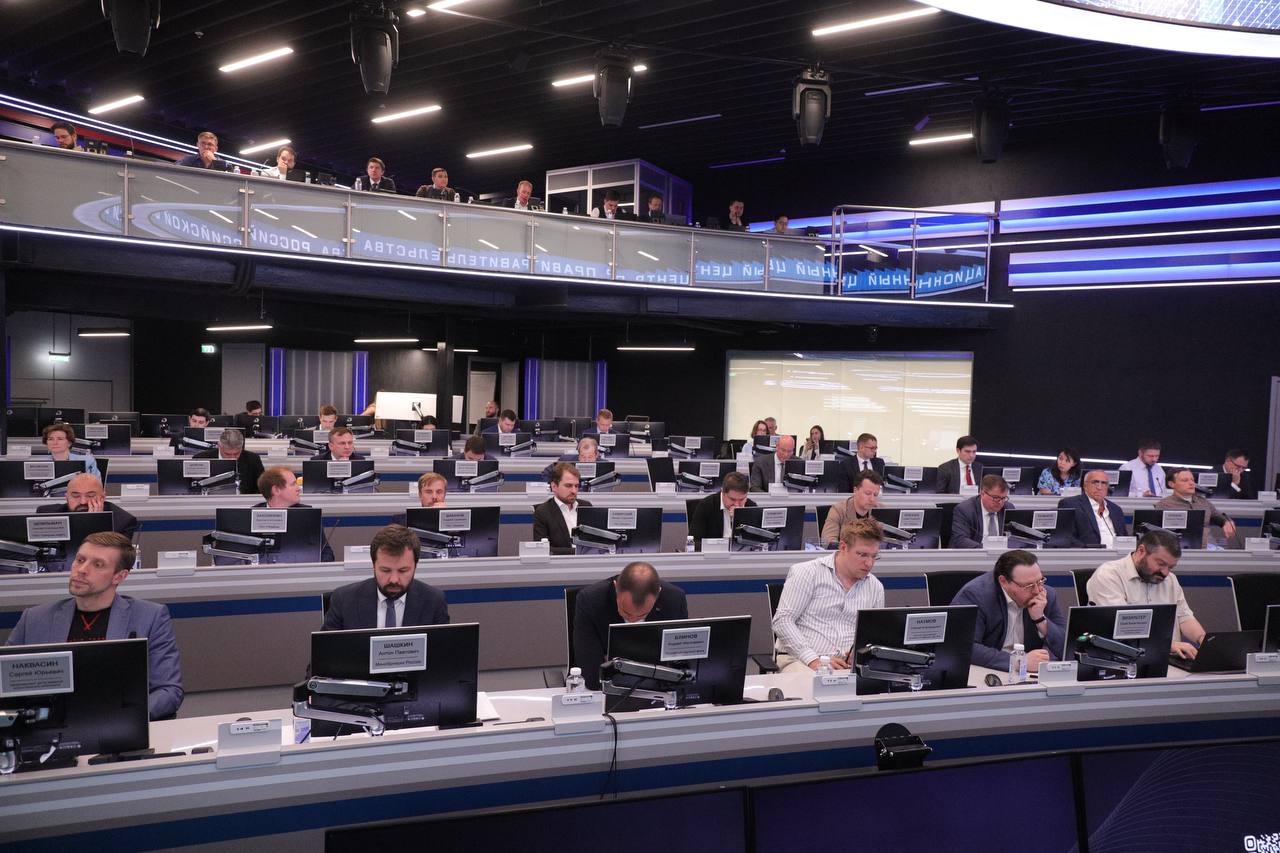
The foresight analysis resulted in a three-level classification describing exploratory research in the field of AI. This classification includes ten key areas (such as fundamental and generative models, machine learning architectures and algorithms, security, trust, and explainability of AI), along with 37 subareas and 127 research tasks.
Maxim Kolesnikov
The results from the foresight analysis will form the foundation of the Unified Research and Development Programme in the Field of AI, according to Deputy Minister of Economic Development of the Russian Federation Maxim Kolesnikov. Additionally, it was decided to recommend the Russian Academy of Sciences (represented at the session by its President Gennady Krasnikov) to use the obtained results, starting from 2025, in the selection of exploratory research and examination of incoming research applications.
Maxim Kolesnikov also highlighted that support for flagship research centres in the field of AI, selected within the framework of the first wave, will end in 2024, and to ensure seamless financing of research in this area, new centres (of the third wave) will soon be selected. He emphasised that this would indeed entail 'a new selection, rather than an automatic extension of support for existing centres.'
The primary parameters of the new selection include conducting basic research on priority topics aligned with the results of foresight, implementing applied research commissioned by industry partners, and facilitating the training of scientific specialists.
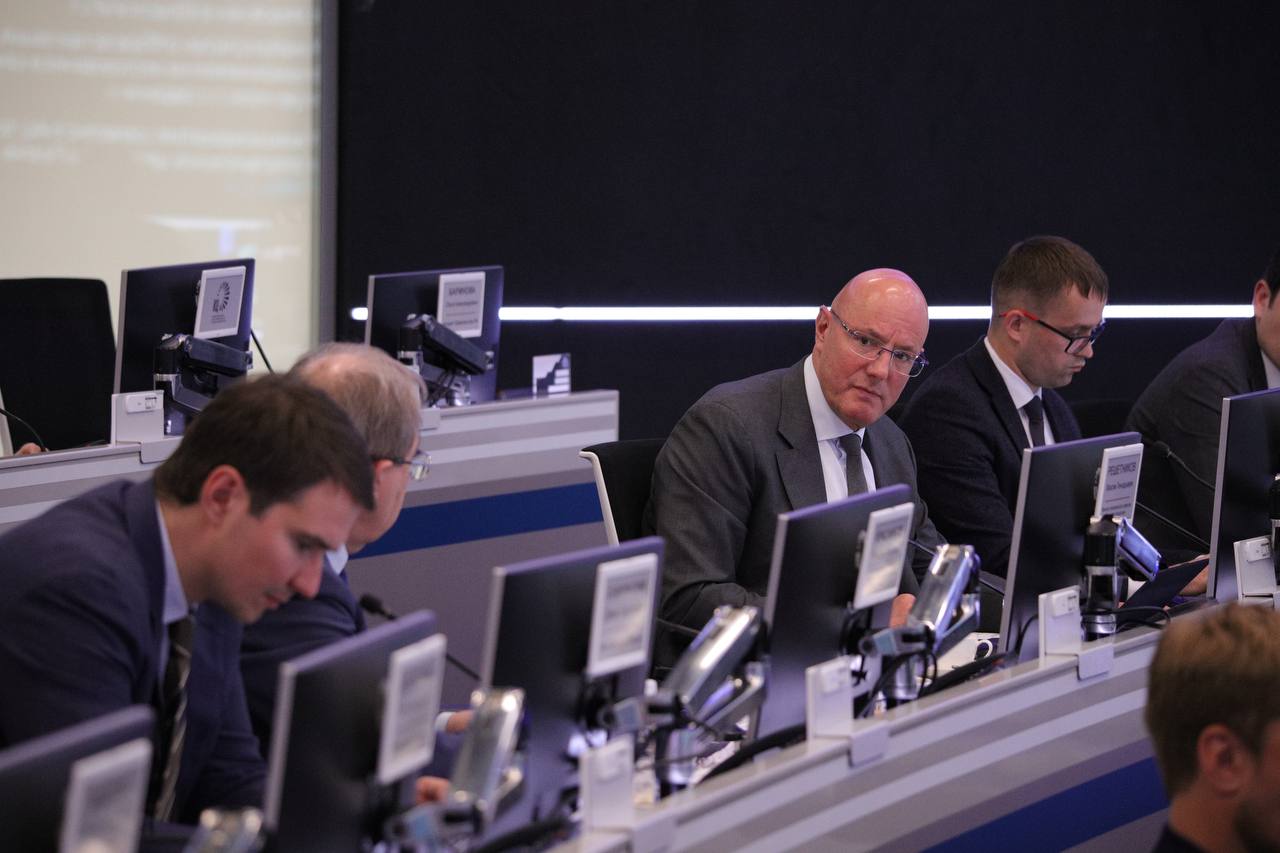
Dmitry Chernyshenko
'Artificial intelligence has become the driving force behind industries aimed to ensure the development of the supply-side economy. Simultaneously, with the emergence of large language models, our focus is increasingly on supporting basic science. Specifically, we have established AI research centres and have started using them to train scientists who will specialise in adapting generative AI to meet the requirements from various industries. This collaboration will enable us to attain technological leadership while enhancing the quality of people's lives, generating new employment opportunities, and bolstering the competitiveness of the economy.'

See also:

Scientific Expedition to Hainan: HSE Scientists Organise Conference on Statistical AI in China
The Statistical AI Conference was held in Sanya, Hainan Island, China, from 24 to 28 August 2026. The international event brought together leading experts in statistics, machine learning, and applied AI. Alexey Naumov, Director of the AI and Digital Science Institute at the HSE Faculty of Computer Science, and Sergey Samsonov, Head of the International Laboratory of Stochastic Algorithms and High-Dimensional Inference, were among the conference organisers.
How to Assess Students’ Knowledge in the Age of AI
A researcher at HSE University has proposed a flowchart to help lecturers decide how to assess students who use artificial intelligence. It shows where the use of AI should be restricted and where it can be incorporated into the learning process. The article has been published in IT Professional.
Scientists Train Neural Network to Generate Process Plans from 3D Models
Researchers at the HSE FCS AI and Digital Science Institute have developed CAD2TechSpec, a framework that converts 3D models of mechanical parts into machining process plans—step-by-step instructions for machine tools. The solution aims to reduce the time required for the design and preparation of technical process documentation in mechanical engineering, aircraft manufacturing, and other high-tech industries. The study findings have been published in PeerJ Computer Science.
Researchers Assess Contributions of BRICS Countries to Leading ML/AI Conferences
The HSE Scientometrics Centre analysed more than 104,000 papers published between 2020 and 2025 and presented at ten top-level A* conferences ranked by ICORE 2026. The researchers examined the contributions of Brazil, Russia, India, China and South Africa. Together, these countries accounted for around 40,800 publications, or 39.2% of the total. However, the distribution is highly uneven, and a shared BRICS research space has yet to emerge.
Laboratory of Future Networks: HSE Telecommunications Research Institute Develops 5G/6G Research Testbed
The 5G/6G testbed at the HSE Telecommunications Research Institute is becoming a research platform, an educational laboratory, and a foundation for developing new software components for future networks. It makes it possible not only to observe how a mobile network operates, but also to change its operating conditions and measure the results: data-transmission speed, latency, errors, radio-resource utilisation, and other parameters. Based on the testbed, researchers plan to develop MIMO, O-RAN, xApp, and IAB technologies, as well as experiment with artificial intelligence.
Hybrid Intelligence: Competencies in the Age of AI Discussed at Technoprom-2026
Artificial intelligence is not creating new professions, but rather transforming the nature of existing ones. This was the conclusion reached by participants in the panel session ‘Hybrid Intelligence: Digital and Human Drivers of Development,’ organised by the Institute for Statistical Studies and Economics of Knowledge (ISSEK) at HSE University as part of the 13th International Forum of Technological Development (Technoprom-2026). The experts discussed how the nature of work is changing, which skills are becoming increasingly sought after, and what prevents companies from fully capitalising on new technologies.
Researchers Rank Recommendation Algorithms Using Sports Tournament Model
Researchers from the AI and Digital Science Institute at the HSE Faculty of Computer Science have developed an approach for selecting recommendation algorithms more effectively. Their approach uses pairwise comparisons of algorithms to create a tournament table, with the overall ranking based on their performance across all datasets in the tournament. This can reduce the number of algorithms that need to be tested when developing new services, saving both time and money. The study was presented at the 32nd ACM SIGKDD Conference on Knowledge Discovery and Data Mining (KDD 2026).
Researchers Develop Method for Direct Generation of Regulatory DNA
Researchers at HSE University have developed a model for generating promoters and enhancers—DNA sequences that regulate gene activity. The model works directly with DNA nucleotides, without first transforming them into a continuous numerical representation. This solution could be useful for applications in synthetic biology and gene therapy. The study results were presented at the ICLR 2026 Workshop ‘Generative AI in Genomics (Gen^2): Barriers and Frontiers.’
Researchers at HSE University and Sber Train Neural Networks to Better Predict User Preferences
The HSE FCS AI and Digital Science Institute and Sber have introduced a new architecture for recommendation systems that combines two classes of models, enabling algorithms to better predict users’ interests and needs. A preprint of the paper has been published on arxiv.org and presented at Urban ML.
‘Working with AI Solves a Wide Range of Engineering Problems’
Artificial intelligence is a working tool based on a balanced combination of algorithms and engineering. Experts and doctoral students from the HSE Moscow Institute of Electronics and Mathematics explain how AI technologies can improve an application, device, or system, and what engineering tasks are solved in the process.