

HSE Hosts Russian National Award in Applied Economics

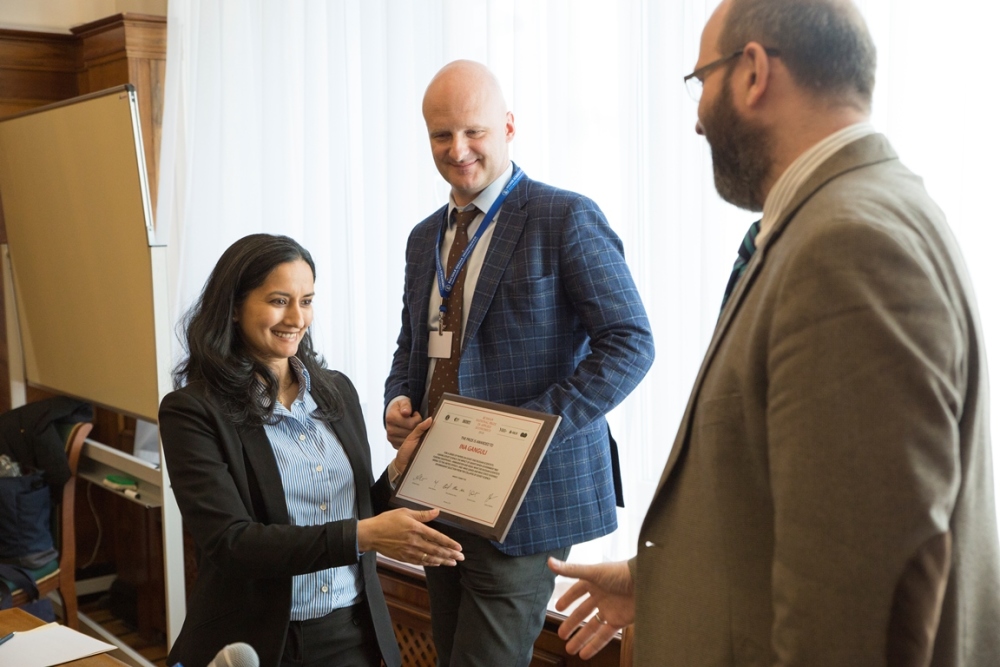
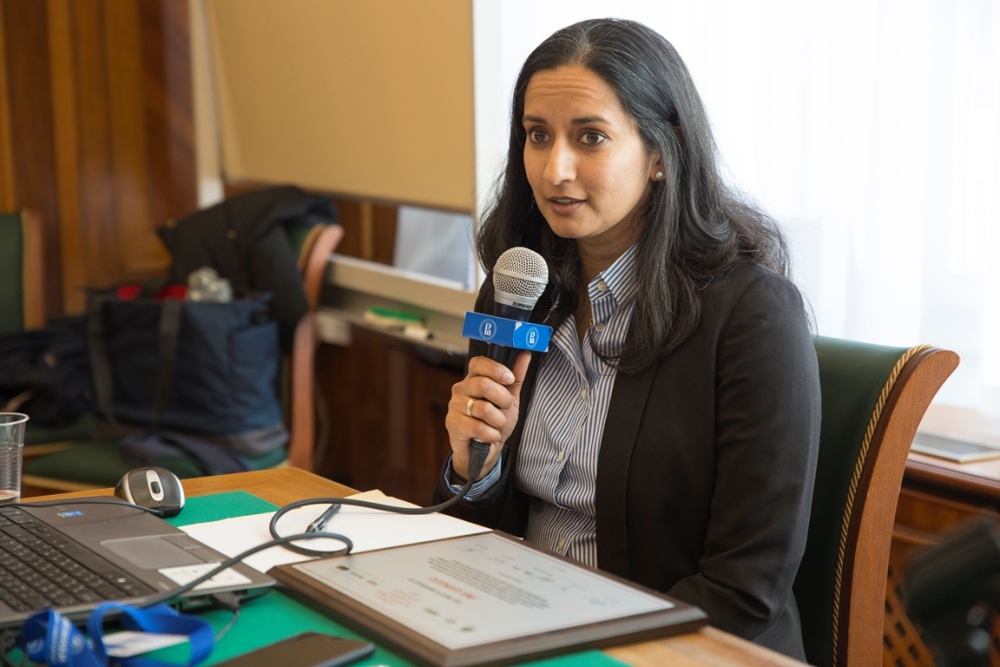

The winner of the 2018 award is Ina Ganguli, Professor at the University of Massachusetts Amherst. The American researcher stood out for her series of articles analysing the productivity of Russian scientists in the 1990s, as well as their decisions concerning emigration and the impact that emigration had on the diffusion of Russian science in the United States.
The Russian National Award in Applied Economics is given once every two years for outstanding published papers on the Russian economy at the country, industry, regional, or company level. The main purpose of the award is to identify works of high importance for the development of academic research and economics education in Russia, as well as for the increased efficiency of the Russian economy and economic policy.
The founders of the Russian National Award in Applied Economics are the Higher School of Economics, the New Economic School, the Ural Federal University, the Association of Russian Economic Think Tanks, the RAS Institute of World Economy and International Relations, and the business magazine Expert.
Twenty-six papers were submitted to the competition (22 in English and four in Russian), all of which had been published in leading international journals. Sixteen papers made it to the expert evaluation stage. Each of these papers was assessed on a 10-point scale by at least two experts, who included both leading Russian and international scholars. The short list included five candidates, from which a winner and a particularly noteworthy paper were selected.
Ina Ganguli, the award winner, said that she began researching the productivity of Russian scientists in the 1990s and their decisions on emigration as part of her PhD thesis: ‘I was interested in general issues related to transition economies. But when I spent some time in the former USSR and talked to people, it was clear that it was a major shock. I became more interested in what had taken place in Russian science and with human capital during the crisis. I tried to find the factors that led scholars to emigrate, as well as those that helped them stay and do research in Russia’.
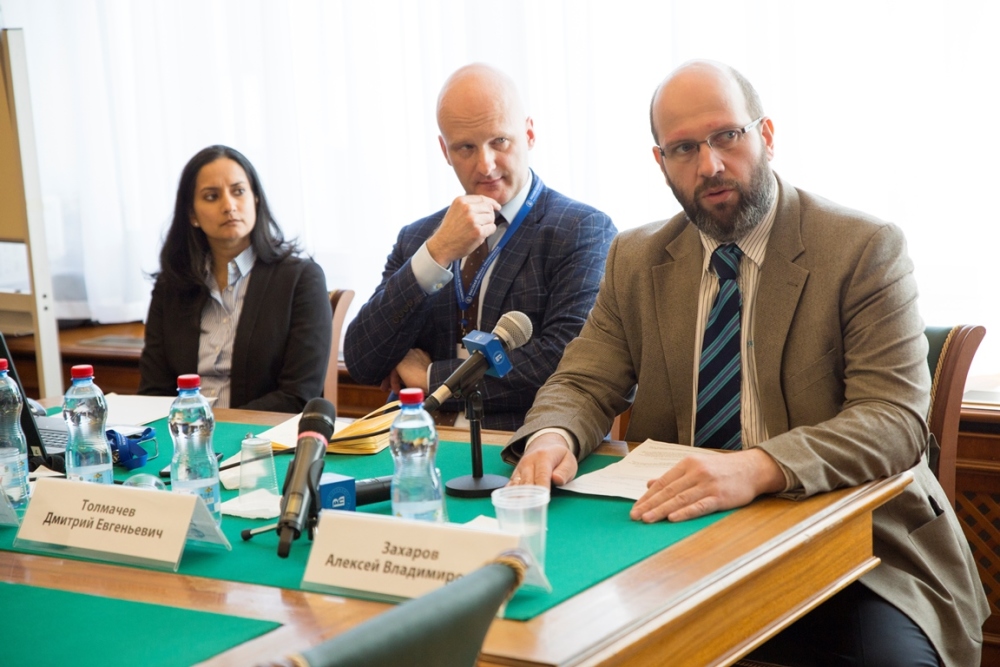
According to Alexey Zakharov, member of the Award Academic Committee and Assistant Professor at the HSE Faculty of Economic Sciences, Ina Ganguli’s papers record a very painful episode in Russia’s recent history – the crisis of Russian science and the devastating outflow of human capital and research staff abroad. ‘I believe that we’ll be addressing Professor Ganguli’s analysis many times, and not only economists, but everyone interested in contemporary Russian history’, Zakharov believes. ‘I’m very hopeful that Ina will continue her studies related to the impact of various grant systems on research’.
The jury members emphasized the originality, high quality and high ethical standards in data collection as it relates to all the series’ papers, but they noted in particular the article ‘Saving Soviet Science: The Impact of Grants When Government R&D Funding Disappears’. In this paper, Professor Ganguli focuses on the effect of the smaller grants that George Soros’ foundation gave as emergency funding to support scientists amid the sharp decline in state funding for the natural sciences immediately following the collapse of the Soviet Union.
The author demonstrated that the Soros Foundation’s payments gave many Russian scholars an opportunity to continue research, instead of leaving for business and other fields. For example, after the funding ended, the scholars who had received grants demonstrated growth in their publication activity.
‘A good imagination and a sense of humour are needed to carry out such a research,’ emphasized Vladimir Gimpelson, Professor in the Faculty of Economic Sciences. ‘The problem is that people don’t make decisions haphazardly. And this selective behaviour doesn’t leave an opportunity to use simple models of analysis in microeconomic studies. It’s very hard to find a control group that would allow us to see what would happen if a certain event didn’t happen’.
But that’s exactly what Ina Ganguli managed to do. She built a model that allowed two very similar groups to be compared. The first were scholars who received grants, and the second were the ones who did not, with the difference between them being insignificant. The difference in the second group was that they didn’t meet one of the grant competitions’ formal requirements. In 1993, the Soros Foundation gave USD 500 to approximately 28,000 scholars each. The requirements for this grant were engaging in theoretical studies and having at least three papers published in peer-reviewed journals over the preceding five years. This means that those who had two papers published within the required period (1988-1993) and one in 1987, for example, were just shy of receiving a grant.
In her article ‘Immigration and Ideas: What Did Russian Scientists “Bring” to the United States?’, the author continued studying Russian scientists’ productivity and showed that the immigration of Russian scientists to the U.S. considerably broadened the familiarity of their American colleagues with scientific works published in Soviet journals, works produced by both the immigrants themselves, as well as other Russian researchers.
The analysis of several databases presented in the paper ‘Who Leaves and Who Stays? Evidence on Immigrant Selection from the Collapse of Soviet Science’ demonstrated that, all else being equal, the likelihood of emigration is higher for men, as well as for younger and more productive scientists.
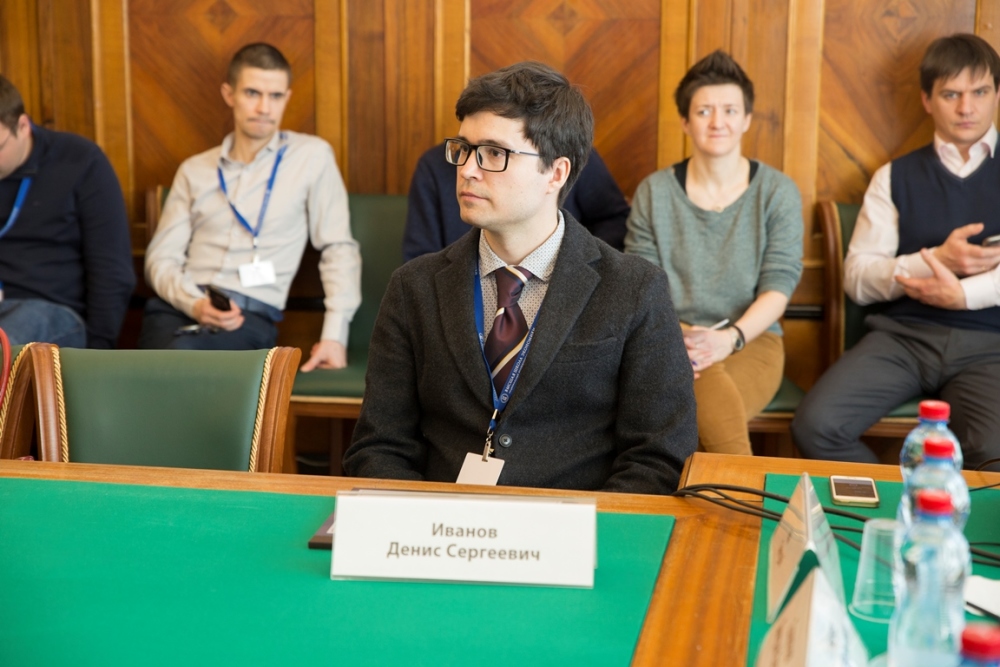
The jury found particularly noteworthy an article by Denis Ivanov, Research Fellow at the HSE Institute for Industrial and Market Studies, entitled ‘Human Capital and Knowledge-Intensive Industries Location: Evidence from Soviet Legacy in Russia.’

See also:

HSE Researchers Compile Scientific Database for Studying Children’s Eating Habits
The database created at HSE University can serve as a foundation for studying children’s eating habits. This is outlined in the study ‘The Influence of Age, Gender, and Social-Role Factors on Children’s Compliance with Age-Based Nutritional Norms: An Experimental Study Using the Dish-I-Wish Web Application.’ The work has been carried out as part of the HSE Basic Research Programme and was presented at the XXVI April International Academic Conference named after Evgeny Yasin.
China Bets on Expanding Leading Universities, Postgraduate Education, and STEM Fields
At the XXVI April International Academic Conference named after Evgeny Yasin at HSE University, one of the distinguished speakers was Prof. Liguo Li of the School of Education at Tsinghua University. He spoke about changes in the structure of higher education in China in line with national strategic priorities, including a proposed 1.7–2-fold increase in the number of leading research universities.
Scholar Explains How States Can Build Governance in Era of Mega-Shifts
How can states maintain governability and stability in a world where established rules are rapidly losing their force? Prof. Ali Farazmand of Florida Atlantic University answered this question in a presentation delivered at the XXVI April International Academic Conference named after Evgeny Yasin. The scholar proposed examining the transformation of the global order through the lens of two ‘mega-shifts’—from the rise of global corporate capitalism to the emerging multipolarity of today—and demonstrated why this transition between eras requires fundamentally new approaches to governance.
Supercomputers as Superheroes: How High-Performance Computing Is Saving the World
Modern supercomputers can perform more than a trillion calculations per second. This immense capacity enables researchers to address problems that were previously intractable. At the XXVI April International Academic Conference, Ilias Kotsireas, a professor at Wilfrid Laurier University, spoke about the potential of high-performance computing in fields such as weather and climate modelling, astrophysics, and medicine.
A Time for Flexible Solutions: How China Trains In-Demand Specialists
Building an effective workforce training system requires not only appropriate institutions, but also well-developed intermediary organisations capable of translating policy into practice and connecting different groups of stakeholders, said Dr Po Yang, Professor at Peking University. She was an invited speaker at the XXVI April International Academic Conference named after Evgeny Yasin.
XXVI April International Academic Conference Kicks Off at HSE University
The conference programme covers five research topics: economics; human capital and society; instrumental methods and models; foresight research; and international research. Hundreds of scientists from around the world will take part in the conference.
Applications for Participation in XXVI April International Academic Conference Still Open
Applications can be submitted on the conference website until December 16, 2025. The programme has been developed around five research themes: Economics, Human Capital and Society, Instrumental Methods and Models, Foresight Research, and International Research. The heads of these areas have presented, in video format, the priority topics and sections for which they are expecting submissions.
Applications to Participate in April International Academic Conference Now Open
HSE University is now accepting proposals to present academic reports at the XXVI April International Academic Conference named after Evgeny Yasin. Applications can be submitted until December 16, 2025. The conference events will take place mainly on-site in Moscow from April 14 to 17, 2026.
24 Countries Represented at 25th Yasin International Academic Conference Held by HSE University
The Programme Committee of the 25th Yasin (April) International Academic Conference on Economic and Social Development has summed up the initial results. In 2025, 1,384 people from 24 countries and 29 Russian regions participated in the conference, with 335 of them delivering presentations.
Stuck in the Net: How Much Time Children Spend Online
On average, a schoolchild spends 48 hours a week on studies—equivalent to a six-day working week for an adult. This was highlighted by experts at the round table ‘Domains of Children’s Well-Being Evaluation for Human Potential and Evidence-Based Social Policy Development,’ held as part of the 25th Yasin (April) International Academic Conference.