

From Research on the Arctic to the Rethinking of Marx: What to Expect at the 19th April Conference
On April 10, the XIX April International Academic Conference begins at HSE and will examine economic and social development. 1733 participants are registered and, of these, 264 are from abroad. Fuad Aleskerov and Andrei Yakovlev, members of the Programme Committee, explain what awaits us at the conference.
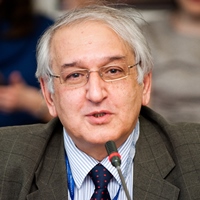 Fuad Aleskerov | 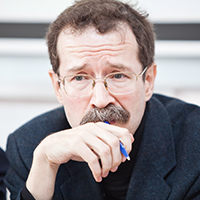 Andrei Yakovlev |
What sets the April Conference Apart?
Fuad Aleskerov: The April conference is the main scientific conference on socio-economic issues in Russia. Certainly, there are other very interesting forums which focus on political decisions in economic matters, but our conference is scientific.
Every year it gets bigger, both in terms of the number of participants and the areas it covers. We try to keep it in check, but people are aware of the calibre of our conference and send in very interesting contributions. We are forced to be very selective so that the programme remains a reasonable size.
Andrei Yakovlev: The advantage of our conference is that it already has a well-established structure, but at the same time it always offers something new. There is something for everyone. Any scientist who is interested in research is guaranteed to find something interesting.
We expect that, at some point, these new topics will form the basis for separate specialized conferences, which will be attended by scientists in these specific fields. Two such topics are design and banking. The latter is a particularly promising area and, for the first time this year, was allocated to a separate section of the conference - ‘Banks and payment systems: regulation, risk assessment, financial innovation’.
How Well-Known is the April Conference and Which Presentations by our International Guests are Worth Seeing?
Andrei Yakovlev: Our conference is certainly well-known abroad. We were forced to reduce the number of foreign participants after the political events of 2014. But these world events have stimulated great interest in an area that was once referred to as ‘Russian Studies’. Of course, this is now on a different level- the people who are interested are not Sovietologists of the 1970s, rather, they are people in the professional sphere, specializing in Russia as an object of research, with different approaches and data. And for such people, cooperation with Russian colleagues is valuable, because it is difficult to write something qualitative in this field without a sufficient understanding of the context and without access to data. We regularly collect such data and give these researchers full access.
This year, the conference will include some presentations and events connected to migration, or rather, emigration, from Russia, and not only the emigration of scientists. The National Prize for Applied Economics was awarded this year to Professor Ina Ganguli from the University of Massachusetts in Amherst. She received the prize for her work in the analysis of Soviet scientific potential (and what happened to it in the period 1990-2000) and the influence of the system of grants, including grants from the Soros Foundation, on the transformation of science.
Andrei Korobkov from the Middle Tennessee State University will give a presentation entitled ‘The Russian elite diaspora abroad: truth and fiction.’ His presentation is sociological and demographic and focuses on possible mechanisms for working with the diaspora as well as for integration and interaction.
The conference will also incorporate a round table, which we will host jointly with the Association of Independent Centres for Economic Analysis. It will assess the impact of current KPIs, which influence our work as scientists in terms of publications in scientific journals, as well as their impact on the Russian research agenda and on the tendency for people to enter academia and analytics.
Fuad Aleskerov: I would certainly recommend going to see three of our international guests. Maurice Salles, Professor at the University of Caen (Normandy, France) will give a presentation entitled ‘Independence of irrelevant alternatives: Arrow and Nash.’ In problems of collective choice, there exists the fundamental property of independence from irrelevant alternatives. And Professor Salles is the first to explore how the concepts that Nash and Arrow suggested are interconnected. I am looking forward to his talk.
Another guest is Gregory Kersten of Concordia University (Canada). He will give a talk on friction in economic systems, namely, correctional mechanisms, and how they can help the economy function more effectively. I am not familiar with the content of the presentation- I have only seen the abstract- but I am sure it will be extremely interesting.
Finally, HSE will also welcome Claude d'Aspremont Lynden (Catholic University of Leuven) who will give a presentation on a classic theme in microeconomics. He will focus on the properties of economic equilibria in economies of a special type, and this is also of great interest to me.
Marx and Why We Don’t Really Know Him
Andrei Yakovlev: This year marks the 200th anniversary of the birth of Karl Marx. By modern economists, he is considered to be someone from a very long time ago, but from the point of view of modern sociology, Marx remains one of the classics.
Since the crisis of 2008-2009, there has clearly been an imbalance in the global economy. At the same time, inequality and social tension, which is also evident in the election results in both the US and Europe, are growing. This in turn generates interest in the ideas that Marx expressed. Nobody argues with the fact that these are ideas are already 150 old, but there are nevertheless some historical parallels and analogies. Currently, many things are happening in the world that resemble what happened in the early twentieth century, and this is a sad fact, because we all know what it led to.
To some extent, this interest in Marx is part of a broader process which accompanies an increase in general interest in history. The use of historical data among economists has become very popular and the processes are considered not statically or in the short-term but rather, as a long-term evolution. It is therefore a good idea to use historical data and approaches that were applied in such analyses in times gone by.
Fuad Aleskerov: I remember how foreign colleagues told me 20 years ago in Paris that Russian economists do not know Marx. And they began to explain some sections of Marx which the Soviet economic school of thought had not considered, and yet these colleagues considered them to be absolutely fundamental. Marx was a great scientist. It’s possible to say that he was mistaken in some things, but then, Einstein did not believe in quantum physics…
About 10 years ago, I was with my children in Trier. The weather was terrible, it had been raining all day. We crossed a street and saw a sign on a house, marking the spot where Karl Marx had been born. And all of a sudden, the sun came out. I thought to myself, ‘Marx is inside us. When we come to his house, the sun comes out.’
Why the Artic is Becoming More Important
Fuad Aleskerov: This year, the conference will include a section devoted to the Arctic for the first time. We started to deal with this topic only two years ago, but it didn’t happen by accident. Serious work has been done and now we are involved in international projects on the Arctic. We wanted to bring together designers and our scientists from the Faculty of World Economy and International Affairs and create this special interdisciplinary section, dedicated to the Arctic. The aim is to develop, at some stage in the future, a separate conference for this topic alone.
The relevance of this topic will only continue to increase with the process of global warming. Minerals are becoming more accessible, the ice melts and the issues of the active use of the Northern Sea Route and the Northwest Passage are already being seriously considered. All this can greatly change the structure of the world economy both in this region and in other places in the world.
Why Students Shouldn’t Miss the April Conference
Fuad Aleskerov: Not so long ago, I was at a very representative conference in India. I was amazed that, despite the fact that the conference was attended by a large number of very serious scholars, the lecture hall was almost empty. I remember how, in my student years at MSU, students would sit in the aisles and on top of each other in order to see interesting people talk.
I consider it very important that our students have the opportunity to listen to leading scientists and to ask them their questions face-to-face. I always encourage students to go to the conference. It’s a place where science is made, and science is the most important thing at university.
Andrei Yakovlev: I want our students to know that, in addition to the scientific part and expert discussions, the conference programme also includes a section ‘B’. There are interdisciplinary round tables, special events and sessions oriented towards a wider audience which deal with the same questions.
I have already spoken about a round table with the Association of Independent Centers for Economic Analysis. In the same section, there will also be a round table devoted to the strategic problems associated with Russian agriculture. This is an attempt to make this important topic, including questions and their possible solutions, accessible to a wider audience.
Across the world, there is a lot of discussion about where we are and what we should work towards. HSE students have always been the most motivated in the wider student community. Their interest is a reflection of the fact that they want answers to the questions that concern them. It’s a very positive thing that they perceive our conference as one of the places where they can get these answers.

Andrei A. Yakovlev
See also:

HSE Researchers Compile Scientific Database for Studying Children’s Eating Habits
The database created at HSE University can serve as a foundation for studying children’s eating habits. This is outlined in the study ‘The Influence of Age, Gender, and Social-Role Factors on Children’s Compliance with Age-Based Nutritional Norms: An Experimental Study Using the Dish-I-Wish Web Application.’ The work has been carried out as part of the HSE Basic Research Programme and was presented at the XXVI April International Academic Conference named after Evgeny Yasin.
China Bets on Expanding Leading Universities, Postgraduate Education, and STEM Fields
At the XXVI April International Academic Conference named after Evgeny Yasin at HSE University, one of the distinguished speakers was Prof. Liguo Li of the School of Education at Tsinghua University. He spoke about changes in the structure of higher education in China in line with national strategic priorities, including a proposed 1.7–2-fold increase in the number of leading research universities.
Scholar Explains How States Can Build Governance in Era of Mega-Shifts
How can states maintain governability and stability in a world where established rules are rapidly losing their force? Prof. Ali Farazmand of Florida Atlantic University answered this question in a presentation delivered at the XXVI April International Academic Conference named after Evgeny Yasin. The scholar proposed examining the transformation of the global order through the lens of two ‘mega-shifts’—from the rise of global corporate capitalism to the emerging multipolarity of today—and demonstrated why this transition between eras requires fundamentally new approaches to governance.
Supercomputers as Superheroes: How High-Performance Computing Is Saving the World
Modern supercomputers can perform more than a trillion calculations per second. This immense capacity enables researchers to address problems that were previously intractable. At the XXVI April International Academic Conference, Ilias Kotsireas, a professor at Wilfrid Laurier University, spoke about the potential of high-performance computing in fields such as weather and climate modelling, astrophysics, and medicine.
A Time for Flexible Solutions: How China Trains In-Demand Specialists
Building an effective workforce training system requires not only appropriate institutions, but also well-developed intermediary organisations capable of translating policy into practice and connecting different groups of stakeholders, said Dr Po Yang, Professor at Peking University. She was an invited speaker at the XXVI April International Academic Conference named after Evgeny Yasin.
XXVI April International Academic Conference Kicks Off at HSE University
The conference programme covers five research topics: economics; human capital and society; instrumental methods and models; foresight research; and international research. Hundreds of scientists from around the world will take part in the conference.
Applications for Participation in XXVI April International Academic Conference Still Open
Applications can be submitted on the conference website until December 16, 2025. The programme has been developed around five research themes: Economics, Human Capital and Society, Instrumental Methods and Models, Foresight Research, and International Research. The heads of these areas have presented, in video format, the priority topics and sections for which they are expecting submissions.
Applications to Participate in April International Academic Conference Now Open
HSE University is now accepting proposals to present academic reports at the XXVI April International Academic Conference named after Evgeny Yasin. Applications can be submitted until December 16, 2025. The conference events will take place mainly on-site in Moscow from April 14 to 17, 2026.
24 Countries Represented at 25th Yasin International Academic Conference Held by HSE University
The Programme Committee of the 25th Yasin (April) International Academic Conference on Economic and Social Development has summed up the initial results. In 2025, 1,384 people from 24 countries and 29 Russian regions participated in the conference, with 335 of them delivering presentations.
Stuck in the Net: How Much Time Children Spend Online
On average, a schoolchild spends 48 hours a week on studies—equivalent to a six-day working week for an adult. This was highlighted by experts at the round table ‘Domains of Children’s Well-Being Evaluation for Human Potential and Evidence-Based Social Policy Development,’ held as part of the 25th Yasin (April) International Academic Conference.