

'Motivation for Pursuing Big Goals in Life': What is Taught in 'Population and Development' Master's Programme
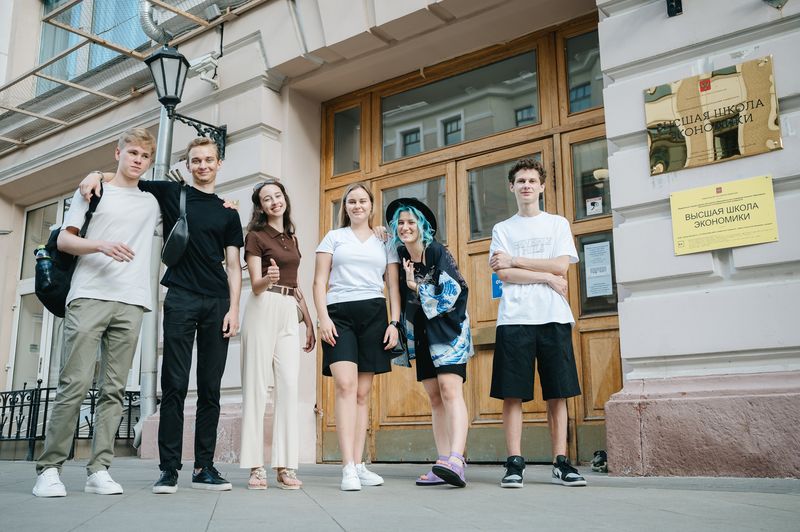
In 2023, the Master's Programme 'Population and Development' was ranked among the top educational programmes at HSE University. The HSE News Service explains what makes this programme special, and why specialists in population issues should study Python, housing policy, and public administration.
The Programme 'Population and Development' was established at the Vishnevsky Institute of Demography in 2015 and has been implemented with support from the world-class Human Capital Multidisciplinary Research Centre. The educational process incorporates the best practices of the United Nations Population Fund (UNFPA). In 2023, 'Population and Development' was ranked among the top educational programmes at HSE University. It was found to be particularly successful in the admission of international students, students' work with external clients, and intercampus disciplines.

Alexander Larionov
According to its academic supervisor Alexander Larionov, the programme is unique.
'As an expert in public finance, I have long recognized the importance of integrating population data into analyses of financial market dynamics, prospects for the development of cashless payments, financial literacy, and monetary policy. Understanding population dynamics allows us to grasp the societal "tectonics" that shape the country's development in both the short and long term,' he said.
Alexander Larionov added that the educational process incorporates the best practices of the United Nations Population Fund (UNFPA). Students acquire practical skills in analysing demographic structures and can apply their knowledge to address public administration issues in areas such as socioeconomic development, finance, and public health.
For example, by employing demographic analysis tools, it becomes possible to predict the proportion of transactions in digital roubles in the total cashless payments. This is achieved through analysing the transformation of the population's age structure and the demand for digital rouble, while considering the distribution of the population by age and level of financial literacy. Therefore, knowledge of demography enables students in the 'Population and Development' programme to approach public administration issues with a fresh perspective.
The programme is interdisciplinary in nature and integrates the best subjects from the fields of Public Administration and Demography.
The students study the following disciplines, among others:
Introduction to Python programming;
Demography;
Population and public administration;
Statistical analysis (beginner and advanced levels);
Housing policy: aspects of population research;
Labour and population economics;
Demography and politics in the healthcare system;
Environmental protection and regulation to ensure the well-being of the population.
'There is a strong focus on teaching quantitative and qualitative analysis methods using Python. Additionally, significant emphasis is placed on project-based learning, with students actively participating in the implementation of actual projects for clients. The programme collaborates with the Semashko National Research Institute of Public Health, the FCTAS RAS Institute for Demographic Research, and the MSU Higher School of Public Audit,' according to Larionov.
He also emphasized that 'Population and Development' is an international programme, with study groups comprising students from around the world and all lectures conducted in English. As a result, students become familiar with the best international practices, acquire skills in solving non-standard tasks, and learn from the experiences of other countries.
Graduates of the Master's Programme in 2024 share their perspectives on why enrolling in it is worthwhile.

Fedor Shvets, Kazakhstan
— Enrolling in the Master's Programme 'Population and Development' is worthwhile for at least three reasons. First, all disciplines and 100% of the classes in this programme are taught in English, providing an opportunity to improve one's fluency in English or even take it to a new level. Second, the presence of a large number of international students in our programme offers the opportunity to immerse oneself in a multicultural environment, make friends from various countries, and learn more about the traditions of other peoples. Third, studying in this programme can serve as a springboard into the academic world, which is particularly beneficial for those planning a career in science. The programme brings together top instructors from various departments and laboratories who will always support a student aspiring to join HSE University's team of researchers. Lastly, I would like to highlight a feature that is inherent in all educational programmes at our university (and 'Population and Development' is no exception), which is the ability to shape one's own educational trajectory. As I complete my master's this year, the most significant takeaway from these two years is that the 'Population and Development' programme has exceeded my expectations in every way. I have gained new friends, knowledge, valuable connections, and access to the academic community.

Anastasia Krizhanovskaya, Russia
— When I learned about the portfolio competition at HSE University, I seriously considered applying for a master's degree. At that time, I was particularly fascinated by social sciences: demography, anthropology, and sociology. I found this programme particularly suited for me, with its instruction in English, motivation for pursuing big goals in life, and an engaging curriculum. A month after submitting my portfolio, I learned that I had won the competition. I view admission to this program as an exciting and multifaceted life experience, and I aim to apply the knowledge to building my career.
Abubakar Gariba Ismaila, Ghana
— I have been passionate about development agency work since my high school days, which led me to pursue a bachelor's in ‘Development Management.’ Recognizing the value of equipping myself with the requisite skills, techniques, and advanced knowledge to excel in my professional field, I found it reasonable to pursue a master’s degree.
I believe the ‘Population and Development’ programme is precisely the type of programme that will provide me with the necessary qualities, exposure, and expertise to excel in my career. The direct connection between my chosen career path and public administration makes this program even more suitable and perfect for me.

See also:

‘HSE Provides Opportunities to Meet New People and Build Connections Beyond the Classroom’
Benjamin Owusu Sarpong, from Kumasi, Ghana, is a final-year student of the Master's programme 'Politics. Economics. Philosophy' at HSE University–Moscow. Now in the final stage of his studies, Benjamin spoke to the HSE News Service to reflect on his experiences—including the various ways HSE brings different cultures together, the numerous opportunities for self-development outside the classroom, and the essential Russian phrases every international student needs to get by.
‘If You Are Open to Being Challenged, Then HSE Is the Best Choice for You’
Felicia Akpelike, from Ghana, is a first-year student of the Master's in Foreign Languages and Intercultural Communication at the HSE School of Foreign Languages. In her interview with the HSE News Service, she talks about why she enjoys Russian language and culture, the benefits of studying in an international environment, and the importance of stepping outside your comfort zone.
‘We Gain a Toolkit for Decision-Making in Various Business Contexts’
Madina Yessimova, from Kazakhstan, is a fourth-year bachelor’s student of Business Administration at the HSE Graduate School of Business. In her interview with the HSE News Service, Madina talks about her drive to study abroad and how it led her to HSE, her research on entrepreneurial activity in Kazakhstan and Russia, and her experiences representing the Kazakhstani community in Russia.
HSE and Nazarbayev University: Scientific and Educational Cooperation
In April 2026, HSE University welcomed an official delegation from Nazarbayev University. The visit primarily focused on establishing cooperation between the two universities, expanding partnership ties, and developing joint projects in support of strengthening bilateral relations between Russia and Kazakhstan.
HSE Scholars Debunk Myth That Africans Fear Russia’s Harsh Winters
Career prospects in Russia prove to be more important for African students than climate, language barriers, or everyday difficulties. HSE researchers came to this conclusion after analysing survey results from students representing 28 countries across the continent. The key factor influencing their decision is the opportunity to start working while still studying.
‘Studying at HSE University Gave Me Not Only Knowledge but Also a System of Thinking’
After graduating from the Vishnevsky Institute of Demography at HSE University, Asem Aldangarkyzy worked at the Bureau of National Statistics of the Agency for Strategic Planning and Reforms of the Republic of Kazakhstan. Now she is an employee of the Senate of the Republic of Kazakhstan. Asem Aldangarkyzy gave an interview in which she shared details about choosing a master's programme, the educational process at HSE University, and her academic and professional activities.
‘Policymakers Should Prioritise Investing in AI for Climate Adaptation’
Michael Appiah, from Ghana, is a Postdoctoral Fellow at the International Laboratory of Intangible-Driven Economy (IDLab) at HSE University–Perm. He recently spoke at the seminar ‘Artificial Intelligence, Digitalization, and Climate Vulnerability: Evidence from Heterogeneous Panel Models’ about his research on ‘the interplay between artificial intelligence, digitalisation, and climate vulnerability.’ Michael told the HSE News Service about the academic journey that led him to HSE University, his early impressions of Perm, and how AI can be utilised to combat climate change.
‘Collective Action Can Lead to Real Progress for Rural Women Everywhere’
Gabriella Leelee Enchill is a third-year student at the HSE University Doctoral School of Sociology. She has a bachelor’s in Integrated Community Development from the University for Development Studies in her native Ghana and a master’s in Population and Development from HSE University. Her current research focuses on gender inequality in rural Ghanaian communities. Gabriella spoke to the HSE News Service about what her studies have uncovered about inequality in the region, how women can gain agency by banding together, and why studying these communities helps empower women around the world.
‘Growth Often Happens Quietly, When No One is Watching’
The end of the year is a natural time for reflection on the past and planning for the future. With the winter holidays almost here, the HSE News Service has been asking international students to share their experiences and take stock of the year gone by. In this instalment, master’s students Raihanulla Moghmand and Isaac Sarfo talk about traditional New Year celebrations in their home countries, explain what they’ve learned from life in Russia so far, and share some warm wishes for their fellow students.
HSE University and SAFC Launch Cooperation on Nature and Climate Projects in Kazakhstan
The Сentre of Digital Technologies for Nature-Based Solutions at HSE University and the Kazakhstan-based company SAFC are planning joint work on the implementation of climate projects in Kazakhstan. Specialists from the HSE centre visited the site of the country’s first forest climate project and signed a cooperation agreement with SAFC.